
Last updated October 30, 2026
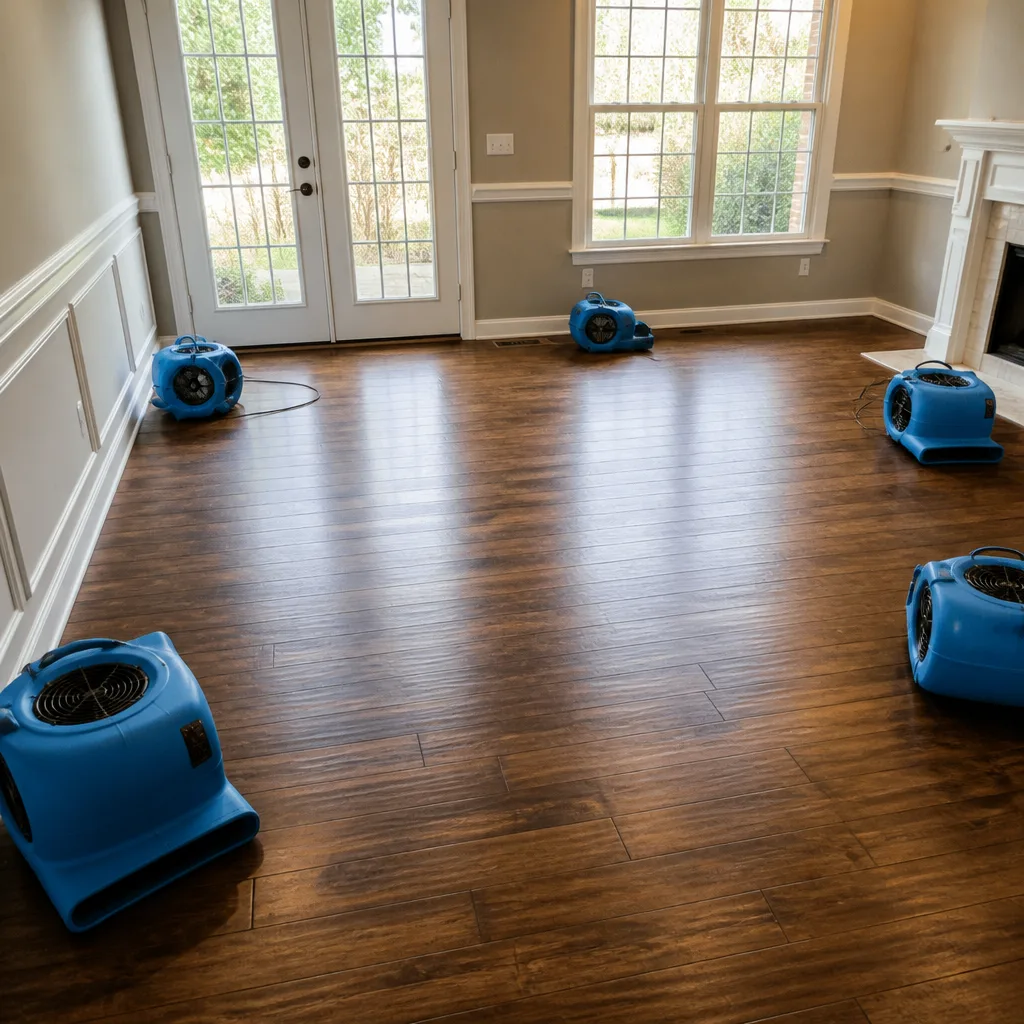 Water damage drying
 Fire & smoke cleanup
 Mold remediation
 Storm response
 Sewage cleanup
 Reconstruction
Free visual inspection and a written scope of work before any mitigation begins - photos, moisture readings, and drying logs go in your claim file
The scope we write is the scope we bill. Anything new gets shown to you, in writing, before we touch it.
Get your free estimateThe Complete Water Damage Restoration Guide for Sunrise Manor Homeowners
Most water damage guides are written for humid climates where wood stays wet for weeks and mold blooms within days of the first leak. Sunrise Manor doesn’t work that way. We sit on caliche soil that drains like concrete, under a sun that delivers 294 clear days a year, and both facts change every step of proper restoration. This guide explains why the national rulebook fails in high-desert conditions, what actually happens inside your walls after a slab leak or supply line burst, and how to make sure the drying is real, not just surface-level. If you own a home in Sunrise Manor, the information here will save you from the most expensive mistake we see: a structure that looks dry but isn’t.
Quick Answer
Water damage restoration in Sunrise Manor requires a different approach than what most national guides recommend because our caliche soil and extreme summer heat create a false-dry effect: surfaces evaporate fast while wall cavities and subfloors stay saturated. Proper restoration follows a sequence of extraction, psychrometric testing, targeted structural drying, and verification against IICRC S500 moisture content standards, not visual inspection. Homeowners who skip moisture testing or rely on surface checks end up with mold inside walls within 30 to 60 days, even after the area appears bone dry.
Restoration work we handle
Table of Contents
- Why Caliche Soil Changes Everything About Water Damage in Sunrise Manor
- The False-Dry Effect: How Mojave Heat Hides Saturated Structures
- Category 1, 2, or 3: The Contamination Decision Tree for Sunrise Manor Water Sources
- The Restoration Sequence: Extract, Dry, Test, Remediate, Rebuild
- What Professional Equipment Actually Does (and Why Rental Fans Fall Short)
- Nevada Insurance Documentation: What Adjusters Actually Require
- Mold Prevention After Drying: The 60-Day Window Most Homeowners Miss
- Common Mistakes to Avoid
- When to Call a Professional
- Frequently Asked Questions
Why Caliche Soil Changes Everything About Water Damage in Sunrise Manor
Beneath most of Sunrise Manor sits a layer of caliche, a hardened deposit of calcium carbonate that forms naturally in arid and semi-arid regions. It’s essentially a cement-like shelf anywhere from a few inches to several feet below the surface. When a slab leak or irrigation line break occurs, water doesn’t percolate downward the way it does in loamy soils. The caliche acts as a barrier, forcing moisture to travel laterally along the slab, into foundation cracks, and upward through capillary action into wall base plates and drywall.
We’ve responded to slab leaks in neighborhoods across Sunrise Manor where the visible water pool was contained to a single room, but moisture readings inside wall cavities extended 15 to 20 feet from the original source. The water followed the path of least resistance along the top of the caliche layer, saturating framing members that never showed a single water stain on the painted surface. This is why visual inspection is functionally useless after a slab leak in this area. The water doesn’t stay where you can see it.
What this means for your restoration: any water release that contacts the foundation requires psychrometric testing, which measures temperature, relative humidity, and dew point inside wall cavities, not just on visible surfaces. A competent restoration technician in Sunrise Manor will drill small inspection holes at the base of walls in adjacent rooms, insert probes, and map the actual moisture pathway before deciding what needs drying. If a company shows up, points at the puddle, and starts running fans without testing the surrounding structure, they’re treating Sunrise Manor like it’s Houston. The water damage restoration process we follow in Sunrise Manor accounts for this soil behavior from the first visit.
The False-Dry Effect: How Mojave Heat Hides Saturated Structures
Sunrise Manor summers regularly push past 100 degrees with single-digit relative humidity. That environment evaporates surface water astonishingly fast. A puddle that would linger for days in a humid climate disappears in hours here. That’s the trap. The visible water vanishes, but the water that wicked into drywall, framing lumber, insulation, and subflooring remains trapped inside materials that are now sealed on the outside by dry paint and texture.
We call this the false-dry effect. The surface of the drywall feels dry to the touch, the slab looks clean, and the homeowner assumes the problem solved itself. Meanwhile, inside the wall cavity, relative humidity sits at 70 to 90 percent. Engineered wood framing and gypsum board are holding enough moisture to support mold growth, even though the exposed face reads under 10 percent on a cheap moisture meter. It’s a genuine disconnect between what you can feel and what’s happening 4 inches behind the paint.
The IICRC S500 standard, which governs professional water damage restoration, sets drying goals based on moisture content readings relative to an unaffected baseline in the same structure, not on visible dryness. In Sunrise Manor, that baseline is often lower than the national average because our ambient humidity is so low. A wall cavity at 14 percent moisture content might be acceptable in a Gulf Coast home where everything reads 14 percent normally. In Sunrise Manor, an unaffected wall typically reads 6 to 8 percent. That means a “dry” wall by national standards can still be twice as wet as it should be for our climate. Certified professionals pull readings from multiple points and compare them to a local baseline, which is the only defensible way to determine when drying is actually complete.
This is the single most common reason we get called back to homes in Sunrise Manor months after another company “finished” a job. The surface dried. The cavity didn’t. The mold bloom that follows is predictable and expensive.
Category 1, 2, or 3: The Contamination Decision Tree for Sunrise Manor Water Sources
Every water release gets classified into one of three categories under IICRC standards, and that classification drives every decision after: what gets torn out, what gets cleaned, and what gets dried in place. In Sunrise Manor, our water sources include some that national guides rarely address, so the decision requires local knowledge.
Category 1: Clean Water. This is water from a sanitary source, like a supply line, a water heater rupture, or a faucet left running. If you respond quickly, Category 1 water can often be dried in place with minimal demolition. Carpet can be saved. Drywall can be dried. The key phrase is “respond quickly.” In Sunrise Manor heat, a Category 1 release turns into a Category 2 situation faster than in cooler climates because warm temperatures accelerate bacterial growth. We consider a 48-hour window the practical ceiling here, not the 72 hours some national sources cite.
Category 2: Gray Water. This is water with significant contamination: washing machine overflow, dishwasher discharge, sump pump failures, or an AC condensate line that’s been pooling. Gray water carries microorganisms and nutrients that support rapid biological growth. Materials that absorb gray water, particularly carpet pad and any porous insulation, typically require removal and replacement rather than drying in place. In Sunrise Manor, irrigation line breaks deserve special attention because the water has traveled through yard soil and picked up whatever bacteria and fertilizers are present. We treat irrigation water as Category 2 at minimum, even though it starts as municipal supply water, because it passes through ground contact before reaching your home.
Category 3: Black Water. This is grossly contaminated water containing sewage, flooding from outside sources, or standing water that has begun supporting microbial growth. A sewage backup from a main line, a toilet overflow that has sat, or flood water that entered from outside all fall here. Category 3 requires the most aggressive approach: full removal of affected porous materials, biocide application, and disposal of materials that cannot be effectively sanitized. Carpet, pad, drywall, and sometimes even base framing require removal. There is no shortcut for Category 3 water in Sunrise Manor or anywhere else.
Here’s the decision tree we walk through on every Sunrise Manor job:
- Identify the source. Is it a clean supply line, an appliance, an irrigation line, or a sewage path?
- Determine the water’s path. Did it travel through soil, crawl space, or construction cavities before reaching the affected area?
- Assess time elapsed. How long has the water been present, and at what ambient temperature? Heat shortens the safe window.
- Test the materials. What’s porous, what’s sealed, what’s functional? Carpet pad always loses. Tile over a slab usually wins.
- Classify and act. The category drives the scope: dry in place, selective removal, or full containment and disposal.
If you’re unsure about the category of water in your home, don’t guess. A wrong guess either wastes money tearing out materials that could have been saved or leaves contamination in place that will cause problems for years. Call a company that carries IICRC credentials and has seen the specific water sources common to Sunrise Manor.
The Restoration Sequence: Extract, Dry, Test, Remediate, Rebuild
Professional water damage restoration follows a defined sequence, and knowing that sequence helps homeowners understand what’s happening at each stage and what questions to ask. Here’s how it works in a typical Sunrise Manor home, at the stud-and-drywall level.
Step 1: Extraction
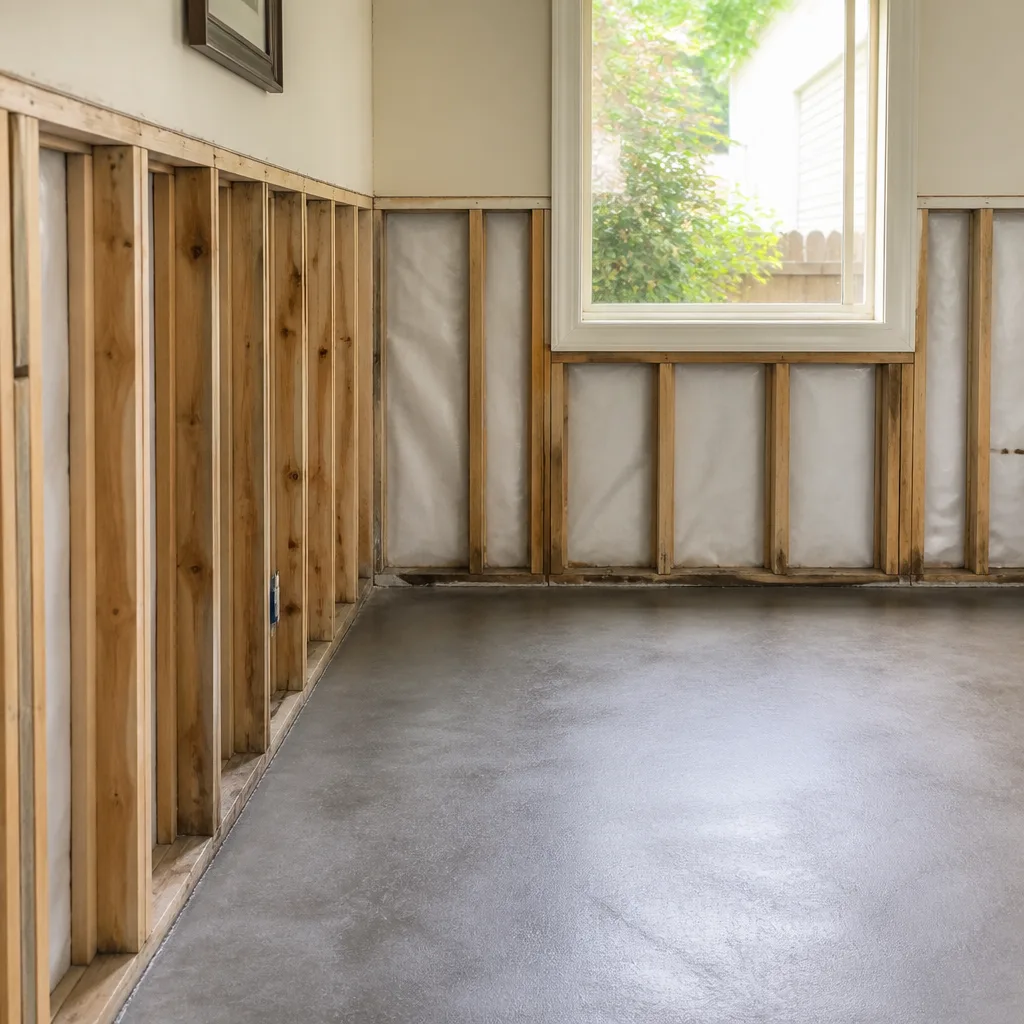
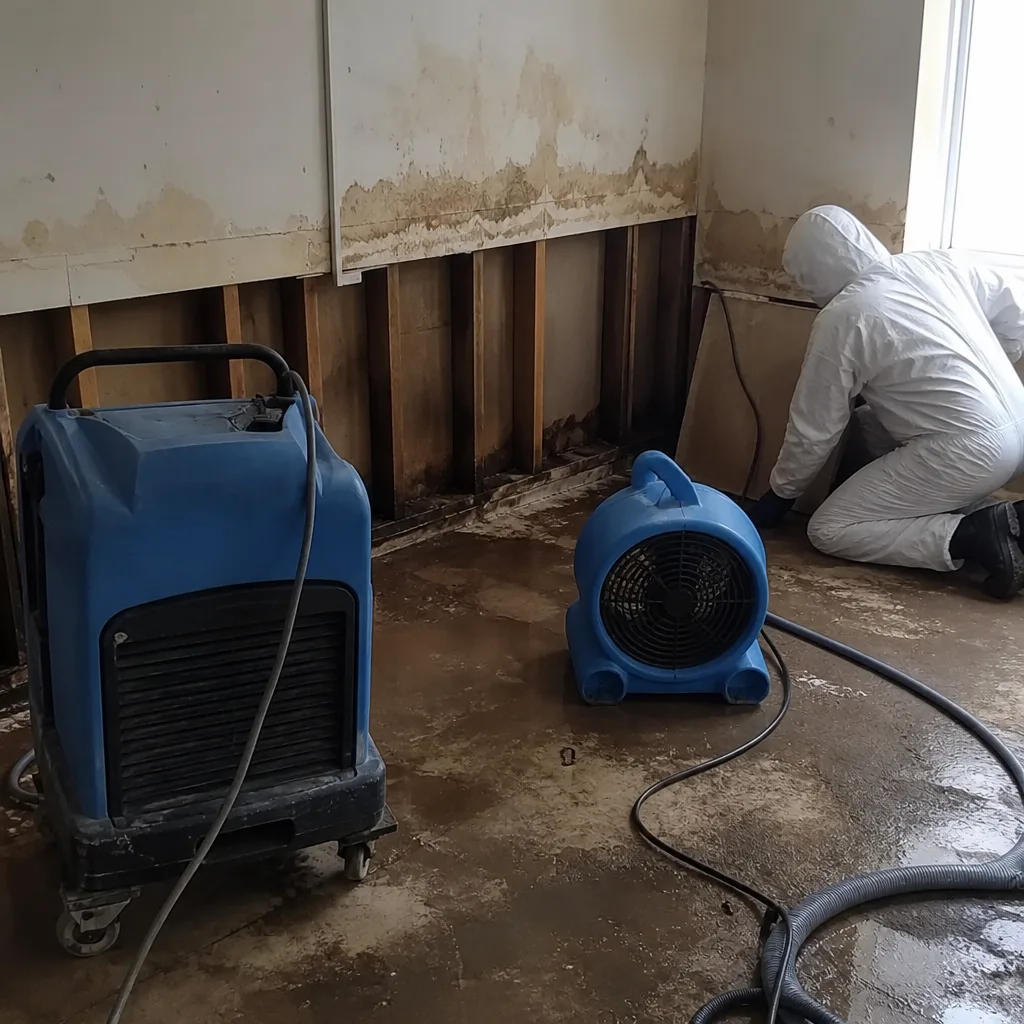
Before any drying begins, standing water is physically removed. This includes water on slab floors, inside carpet, and, critically, water trapped in wall cavities and under cabinets. We use truck-mounted or portable extraction units to pull the bulk water out. Injectidry systems are deployed at this stage when water has entered wall cavities or under subfloors, allowing us to apply negative pressure to those hidden spaces and pull water out without removing drywall. The more water extracted mechanically, the less time the structure spends saturated, and the less demolition is required.
Step 2: Structural Drying
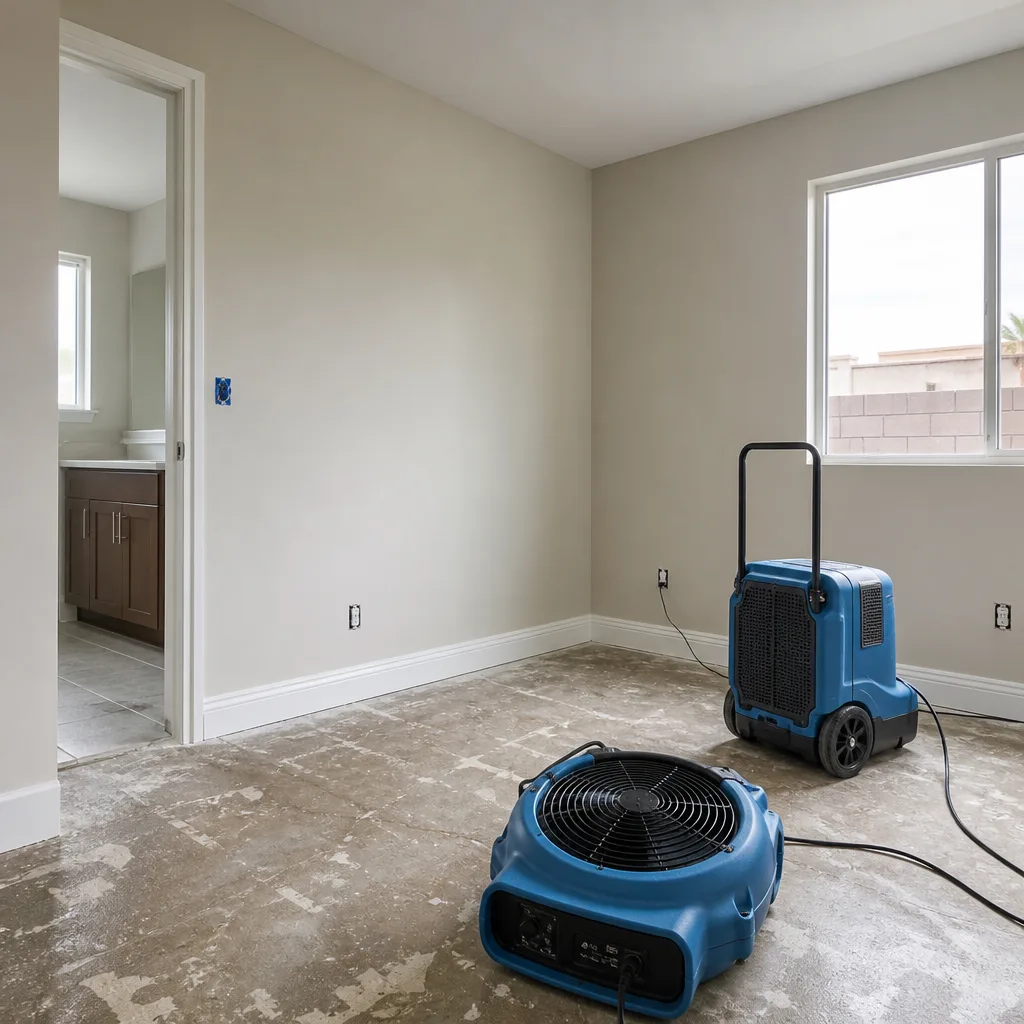
After extraction, professional-grade air movers and dehumidifiers are positioned to evaporate remaining moisture and carry it out of the structure. The equipment profile matters enormously here. Commercial restoration air movers from brands like B-Air move 2,500 to 3,000 cubic feet per minute, compared to maybe 300 from a box fan. Commercial dehumidifiers from Dri-Eaz or Phoenix pull 10 to 15 gallons of water per day out of the air. This is not the same as opening windows and setting up a rental fan. In Sunrise Manor, the natural dryness helps evaporation, but the trapped moisture inside cavities still requires mechanical drying pressure to move out.
Step 3: Moisture Testing and Verification
Drying is not complete when the floor feels dry. It’s complete when moisture meters read acceptable levels at multiple points in the affected area, compared to an unaffected baseline in the same home. This is where the false-dry effect gets caught. A professional will pull readings from wall cavities, under base plates, inside subfloor spaces, and on visible surfaces. Every reading gets documented. If the numbers don’t hit the drying goal, the equipment stays until they do. That documentation matters for the next step, and for your insurance file.
Step 4: Mold Assessment and Remediation
Water damage and mold are sequential, not separate. If water sat long enough or temperatures were high enough, microbial growth may have already started. A qualified restoration company checks for visible growth and elevated moisture that could support future growth during the drying process, not as an afterthought. This is one of the strongest arguments for hiring a company that does both mold remediation in Sunrise Manor and water damage: the water crew knows what to look for because they understand what they’re looking at. If mold is present, containment, removal, and sanitization happen before rebuilding.
Step 5: Rebuild and Reconstruction
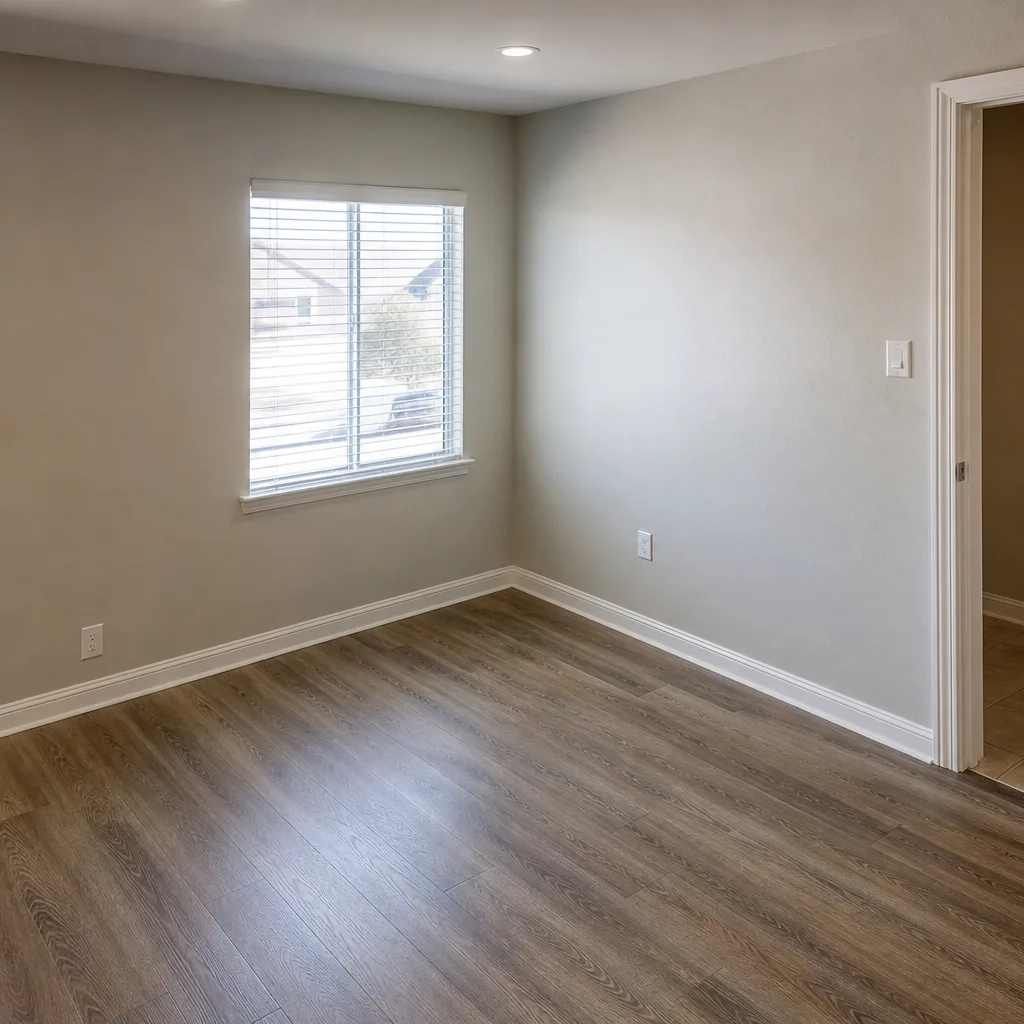
The final stage is restoring the structure to its pre-loss condition. This can mean new drywall, paint, baseboards, flooring, or cabinetry. Because the rebuild stage depends entirely on the drying and testing stages being done correctly, the quality of the final result reflects the quality of the work upstream. A proper rebuild on a properly dried structure lasts for decades. A proper rebuild on a false-dry structure compounds the original problem, sealing damp materials behind new finishes.
Homeowners who understand this sequence can track progress at each inspection point. Ask to see the moisture readings. Ask what the drying goal is. Ask what the baseline was. A restoration company that can’t show you those numbers is guessing, and guessing in Sunrise Manor means mold behind walls.
What Professional Equipment Actually Does (and Why Rental Fans Fall Short)
There’s a persistent belief that water damage drying is mostly a matter of moving air around and waiting. That belief costs homeowners thousands of dollars in preventable mold remediation. The equipment difference between what a professional restoration company deploys and what you can rent or buy at a home improvement store isn’t marginal. It’s the difference between drying the inside of your walls and drying the paint on the surface.
Professional restoration firms run air movers built for continuous, high-volume airflow across wet surfaces. A single professional air mover from B-Air or XPOWER produces more cubic feet per minute of airflow than 10 box fans combined, and it’s designed to run 24 hours a day for weeks without failing. The orientation matters too. Professional crews position air movers at specific angles to create a vortex pattern that pulls moisture out of substrate materials, not just across the top. That airflow discipline is part of IICRC training and it’s completely absent from a homeowner’s rental fan setup.
Dehumidification is the other half of the equation, and it’s where consumer equipment fails completely. A residential dehumidifier from a hardware store pulls maybe 2 to 3 pints of water per day from the air. A commercial desiccant or low-grain refrigerant dehumidifier from Dri-Eaz or Phoenix pulls 120 to 180 pints per day. In Sunrise Manor, where ambient humidity is already low, the science shifts: you need low-grain refrigerant dehumidifiers that can push relative humidity in a sealed room down to 30 percent or below, creating the vapor pressure differential that actually draws moisture out of wood and drywall. A consumer dehumidifier can’t reach that grain depression, period. The water stays in the wall.
Then there’s Injectidry, which solves a specific problem that no amount of air movement can address: water trapped in closed cavities. When a supply line leaks inside a wall, or water travels under a tile floor, the moisture sits in spaces where air movers can’t reach. Injectidry systems create negative pressure in those cavities through small access points, pulling dry air in and saturated air out through a manifold. The result is real drying inside the wall or under the slab, with little or no demolition. We use Injectidry on wall cavities, under kitchen cabinets, and below tile and hardwoods throughout Sunrise Manor. It’s the single biggest reason we can preserve original materials that other companies would tear out and replace.
Rental fans and dehumidifiers have their place in a finished, open room with a small clean-water spill that was caught immediately. They do not have a place after a slab leak, a supply line burst inside a wall, or any Category 2 or 3 event. The gap between consumer-grade and commercial-grade equipment is too large, and the cost of getting it wrong shows up weeks later as mold.
Nevada Insurance Documentation: What Adjusters Actually Require
Insurance claims for water damage in Nevada follow a specific rhythm, and homeowners who understand it are better positioned to get claims approved without delays or denials. The documentation protocol a restoration company follows matters as much as the drying work itself. Here’s what Nevada adjusters actually look for, based on the claims we’ve walked through with homeowners across Sunrise Manor.
First, the initial assessment has to establish causation and category clearly. Was this a sudden and accidental discharge, or a long-term seepage issue that a standard homeowner’s policy excludes? A good restoration report identifies the source, the time frame, the materials affected, and the water category with enough specificity that the adjuster doesn’t have to ask. Vague language like “water damage in the kitchen” doesn’t help. “Category 2 water from dishwasher supply line failure affecting 42 square feet of engineered wood flooring and the bottom 12 inches of drywall on two kitchen walls” does.
Second, photo documentation has to show the damage before anything is moved, not after. We take photos at every stage: initial loss, after extraction, during drying, before demolition, after demolition, before rebuild, after rebuild. Adjusters in Nevada, especially with the major national carriers, consistently ask for pre-mitigation photos because they need to verify that the damage was actually present before work began. If the restoration company only documents the “during” and “after,” the adjuster has no basis to confirm the claim.
Third, drying logs are non-negotiable. A professional restoration company records temperature, relative humidity, and moisture content readings from multiple points every 24 hours until the drying goal is reached. That log is the proof that drying actually happened. Adjusters will ask for it if the claim involves structural drying charges. If the restoration company can’t produce a coherent drying log, those charges are likely to be contested or reduced.
Fourth, line-item scope documents break down every charge into specific line items: number of air mover days, number of dehumidifier days, square footage of drywall removed, linear feet of baseboard replaced, hours of labor, and so on. Nevada adjusters compare those line items against industry-standard pricing software. A lump-sum “mitigation: $8,400” entry invites scrutiny and cuts. A properly formatted scope with the equipment counts and days listed matches what the adjuster needs to approve the claim.
We’ve found that the single most common gap in documentation from smaller restoration companies is the daily moisture log. They show up, run fans for five days, leave, and bill for drying. The adjuster asks for the data, there is none, and the homeowner ends up paying for drying charges out of pocket. Ask your restoration company upfront: “Will you provide daily psychrometric readings and a written scope before work starts?” If the answer is hesitant, find another company. The written scope before work starts is the best defense against inflated or contested charges after the fact.
Mold Prevention After Drying: The 60-Day Window Most Homeowners Miss
Water damage creates the conditions for mold. Mold doesn’t always show up during the drying phase, which is why homeowners get a false sense of security. The typical pattern in Sunrise Manor is this: water event happens, drying is completed, everything looks and smells fine, and then 30 to 60 days later a musty odor appears or staining shows through fresh paint. What happened? Mold spores that were present but dormant found the remaining micro-moisture in a wall cavity or behind a baseboard, and the warm Southern Nevada conditions gave them a perfect growth environment.
The 60-day window after a water event is when secondary mold is most likely to establish. Here’s what actually matters for prevention:
- Verify the drying was complete before rebuild. If you can’t see moisture readings that hit the drying goal before new drywall went up, assume the worst. The single biggest predictor of post-restoration mold is premature rebuild over an unverified structure.
- Inspect the perimeter of the affected area monthly for 60 days. Look for staining, warping, peeling paint, or a musty smell. Mold behind fresh drywall often announces itself through subtle paint discoloration at the baseboard line first.
- Check humidity levels in the weeks after restoration. A restored area that stays above 50 percent relative humidity when the rest of the house is at 15 percent indicates a moisture source that wasn’t fully addressed. This can happen when a slab leak was repaired but the soil under the slab remains wet.
- Don’t seal wall cavities or closed spaces without confirmation. If the drying plan included Injectidry in wall cavities, the records should show the moisture readings from those cavities before they were sealed. That data belongs in your file.
- Act fast if anything looks off. The difference between a minor mold issue and a major remediation project is often 2 to 3 weeks. If you catch it early, it’s a targeted cleaning. If you wait until it’s visible and spreading, it’s containment, demolition, and full mold remediation.
The connection between water damage and mold is why having one company that handles both makes sense. When the water team knows that a mold assessment is part of the job, and the mold team can walk back through the drying records to identify trouble spots, the handoff risk disappears. In Sunrise Manor, where the false-dry effect creates so many hidden damp cavities, that integrated approach isn’t a convenience. It’s the difference between catching a problem in week five and discovering it in month eight.
Common Mistakes to Avoid
- Trusting a visual inspection instead of moisture readings. In Sunrise Manor’s dry heat, surfaces look and feel dry while wall cavities hold 70 percent humidity. A visual check is not a drying verification. Demand documented moisture readings.
- Using consumer fans and dehumidifiers after a significant water release. Box fans don’t move enough air to dry structural materials, and residential dehumidifiers can’t hit the grain depression needed to pull water from wood. The equipment gap results in a structure that’s damp for weeks.
- Rebuilding before drying verification. Sealing fresh drywall over a wall cavity that hasn’t met the drying goal is the most direct path to mold. No rebuild should begin until the drying log shows all affected areas at or below the baseline moisture content.
- Treating irrigation line water as clean. Sunrise Manor’s hard water travels through yards and picks up soil bacteria before it reaches your home. Irrigation water should be categorized as Category 2, not Category 1, and porous materials should be treated accordingly.
- Assuming the insurance adjuster will sort everything out. Nevada adjusters process claims based on the documentation they receive. If your restoration company can’t produce photos, drying logs, and a line-item scope, the claim will be contested. Choose a company that documents like the adjuster is reviewing every invoice.
- Waiting to call after a slab leak because the visible water seems contained. Caliche hardpan forces water laterally along the slab, which means the water you see is often a fraction of the water that’s traveled. The clock for secondary mold growth starts at the moment of the leak, not at the moment the puddle appeared.
- Hiring separate water, mold, and rebuild contractors with no coordination. When the drying company hands off to a mold company that hands off to a general contractor, the critical testing data gets lost at each handoff. One company that handles water, mold, and fire means the drying records inform the mold check and the rebuild scope stays consistent.
When to Call a Professional
Some water releases are manageable with a mop and a fan. A clean-water spill on a tile floor that’s caught within minutes and leaves no standing water doesn’t require a restoration crew. But the line between DIY and professional happens fast. Call a professional if water has entered wall cavities, flooring, or under cabinets. Call if the water source is gray or black, especially sewage or irrigation water. Call if the leak happened inside a wall and you can’t see the full extent. Call if you have any doubt about the category or the materials affected. Water damage compounds every hour it sits, and the Sunrise Manor heat accelerates the biological clock. Ashworth Water Damage offers free estimates in Sunrise Manor, call (833) 734-7202, and we’ll assess the situation with moisture readings, not a walkthrough.
Frequently Asked Questions
Most residential water damage restoration in Sunrise Manor takes 3 to 7 days for structural drying, depending on the affected area, the water category, and the construction materials. Drying is complete when moisture readings hit the drying goal, not when a timer expires. Rebuild work adds additional time after drying is verified.
Homeowners insurance typically covers sudden and accidental water damage, like a burst supply line or a water heater rupture. It typically does not cover long-term seepage, gradual leaks, or flood damage from outside sources. The documentation your restoration company provides, including the cause, category, and photo record, determines how smoothly the claim proceeds.
Yes. In fact, Sunrise Manor’s dry climate can mask the moisture that leads to mold because surfaces dry quickly while wall cavities and subfloors stay wet. Mold grows in the hidden damp spaces created by the false-dry effect, which is why testing is essential even when everything looks and feels dry.
It depends on the water category, the duration of saturation, and the moisture content readings at the time of assessment. Clean water caught quickly can often be dried in place. Gray or black water typically requires removal and replacement of affected drywall. A professional evaluation with moisture testing determines what stays and what goes.
Water damage restoration removes the water and dries the structure. Mold remediation in Sunrise Manor removes mold that has already grown, often as a result of water damage that wasn’t properly dried. The two services are sequential in many cases. We handle both so the drying records inform the mold check and nothing gets lost between contractors.
Shut off the water source if you can do so safely, move valuables out of the affected area, and call a professional restoration company as soon as possible. Don’t run consumer fans or try to dry the area yourself if the water source is gray or black, or if water has entered walls or flooring. The faster a professional assessment happens, the more materials can be saved and the lower the total restoration cost.
Yes. We provide fire damage restoration in Sunrise Manor, which means one company handles water, mold, and fire under one roof. After a fire, the water used to extinguish it often causes secondary damage, and having the same team address both the fire and the water damage prevents coordination problems and missed handoffs.
The Bottom Line
Water damage restoration in Sunrise Manor fails when it’s treated like water damage restoration anywhere else. The caliche soil beneath our homes forces water sideways instead of down. The desert heat dries surfaces while cavities stay saturated. The result is a pattern we see repeatedly: a homeowner thinks the problem is solved, rebuilds too early, and discovers mold behind fresh drywall months later. The solution is technical, not cosmetic. Psychrometric testing, commercial-grade drying equipment, documented drying logs, and verification against IICRC S500 standards are what separate a structure that’s actually dry from one that only looks dry. If you’re facing water damage in Sunrise Manor, get an assessment based on moisture readings, not a walkthrough. The Ashworth Water Damage home team is built for this specific climate and this specific soil, and the estimate is free.
Written by the team at Ashworth Water Damage, serving Sunrise Manor since 2018.
See the difference
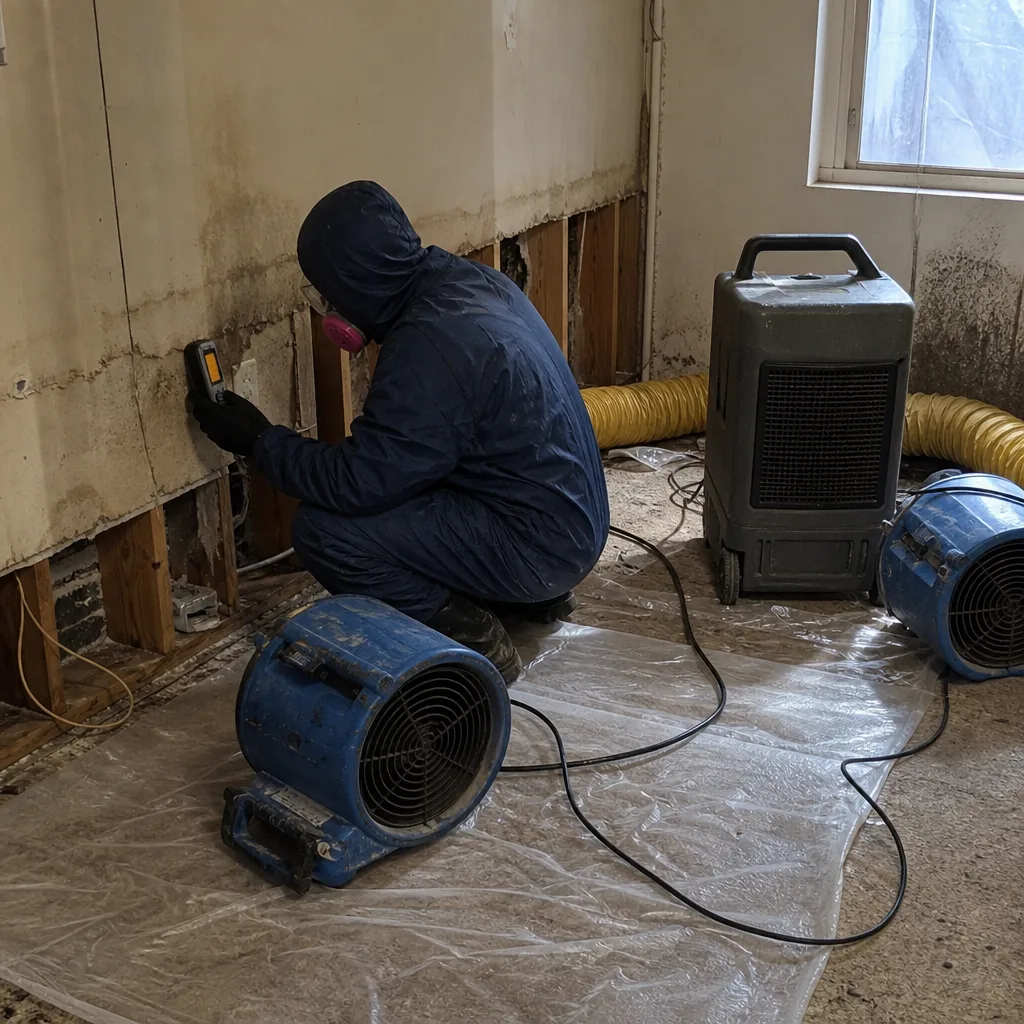 Before
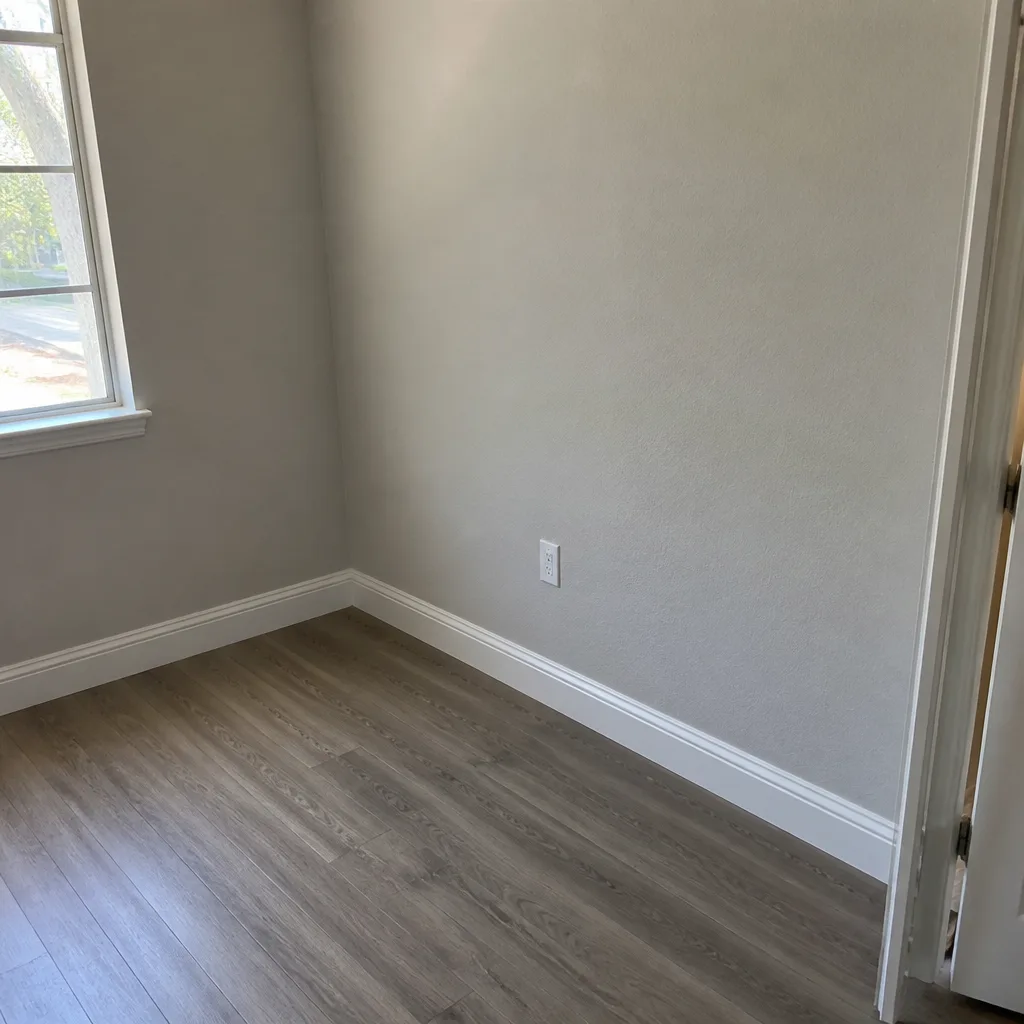 After
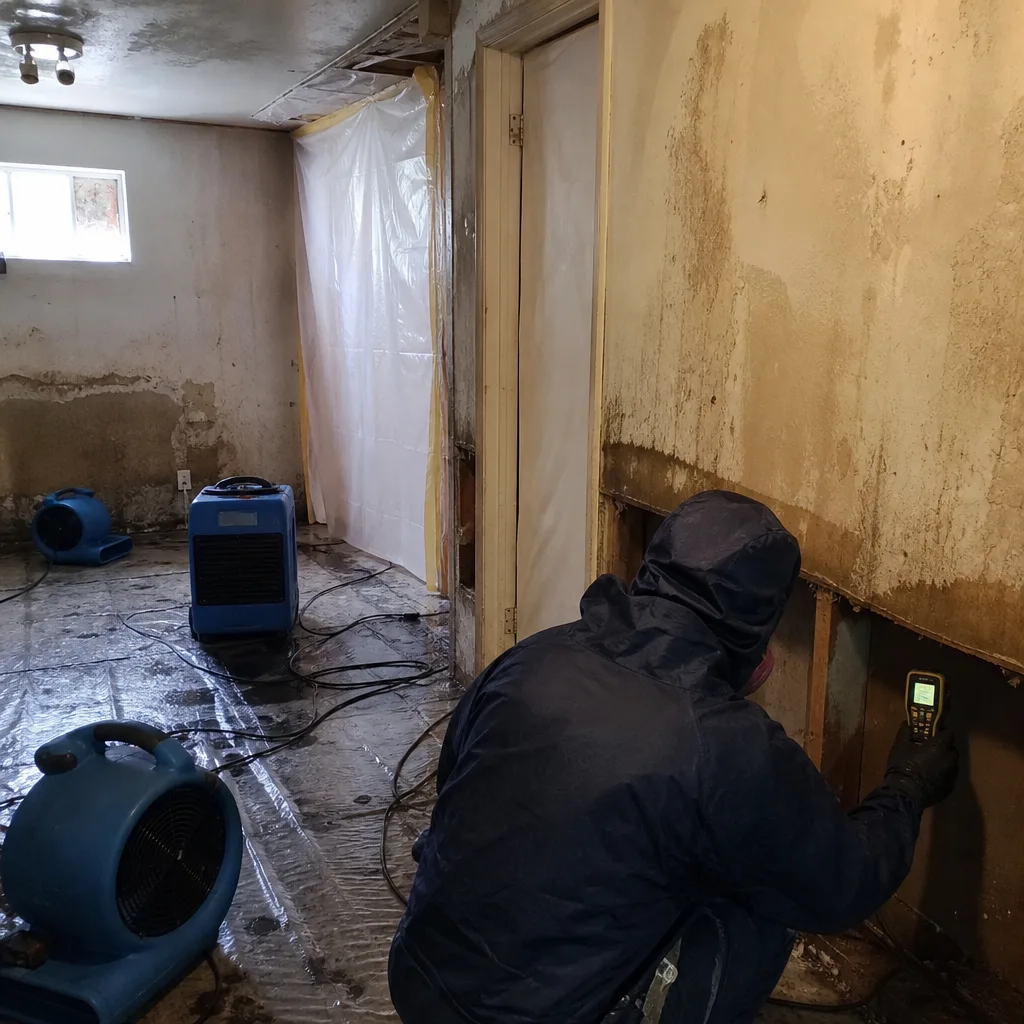 Before
 After
 Before
 After