
Last updated October 30, 2026
 Water damage drying
 Fire & smoke cleanup
 Mold remediation
 Storm response
 Sewage cleanup
 Reconstruction
Free visual inspection and a written scope of work before any mitigation begins - photos, moisture readings, and drying logs go in your claim file
The scope we write is the scope we bill. Anything new gets shown to you, in writing, before we touch it.
Get your free estimateDamage Restoration Permits, Codes & Inspections in NV: What You Need to Know
An unpermitted restoration repair in Sunrise Manor can surface years after the work was done, usually during a title search when you’re trying to sell the house. The buyer’s escrow officer finds a water heater replacement without a permit, or electrical work after a fire that was never inspected, and suddenly your closing is on hold while you scramble to get retroactive approval from Clark County. This guide explains exactly which restoration projects in Nevada require permits, what the inspection process looks like, how unpermitted work affects your insurance, and what to do if you discover a previous owner cut corners on your Sunrise Manor property. For Damage Restoration Warning Signs: A Sunrise Manor Homeowner’s Reference Guide, see our companion post.
Restoration work we handle
Quick Answer
In Nevada, restoration work that replaces like-for-like materials, such as drywall patches, paint, flooring, or trim, typically does not require a permit. However, any restoration that alters structural components, electrical systems, plumbing lines, or the building envelope, such as replacing load-bearing framing, rewiring, or moving drain lines, requires a permit from the Clark County Building Department and must be completed by a contractor licensed under Nevada Revised Statutes Chapter 624.
Table of Contents
- Nevada Permit Requirements for Restoration Work
- Clark County Building Department: What’s Exempt and What Triggers Inspection
- How Nevada Revised Statutes Chapter 624 Applies to Restoration Contractors
- The Inspection Sequence for Water-Damaged Structures
- Unpermitted Work and Homeowner’s Insurance
- Retroactive Permitting in Clark County: Process and Costs
- Common Mistakes to Avoid
- When to Call a Professional
- Frequently Asked Questions
- The Bottom Line
Nevada Permit Requirements for Restoration Work
Nevada uses the International Residential Code as the baseline for residential inspection requirements, with local amendments adopted by Clark County. The core principle is simple: cosmetic restoration does not require a permit, but anything that touches structure, systems, or safety does.
In Sunrise Manor, a water damage repair that removes wet drywall, replaces insulation, and reinstalls new drywall and paint is considered cosmetic, assuming the framing underneath is sound. The moment the repair involves cutting into a stud, sistering a joist, or replacing a section of top or bottom plate, that’s structural work and the county wants to see it before it gets covered.
Here’s the breakdown that matters for restoration specifically:
- No permit required: Drywall replacement, insulation replacement, painting, flooring replacement, trim work, cabinet replacement not tied to plumbing or electrical, and roof shingle replacement under 100 square feet.
- Permit required: Any framing modification or replacement, electrical rewiring, panel replacement, plumbing line replacement or relocation, water heater replacement, HVAC ductwork modification, window or exterior door replacement, and any roof sheathing replacement.
- Fire-damaged structures: Almost always trigger permits because the heat damage typically compromises framing, electrical wiring, and structural connections even when the fire didn’t collapse anything. Clark County inspectors will want to evaluate the extent of charring before any rebuilding begins.
One nuance homeowners in Sunrise Manor often miss: if your restoration work is being done through an insurance claim, the permit requirement doesn’t change. Insurance companies don’t issue permits, and a check from an adjuster doesn’t substitute for county approval. Your contractor is still legally obligated to pull permits for scope that requires them, regardless of who’s writing the check.
Clark County Building Department: What’s Exempt and What Triggers Inspection
Clark County Building Department publishes explicit exemptions in its residential permit guidelines. The exemptions matter because a restoration contractor who knows these thresholds can move faster on emergency work without cutting legal corners. A contractor who doesn’t know them will either overpermit, slowing down a family trying to get back into a flooded home, or underpermit, setting up a compliance bomb down the road.
The county’s exemption list for residential work includes:
- Drywall repair and replacement in any quantity, provided no framing is altered
- Painting, including full interior repainting after smoke damage
- Flooring replacement, including subfloor sections under 32 square feet if the joists are untouched
- Insulation replacement where the wall cavity is opened and the framing remains intact
- Cabinet replacement without plumbing or electrical modifications
- Roof shingle repair under one square (100 square feet)
- Fascia, soffit, and trim replacement
What does trigger mandatory permits and inspection in Clark County:
- Any cut, notch, or drill through a load-bearing stud or joist
- Replacement of any section of top plate, bottom plate, or sill
- Electrical wiring replacement beyond a device swap, meaning a new run of Romex, a circuit addition, or any panel work
- Plumbing line replacement beyond the fixture trap, including supply line replacements and any drain line work behind the wall
- Water heater, furnace, or AC condenser replacement
- Ductwork replacement or modification
- Window and exterior door replacement, including fire-rated assemblies after a fire
In our experience drying structures across Sunrise Manor, older homes built in the 1960s and 1970s have framing layouts that complicate the simple question of “is this load-bearing?” A wall that looks partition-grade to a homeowner may be carrying a truss point. That’s why we document every opened wall with photos before and after drying, so if the scope shifts from dry-out to structural repair, there’s a clear paper trail for the county.
How Nevada Revised Statutes Chapter 624 Applies to Restoration Contractors
NRS 624 is Nevada’s contractor licensing statute, and it creates a specific legal framework for restoration work that most homeowners never encounter until something goes wrong. The statute requires that any person or company performing construction, alteration, repair, or improvement on residential property in Nevada hold a contractor’s license issued by the Nevada State Contractors Board, unless the work falls under an express statutory exemption.
The exemption that matters for restoration: a homeowner can legally perform work on their own residence without a license, but only if the work is not structural and the homeowner performs it personally. The moment you hire someone, even a handyman, to perform work that requires a permit, that person must hold the appropriate license classification.
For restoration specifically, NRS 624 matters in three practical ways:
- Permit pulling authority: Only a licensed contractor can pull a permit for work in Clark County. If your restoration company cannot pull their own permit, they’re either operating under someone else’s license (a legal gray area called “rent-a-license”) or they’re doing work that should have been permitted without one. Both are red flags.
- Scope classification: The license classification must match the work. A contractor licensed only for “B-2 Residential and Small Commercial” can handle general building work. But if the restoration involves significant electrical, they need a C-2 Electrical classification or a properly licensed electrical subcontractor. Water damage restoration that stays within drying, demolition, and cosmetic repair is generally B-2 scope. Structural repair after fire is B-2. Electrical repair after fire is not.
- Consumer protection: NRS 624 creates a recovery fund for homeowners who are damaged by a licensed contractor’s failure to perform or failure to comply with the law. If an unlicensed contractor walks off your Sunrise Manor job with a deposit and the work is incomplete or unpermitted, you have no recovery fund access. The legal remedy is civil court, which is slow and uncertain.
When we talk to Sunrise Manor homeowners after a loss, the license question is the one they’re least prepared to ask, even after reading How to Hire a Damage Restoration Contractor in Sunrise Manor: A Step-by-Step Guide. They assume anyone who shows up with a truck and a dehumidifier is operating legally. Under NRS 624, that assumption can cost them tens of thousands in unpermitted repair liability.
The Inspection Sequence for Water-Damaged Structures
Water damage restoration follows a sequence that’s unique in the permitting world because the damaged area has to be opened to dry properly, then closed only after the right inspections happen. Getting the order wrong means either covering work the inspector needed to see, or leaving walls open long enough for secondary damage to set in.
Here’s the sequence as it plays out in Clark County for a typical flood or pipe burst in a Sunrise Manor home:
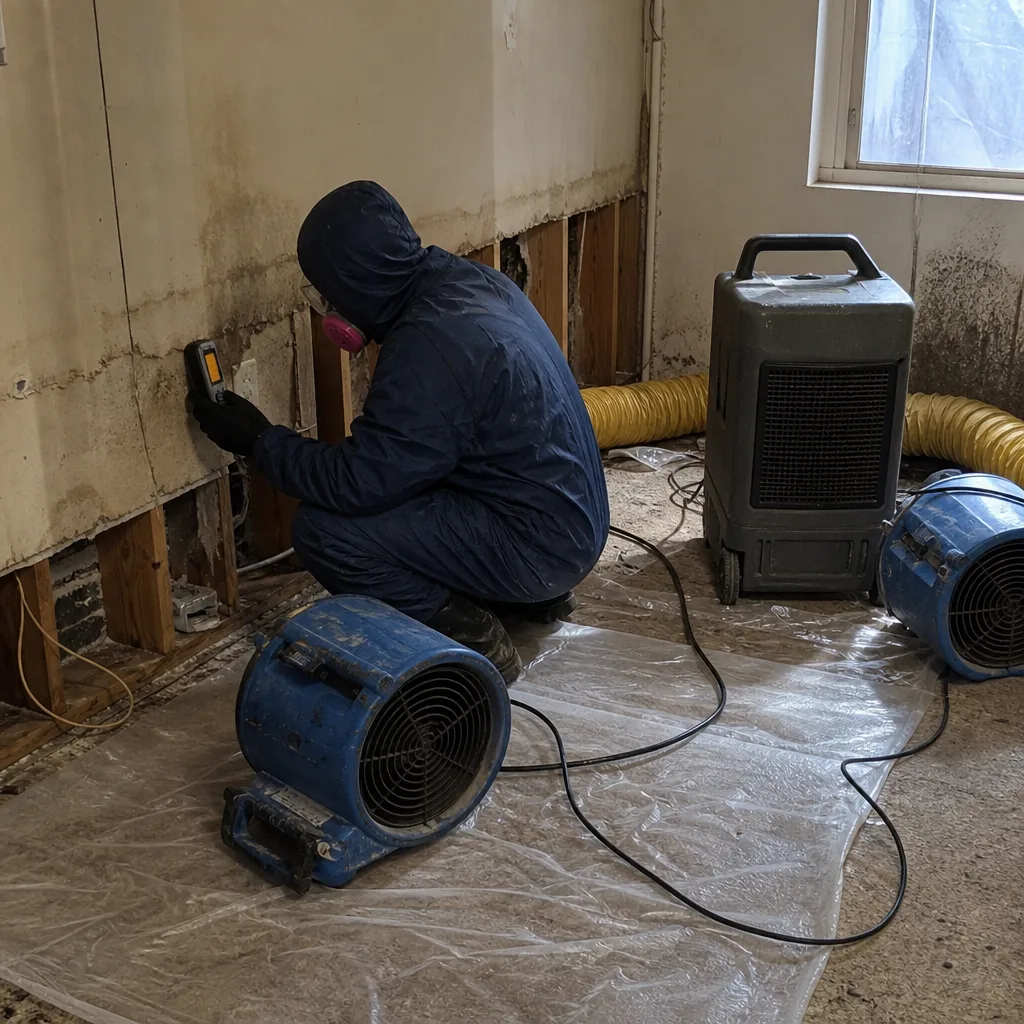
- Emergency mitigation (no permit needed): The restoration crew extracts standing water, removes saturated materials that cannot be dried, and sets drying equipment. This phase is classified as mitigation, not repair, and Clark County treats it as permit-exempt. We run Dri-Eaz and Phoenix air movers and dehumidifiers during this phase, pulling moisture from framing and subfloor before any rebuild is discussed.
- Damage assessment and permit application: Once the structure is dry down to its pre-loss moisture content, the contractor determines if the repair scope triggers permit requirements. If structural repair is needed, the permit application goes to Clark County with a scope of work. This happens before any repair work begins.
- Rough inspection (the critical milestone): The inspector arrives to see the open structure. They verify that the framing is sound or that repair work meets code, that any electrical or plumbing replacement is compliant, and that fire-blocking and structural connections are correct. This inspection must happen while the walls are open. If you close the wall first, the inspector will require you to open it back up.
- Insulation and vapor barrier inspection (sometimes combined): Depending on the wall assembly, the county may require a separate inspection after insulation is installed but before drywall goes on. This is more common in exterior walls where the building envelope was compromised.
- Final inspection: After drywall, texture, paint, and trim are complete, the inspector returns for a final sign-off. This closes the permit and is the document you need if you sell the home or file a future insurance claim on the same area.
What we’ve learned from Sunrise Manor water damage jobs specifically: homes built before current energy code requirements have wall assemblies that inspectors watch closely. An exterior wall repair on a 1970s home in this area may trigger a requirement to bring that wall’s insulation up to current R-value standards as a condition of repair approval, which increases rebuild cost beyond the like-for-like replacement price.
Unpermitted Work and Homeowner’s Insurance
Unpermitted restoration work interacts with insurance in two distinct phases: at claim time and at policy renewal time. Both can hurt, but the mechanisms are different.
At claim time: If you file a claim for new damage to an area that was previously repaired without a permit, the adjuster will examine the repair history. Nevada insurance policies typically include language requiring that all work be performed in accordance with applicable law and local code. If new damage traces back to unpermitted prior work, the carrier can deny the claim on the basis that the loss resulted from work that was never code-inspected. We’ve seen this play out in Sunrise Manor with water heater replacements: a homeowner installed a water heater without a permit in 2019. In 2024, the supply line failed and flooded the garage. The carrier denied the water damage claim because the original installation was unpermitted and the failure originated at the unpermitted connection.
At renewal time: Carriers conduct property inspections on a rotating schedule, and some use aerial imagery and public records to flag unpermitted improvements. Clark County permit records are accessible, and a carrier that finds evidence of major unpermitted work, such as a rebuilt addition after a fire, or a relocated bathroom after water damage, may decline to renew the policy or add a surcharge that reflects the increased risk of insuring a non-compliant structure.
The worst case is both scenarios stacking: a claim denied for unpermitted prior work, followed by non-renewal, followed by difficulty placing a new policy because the prior loss history is now attached to the property in the CLUE report. In Sunrise Manor, where the housing stock includes a substantial number of older homes with a repair history, this is a bigger risk than most residents realize.
What protects you: insist on a permit when the scope requires one, keep the final inspection sign-off in your permanent records, and forward the permit documents to your insurance agent so the carrier’s file reflects compliant work. If you’re working with a restoration contractor, the contract should state explicitly that they are responsible for pulling all required permits.
Retroactive Permitting in Clark County: Process and Costs
Retroactive permitting is Clark County’s process for bringing already-completed unpermitted work into compliance. It is not a punishment process, but it is not cheap or fast either. The county’s interest is that the work meets code before it gets a stamp.
The process for retroactive permitting on restoration work follows this path:
- Owner or licensed contractor files a permit application identifying the work that was completed without a permit. The county will not accept this application from an unlicensed contractor.
- County performs a preliminary review to determine if the scope is eligible for retroactive approval. Work that is hidden inside walls or behind finishes cannot be evaluated without destructive inspection, which the homeowner pays for.
- Invasive inspection: The county will require selective demolition to expose concealed work. For a bathroom that was rebuilt after a sewer backup without permits, this means opening the wall behind the tub, removing a section of ceiling below the bathroom, or cutting access panels. The goal is to verify plumbing connections, electrical work, and structural condition.
- Corrections: If the exposed work meets current code, the inspector signs off and the permit closes. If not, the corrections become mandatory, and the permit will not close until they’re completed and reinspected.
- Administrative fees: Clark County charges the standard permit fee for the work type, plus a retroactive review fee that varies with scope. Total cost for a typical concealed bathroom or kitchen restoration runs between $800 and $2,500, including the selective demolition, inspection fees, and subsequent repair of the inspection openings. The cost can be substantially higher if corrections are required.
We’ve walked Sunrise Manor homeowners through this process, and the consistent lesson is that the retroactive permit always costs more than the original permit would have cost. The original permit for that same bathroom work would have been $200 to $400, and the inspection would have happened with the walls open as part of the normal repair sequence. The retroactive path adds demolition, repair, and the retroactive review fee on top.
Common Mistakes to Avoid
- Assuming “cosmetic” means “no permit” without checking: In Clark County, painting and flooring are cosmetic, but moving an electrical outlet to accommodate a new vanity is not. One small electrical or plumbing change inside an otherwise cosmetic restoration turns the whole project into permitable scope.
- Hiring an unlicensed contractor to save money: NRS 624 makes it illegal for an unlicensed person to perform work requiring a permit. If that person walks off the job, takes your deposit, or does substandard work, you have no contractor’s board complaint path and no recovery fund access.
- Letting the contractor close the walls before inspection: In water damage restoration, the pressure to get the house back together fast is real. But if the inspector needs to see the framing and you’ve already hung drywall, you’ll be opening it back up at your expense.
- Not keeping permit records: Even if the permit was pulled and the inspection passed, those papers are your proof. Selling a Sunrise Manor home with a water damage history but no permit records triggers title complications that can scare off buyers.
- Assuming insurance covers retroactive permitting costs: Standard homeowners policies do not cover the cost of bringing unpermitted prior work into compliance. If the prior owner did work without permits and you’re now paying for retroactive approval, that’s an out-of-pocket expense.
- Treating mold remediation and water damage repair as separate permit questions: Mold remediation itself rarely requires a permit. But the underlying repair work that follows, replacing water-damaged structural members or rebuilding a moisture-compromised wall system, is permitable scope. A Sunrise Manor mold job that requires opening a ceiling and replacing joists triggers the same county inspection requirements as any structural repair.
- Waiting until a sale is pending to resolve unpermitted work: The retroactive permit process takes weeks, not days. A Sunrise Manor seller who discovers unpermitted work during escrow is looking at a delayed closing, a price concession, or both.
When to Call a Professional
Any restoration project that goes beyond paint and flooring should involve a licensed professional who can assess whether permit scope is triggered—our DIY vs Professional Damage Restoration: The Sunrise Manor Homeowner’s Decision Guide covers when to call in the pros. If the work involves structural repair after water or fire damage, electrical rewiring, plumbing replacement, or anything concealed inside walls, call a licensed restoration contractor before the work starts. If you’ve purchased a home and discovered evidence of unpermitted restoration work, call before you do anything else; a licensed contractor can assess the scope and advise whether retroactive permitting is worth pursuing. Ashworth Water Damage offers free estimates in Sunrise Manor, call (833) 734-7202, and we’ll walk the property with you and give you a straight answer about what needs a permit and what doesn’t.
Frequently Asked Questions
Water damage restoration that stays within drying, demolition, and like-for-like cosmetic repair, such as drywall, paint, and flooring replacement, does not require a permit in Clark County. If the repair scope includes structural framing, electrical rewiring, or plumbing replacement, a permit is mandatory. Call (833) 734-7202 for a free assessment of your specific situation.
Unpermitted restoration work can stall or kill a sale once the buyer’s title search and property inspection uncover it. The seller is typically forced to either obtain retroactive permits before closing, reduce the sale price, or offer a credit for the buyer to resolve the issue. Retroactive permits cost more than original permits because the work must be exposed for inspection.
Mold remediation by itself generally does not require a building permit, but the repair work that follows it often does. Replacing mold-compromised framing, rebuilding wall sections, or rewiring after mold damage triggers the same permit requirements as any structural repair. Ashworth Water Damage provides mold remediation services that include documentation of the underlying repair scope, so you know exactly what requires county approval.
Yes. Nevada insurance policies require that covered property be maintained and repaired in compliance with applicable law. If a new loss originates from unpermitted prior work, the carrier can deny the claim. The carrier can also decline to renew the policy if an inspection reveals substantial unpermitted improvements.
Retroactive permitting for concealed restoration work typically costs $800 to $2,500 when you include selective demolition to expose the work, inspection fees, retroactive review fees, and repair of the inspection openings. Larger scopes or work that requires corrections can go higher. The original permit for the same work would have been a fraction of that cost.
Only a contractor licensed under NRS 624 with the appropriate classification can pull a building permit in Clark County. A homeowner may perform work on their own residence without a license only if the work is not structural and is performed personally. Anyone hired to perform permitable restoration work must hold a valid Nevada contractor’s license. Call (833) 734-7202 to confirm that the contractor you’re considering is properly licensed for your specific restoration scope, or ask us directly during a free estimate.
The Bottom Line
Permit requirements in Nevada restoration work come down to a simple question: does the repair touch structure, electrical, plumbing, or the building envelope? If yes, Clark County requires a permit and inspection, and the contractor must be licensed under NRS 624. Unpermitted work creates liabilities at claim time, renewal time, and resale time that are more expensive to fix than the original permit would have been. If you’re facing water, mold, or fire restoration in Sunrise Manor and aren’t sure where the permit line falls, call Ashworth Water Damage at (833) 734-7202. We’re certified to IICRC standards, we’re RIA members, and we’ll tell you the truth about your specific scope before any work begins. Explore more guides & resources on Sunrise Manor restoration. One call covers water, mold, and fire, and we’ll help you understand the permit path from the first assessment through final inspection.
Written by the team at Ashworth Water Damage, serving Sunrise Manor since 2018.
See the difference
 Before
 After
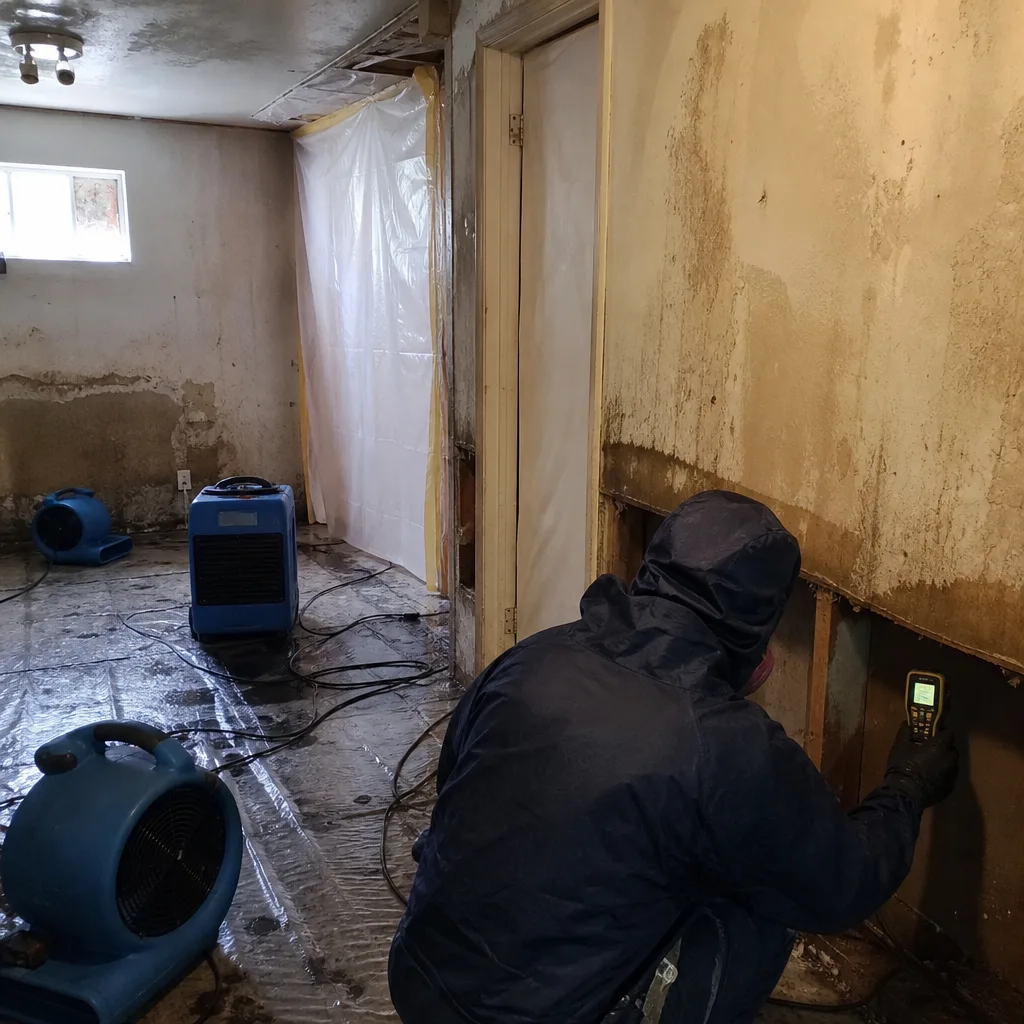 Before
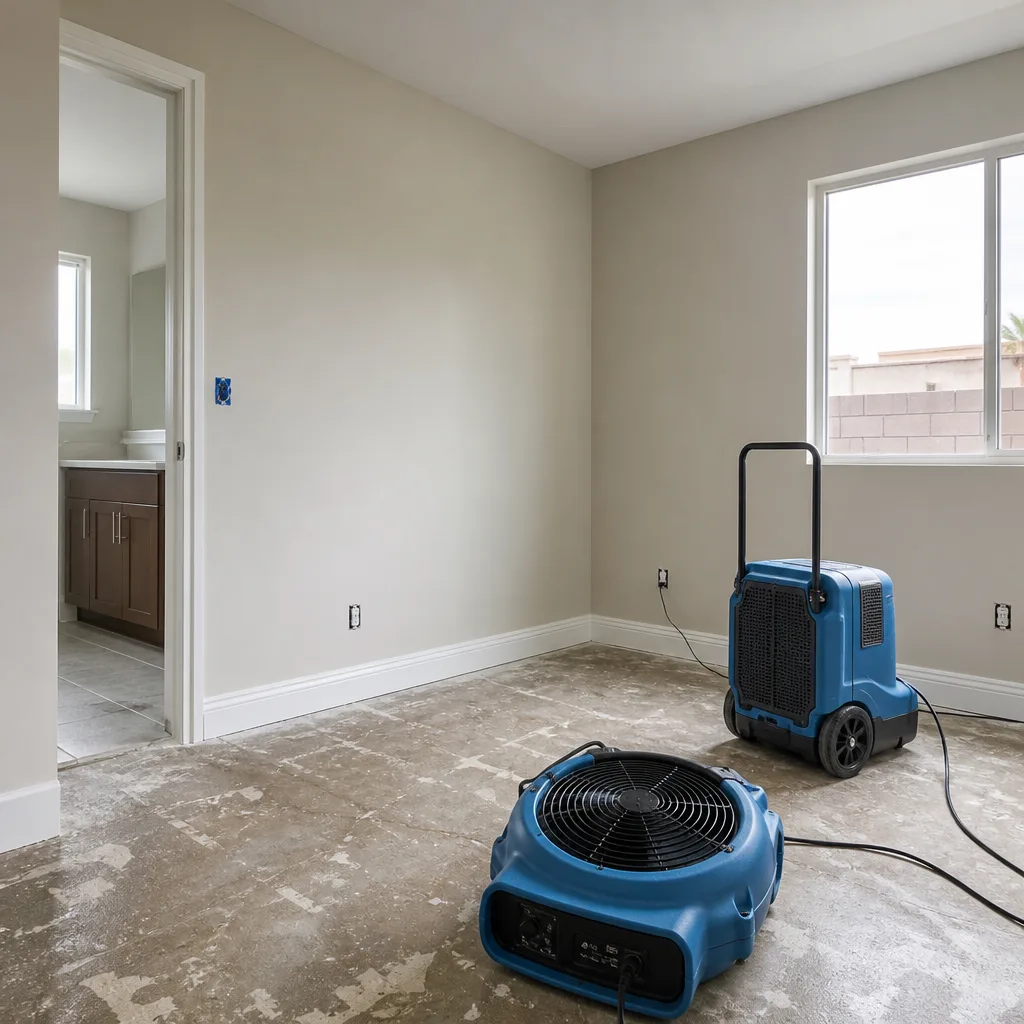 After
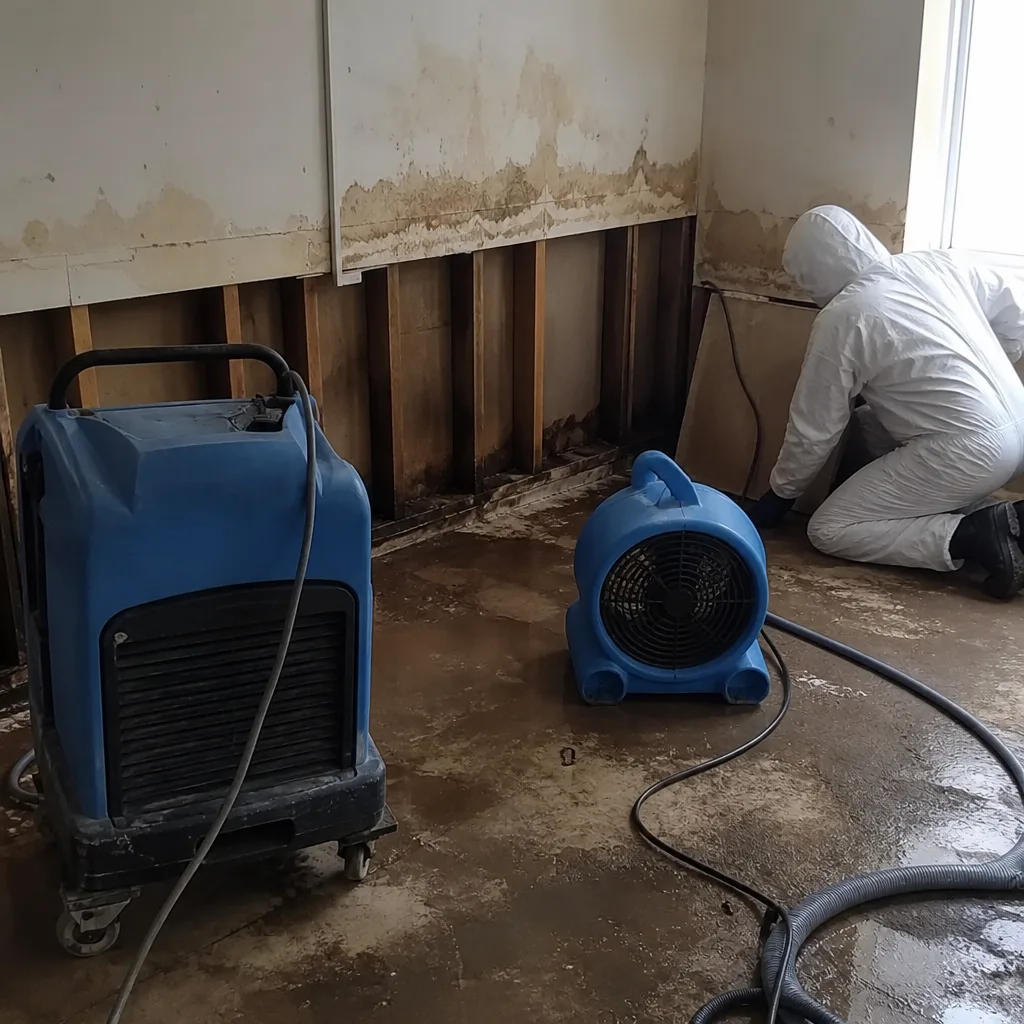 Before
 After