
Last updated October 30, 2026
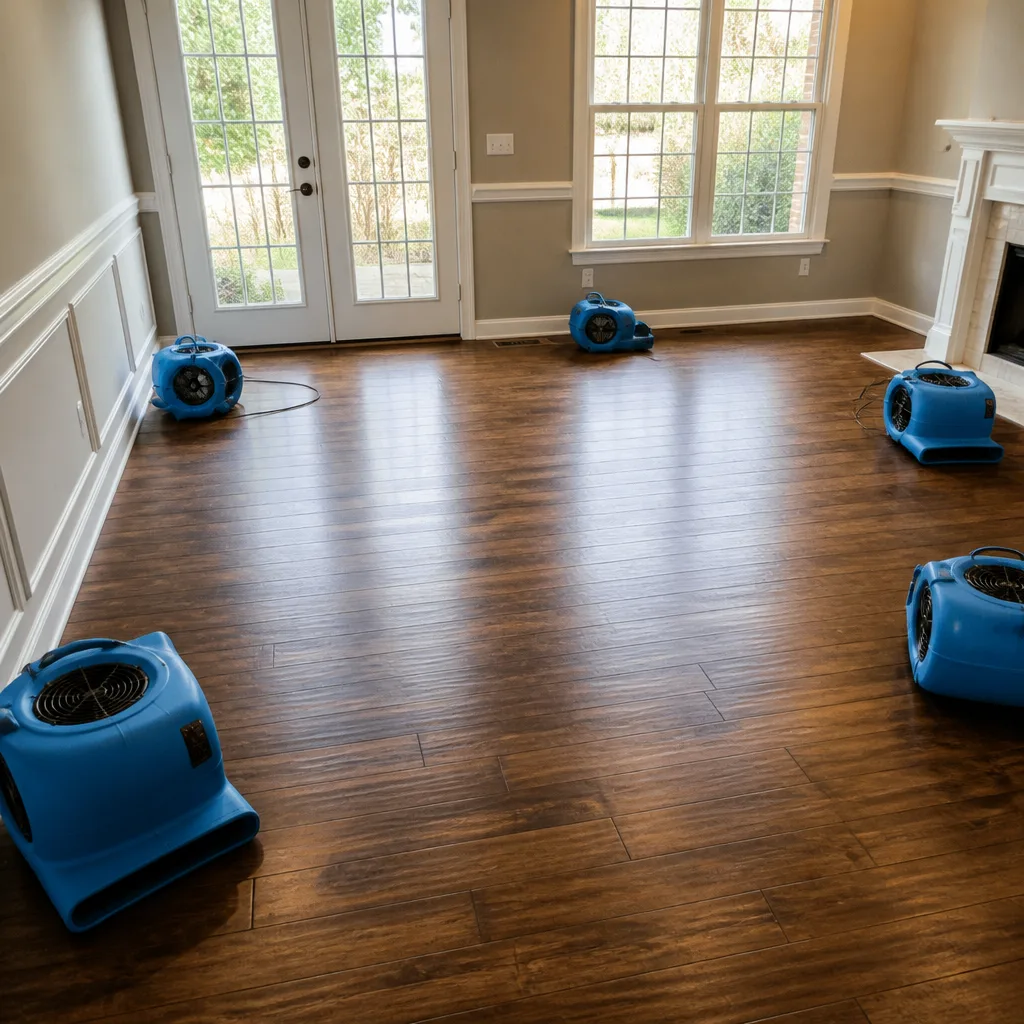 Water damage drying
 Fire & smoke cleanup
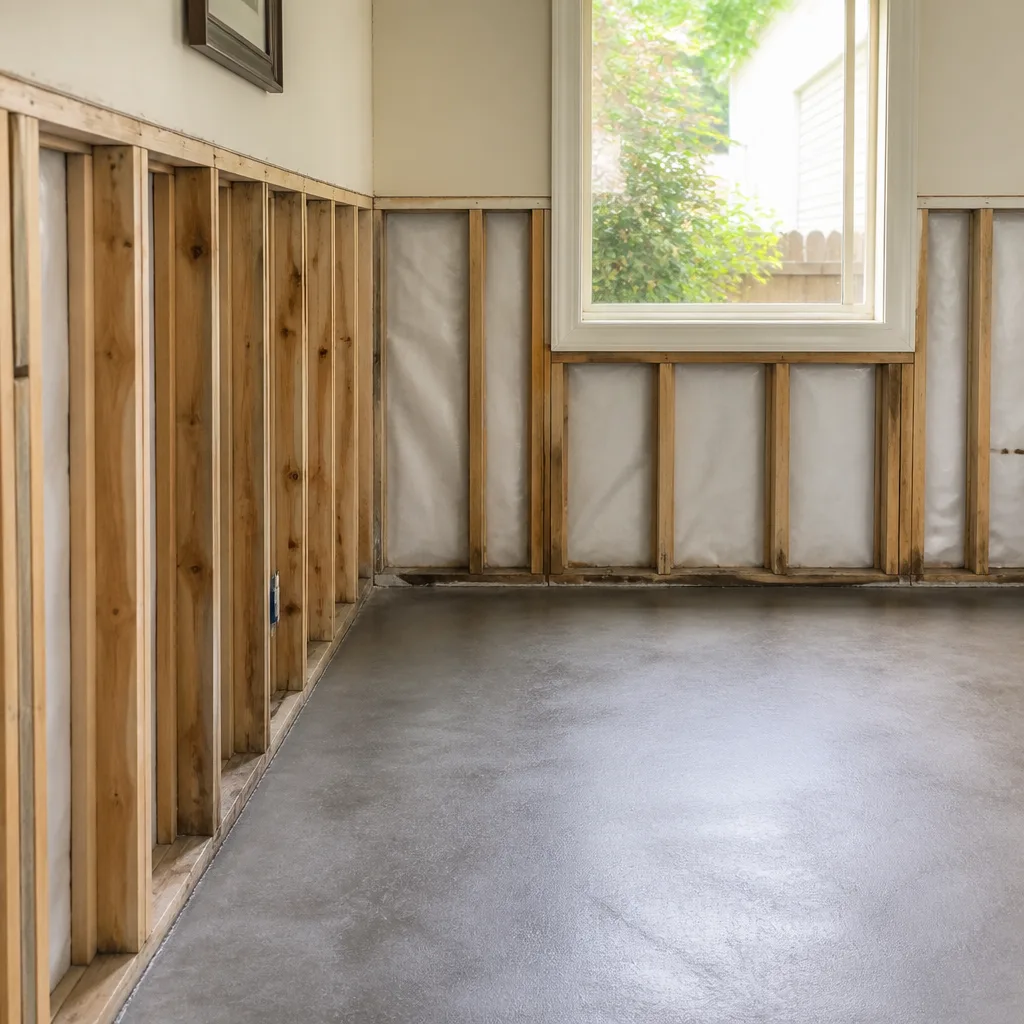 Mold remediation
 Storm response
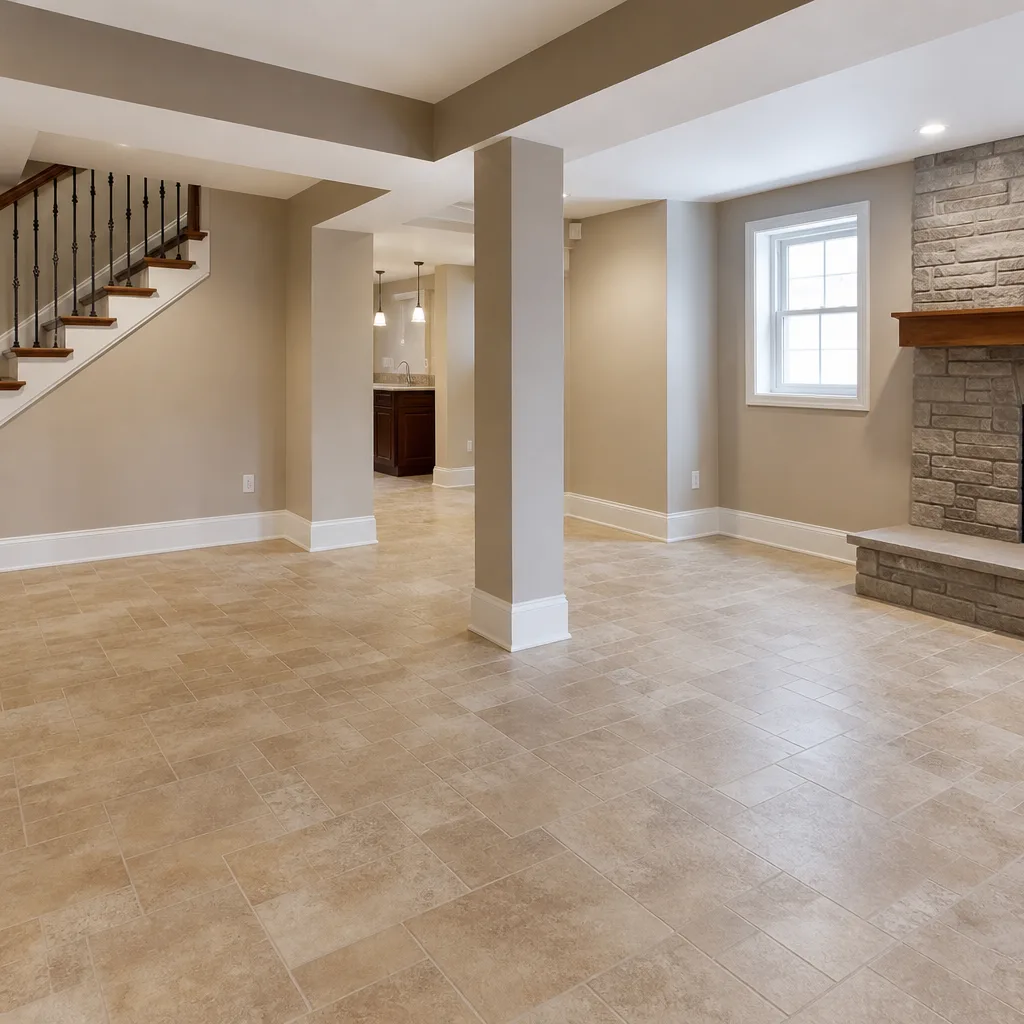 Sewage cleanup
 Reconstruction
Free visual inspection and a written scope of work before any mitigation begins - photos, moisture readings, and drying logs go in your claim file
The scope we write is the scope we bill. Anything new gets shown to you, in writing, before we touch it.
Get your free estimateDamage Restoration Warning Signs: A Sunrise Manor Homeowner’s Reference Guide
Most homeowners in Sunrise Manor don’t discover water damage by seeing standing water. They find it the way a cardiologist finds arterial plaque: through secondary symptoms that only make sense in hindsight. The desert’s low humidity, often below 15 percent, acts as a kind of cosmetic camouflage. It dries surface evidence so quickly that what remains visible looks like ordinary wear, while moisture continues migrating through drywall, base plates, and the porous block common to homes across the 89110, 89142, and 89156 ZIP codes. This reference teaches you to read the earlier indicators, the ones that surface days or weeks before the obvious stains appear. By the time you finish, you’ll know which signs mean call now, which mean monitor for 48 hours, and which are simply the house breathing in a high-desert climate.
Quick Answer
Water damage warning signs in a Sunrise Manor home include unexplained tile cracking on slab floors, horizontal stucco cracks at window corners, musty odors that appear only when the HVAC runs, and cabinet bases that swell near plumbing walls. The earliest indicators are often not stains at all but texture changes, odor patterns, and humidity readings that don’t match the season. If you see two or more of these signs in the same room, treat it as an active moisture event and investigate within 48 hours.
Restoration work we handle
Table of Contents
- Slab-on-Grade Foundation Signals Most Guides Miss
- Stucco and Exterior Wall Indicators Specific to Sunrise Manor
- HVAC and Ductwork Red Flags That Signal Hidden Moisture
- Reading Odor Patterns: Mold vs. Sewage vs. Sulfur
- The Category Decision Tree: Call Now or Monitor
- How Sunrise Manor’s Seasons Change the Warning Signs
- What to Document Before You Call Anyone
- Common Mistakes to Avoid
Slab-on-Grade Foundation Signals Most Guides Miss
Sunrise Manor sits on the eastern edge of the Las Vegas Valley, where residential construction is overwhelmingly slab-on-grade. There is no crawl space under your feet, no basement to inspect, no subfloor cavity where water can announce itself. When a supply line leaks inside a wall or beneath the slab, the first evidence is often not a wet spot but a hairline crack in a floor tile that had been stable for a decade.
Here’s what happens. Water migrating under tile loosens the thin-set bond in a pattern, not randomly. If you see cracks running in a roughly linear direction from a bathroom or kitchen wall toward the center of a room, that’s not settling. That’s a moisture path. The same logic applies to grout. In our experience across Sunrise Manor homes, grout discoloration that follows plumbing fixture lines, especially around toilets, showers, and kitchen islands, is a far earlier indicator than any visible dampness.
The Cabinet Base Test
Kitchen and bathroom cabinet bases are the canary in the coal mine for slab leaks. The toe kick, that recessed area at the bottom of a cabinet, is made from materials that absorb moisture readily and show it clearly. Run your fingers along the toe kick. Does it feel softer on one end than the other? Is the paint or laminate beginning to bubble in a pattern that follows the shape of a pipe? That’s moisture wicking up from the slab. You will almost never see it in the desert air because the exposed surface dries within hours.
- Open the cabinet doors under your kitchen sink and bathroom vanities.
- Press your thumb against the base panel with moderate pressure.
- Check for any give, softness, or a slight spongy feel compared to an adjacent cabinet.
- Look at the seam where the cabinet bottom meets the side panels for darkening.
- If you find softness, call a water damage restoration professional in Sunrise Manor before the cabinet structure fails.
Stucco and Exterior Wall Indicators Specific to Sunrise Manor
Stucco is the dominant exterior cladding across Sunrise Manor, and it fails in predictable ways that most guides written for wood-frame, vinyl-sided houses simply don’t cover. Stucco is a cement-based system, and when moisture gets behind it, the signs are visible at the seams and stress points, not in the middle of the wall. If you know what to look for on a Saturday morning walk around the house, you can catch an exterior intrusion months before it becomes an interior problem.
The single most reliable indicator is a hairline horizontal crack at the upper corner of a window or door. Stucco expands and contracts with temperature, and Sunrise Manor’s summer highs above 105°F followed by overnight drops of 30 degrees create constant thermal cycling. A vertical crack near a corner is usually just the house settling. A horizontal crack running along the top of a window frame means moisture has gotten behind the stucco and is forcing the cladding away from the substrate as it expands.
Reading the Weep Screed
At the bottom of every stucco wall, where the cladding meets the foundation, there is a metal flashing called a weep screed. Its job is to let water drain out and air circulate behind the stucco. When you see staining on the stucco directly above the weep screed, that’s moisture exiting the wall, not moisture entering from rain (which Sunrise Manor gets less than five inches of per year). Dark, rust-colored drip lines running down from the weep screed in a dry week is one of the clearest signals that water is trapped in your wall cavity, and it means call sooner rather than later.
HVAC and Ductwork Red Flags That Signal Hidden Moisture
Your air conditioner is the largest dehumidifier in your house, but it’s also the most likely place for moisture to hide. Sunrise Manor homes run AC systems hard from May through September, and the condensate those systems produce has to go somewhere. When it goes somewhere it shouldn’t, the signs show up in the air itself.
The most useful early indicator we see is what we call the “AC-only odor.” If the house smells fine when the system is off but produces a musty, earthy smell within 30 to 60 seconds of the blower starting, the smell is coming from inside the ductwork or the evaporator coil. That’s not a filter issue. That’s biological growth in a dark, humid chamber, and it spreads spores through the entire living space every time the system cycles.
Condensation on Supply Registers
Check the metal registers where conditioned air enters your rooms. Condensation on the register face in a dry desert climate is not normal. If the register is sweating, the air temperature differential is extreme, which usually means the register is sitting in a ceiling cavity or wall chase with moisture present. In Sunrise Manor, where ambient outdoor humidity rarely exceeds 30 percent, indoor condensation is almost always tied to a plumbing leak or an AC condensate problem, not weather.
The Smart Thermostat Tell
If you have a smart thermostat that tracks indoor humidity, use it. A baseline reading in a properly dry Sunrise Manor home runs between 20 and 35 percent relative humidity in summer, lower in winter. If you see unexplained spikes, particularly at night when the AC runs less, that moisture is being introduced from somewhere inside the structure. A 15-point jump that persists for more than a few hours is worth investigating. One caveat: if you’ve recently had a large gathering or cooked a big meal, that can explain a short-term bump. If the spike happens when the house has been empty, that’s structural.
Reading Odor Patterns: Mold vs. Sewage vs. Sulfur
Odor is the most reliable early warning system you have, but only if you can distinguish the three main categories. They’re distinct, and each points to a different source and a different urgency level.
Mold odor is earthy and organic, like damp soil or decomposing leaves. It’s also persistent; it doesn’t come and go with the wind. In a Sunrise Manor home, mold odor that appears in a room with no visible moisture is usually coming from inside a wall cavity, behind a baseboard, or under carpet padding. The smell is strongest in the morning when the house has been closed up all night.
Sewage odor is unmistakable once you’ve smelled it: it has a fecal, rotten-egg component mixed with something sour. This is not a nuisance smell; it’s a Category 3 biohazard indicator. In Sunrise Manor’s older neighborhoods, particularly those with original cast iron drain lines from the 1970s and 1980s, pipe deterioration under the slab is common. If you smell sewage and can’t locate the source within an hour, call a plumber and a water damage restoration team in Sunrise Manor the same day.
Sulfur odor (often described as rotten eggs) is different from sewage. If the smell is confined to one bathroom and appears when you run hot water, the likely culprit is the sacrificial anode rod in your water heater. It’s a maintenance issue, not a restoration issue. That said, sulfur odor that comes from floor drains or appears in multiple rooms can indicate a dried-out P-trap, which allows sewer gas into the home. The fix for that is pouring water into the drain to restore the trap seal. If the odor persists after that, the problem is deeper.
The Category Decision Tree: Call Now or Monitor
Restoration professionals classify water into three categories based on contamination level. Understanding this system gives you a practical framework for deciding how urgently to act. Here’s a simplified version any homeowner can apply.
Category 1: Clean water. This is water from a supply line, a tub overflow, or a leaking faucet. It’s clean at the source. If you catch it within 24 to 48 hours and dry the area thoroughly, you can often avoid major restoration work. Action: dry it, document it, monitor for 72 hours. If the area still feels damp or the odor develops, upgrade your response.
Category 2: Gray water. This is water that has been used but isn’t sewage: washing machine discharge, dishwasher overflow, shower drain backup. It contains bacteria and requires sanitizing, not just drying. Action: contain the spread, do not run fans across it (that spreads contamination), and call a professional within 24 hours. This is where the DIY approach starts creating more problems than it solves.
Category 3: Black water. Sewage, flood water from outside, or any water that has sat long enough to grow bacteria. This is a health hazard that requires PPE, containment, and professional remediation. Action: evacuate the area, keep children and pets away, and call immediately. Do not attempt to dry this yourself.
- Identify the source. If you can’t see the source, that alone is a warning sign.
- Classify the water: clean, gray, or black.
- Check the area with the back of your hand for dampness you can’t see.
- If Category 1 and caught within 24 hours: dry and monitor.
- If Category 2 or 3, or any category older than 48 hours: call a professional.
How Sunrise Manor’s Seasons Change the Warning Signs
The high desert climate doesn’t just hide water damage, it changes how damage presents across the year. Understanding the seasonal pattern helps you calibrate what’s a red flag and what’s a false positive.
Summer (June to September): This is the season of hidden leaks. AC usage is constant, indoor humidity is artificially low, and surface drying happens in hours, not days. The warning signs that matter most in summer are the AC-only odor, smart thermostat humidity spikes, and cabinet base softness. Stains are least likely to appear during these months, which means visible staining in July or August is a sign of serious, ongoing water volume.
Monsoon season (July to September): Sunrise Manor gets occasional heavy downpours that overwhelm drainage systems designed for a dry climate. Roof flashing, window seals, and door thresholds that have been dry for eleven months suddenly get tested. This is when you’ll find exterior intrusion issues. Check your weep screed staining after the first major monsoon event of the summer.
Winter (December to February): Furnace season changes the moisture dynamics. Cold air holds less moisture, so indoor humidity drops further. But if your home has a plumbing leak, winter is when it shows up in the tile and grout, because the temperature differential between the water in the pipes and the surrounding slab creates condensation inside the wall assembly. Winter is also when we see more pipe bursts in Sunrise Manor, particularly in the older neighborhoods where original copper supply lines have corroded over 40 years of hard water.
What to Document Before You Call Anyone
The first 90 minutes after you discover water damage determine how smoothly your insurance claim processes. We’ve worked with enough adjusters to know exactly what they need, and the key is photo documentation taken before anything is moved, removed, or dried.
- Photograph everything from multiple angles before touching anything. Wide shots that establish the room, then close-ups of the damage. Your phone timestamp is your friend.
- Photograph the source if you can find it. The cracked fitting, the failed water heater connection, the separated drain pipe. Adjusters need to see the cause, not just the effect.
- Document the category of water. If there’s any chance of gray or black water, note it in writing. This determines the scope of remediation.
- Keep a written timeline. When you first noticed the issue, what the humidity has been, what you’ve done so far. Adjusters respond well to organized homeowners.
- Don’t discard damaged materials until they’ve been documented. Carpet pad, drywall cutouts, baseboards. These are evidence for the claim.
Most restoration companies, including ours, coordinate directly with insurance adjusters and provide the photo documentation as part of the scope of work. This is where mold remediation in Sunrise Manor and water damage restoration work together: the documentation required for a successful claim is the same documentation required for a successful restoration.
Common Mistakes to Avoid
- Assuming no stain means no damage. In Sunrise Manor’s dry air, this is the single most expensive mistake homeowners make. Moisture wicks through drywall and base plates invisibly for weeks. The absence of a stain is not the absence of water.
- Pointing household fans at the wet area. This circulates moisture through the entire room and accelerates mold growth in areas that were previously dry. Professional drying requires calculated airflow and dehumidification, not a box fan from the garage.
- Treating a sewage backup as a plumbing-only problem. A plumber fixes the pipe. They don’t remediate the contamination. Category 3 water requires sanitization, containment, and professional drying. Skipping this step means living with residual pathogens in your walls.
- Waiting to file an insurance claim. Most policies have a duty to mitigate damages. Waiting days to call means the insurer can argue that your inaction increased the scope of loss. Call within 24 hours of discovery.
- Using a consumer-grade moisture meter and trusting it. The $30 meter from the hardware store measures surface moisture and gives you a false sense of confidence. Professional restoration uses penetrating and hygrometer-based measurement tools that read moisture inside wall cavities and under flooring.
- Assuming mold is a separate problem from water. Mold is a consequence of water. If you find mold, you’re finding a water source that’s been there for days or weeks. Treat the water, not just the mold. A mold remediation team in Sunrise Manor that doesn’t address the moisture source is only doing half the job.
- Painting over a water stain without investigating. The stain will return, but by then the damage will be twice as extensive. Paint is not a barrier against moisture migration. If you’re painting over a stain, you’re hiding a warning sign, not solving the problem.
When to Call a Professional
Call when the water category is anything other than clean and recent. Call when you can smell something you can’t see. Call when two or more of the warning signs in this guide appear in the same room. Call when the moisture is beneath flooring, inside walls, or under cabinets. Call when your insurance company asks for professional documentation. In all these cases, the cost of professional assessment, which is typically free, is a fraction of the cost of allowing the damage to compound. Ashworth Water Damage offers free estimates in Sunrise Manor, and our home damage restoration services cover water, mold, and fire from a single certified team. Call (833) 734-7202 to schedule an assessment.
See the difference
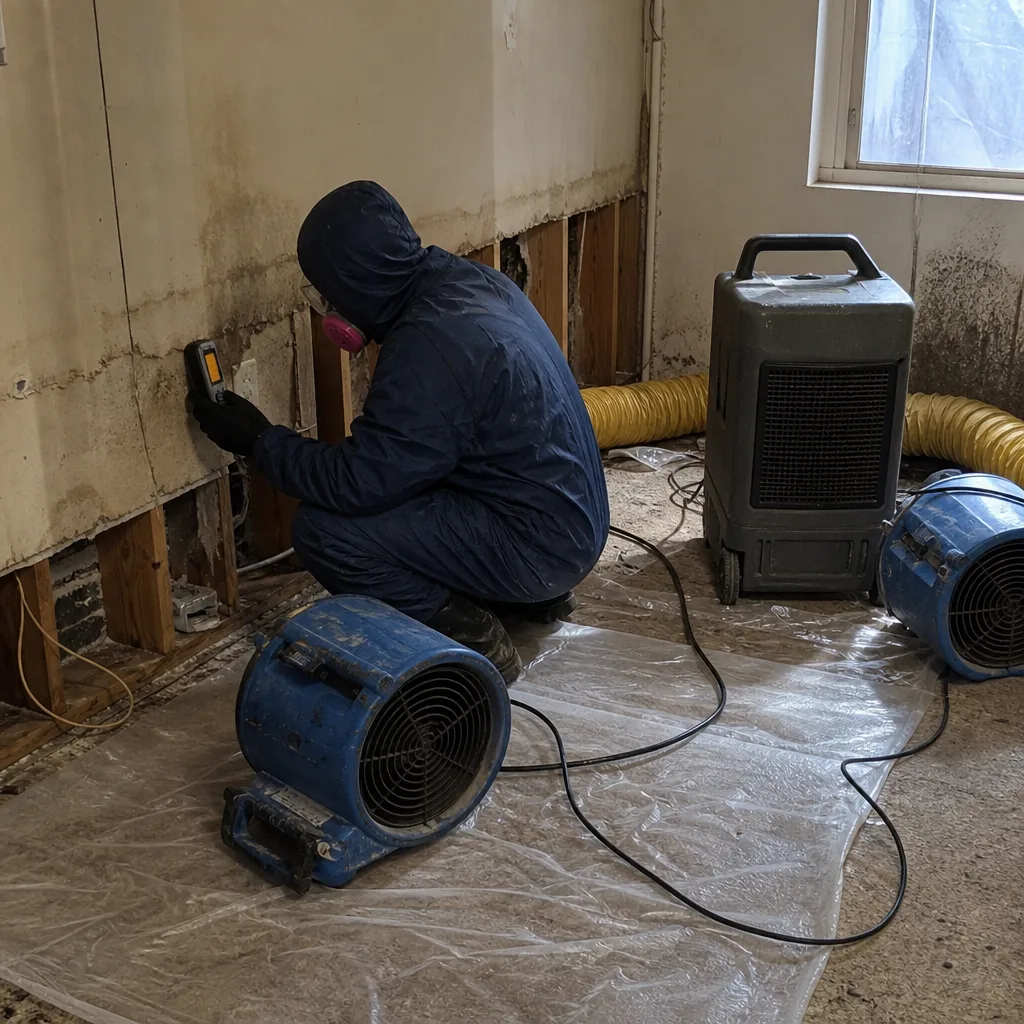 Before
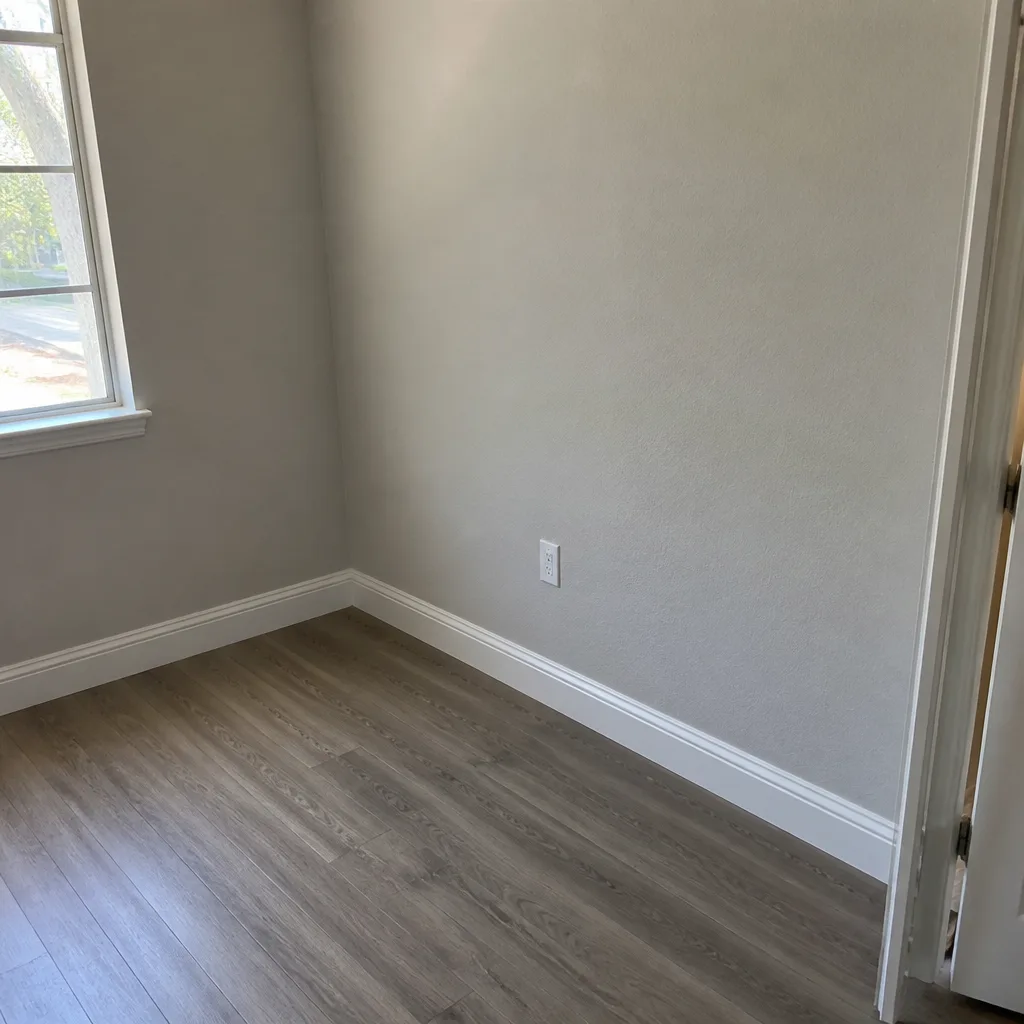 After
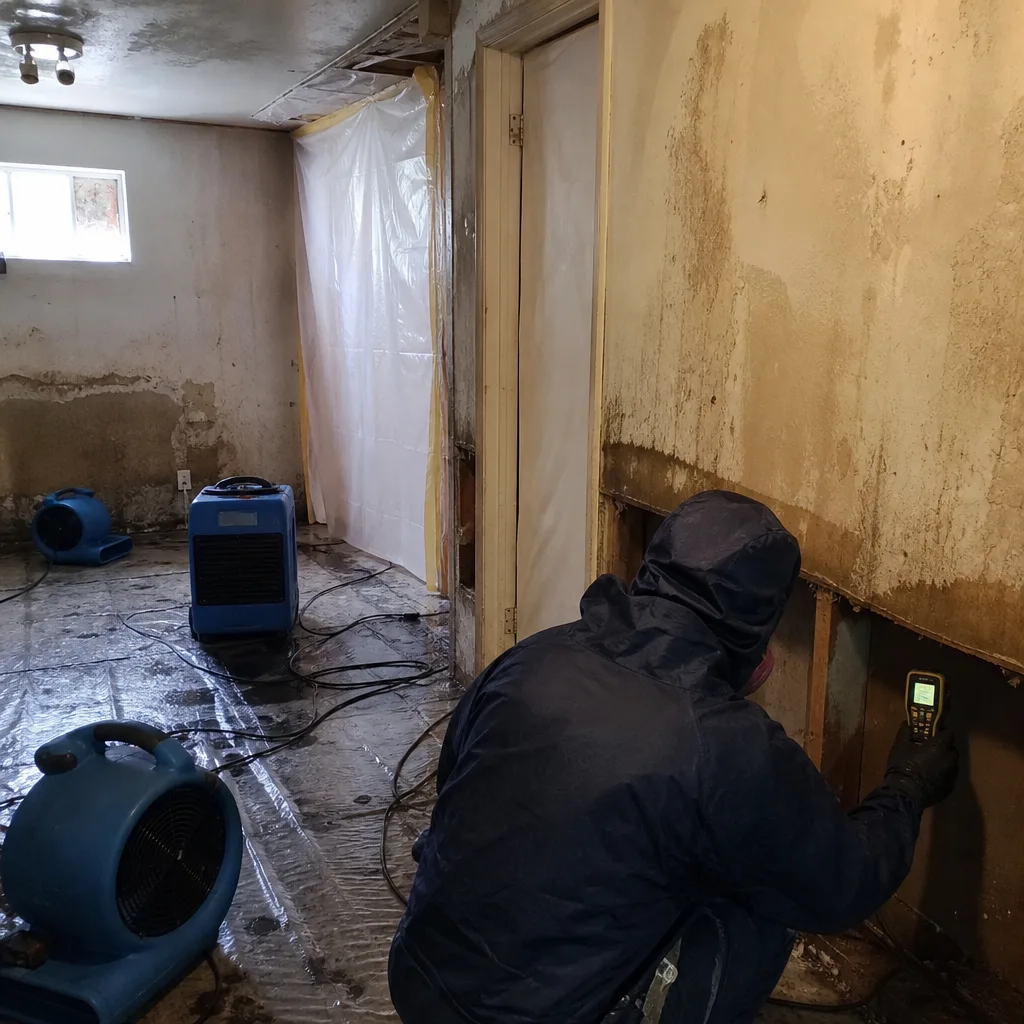 Before
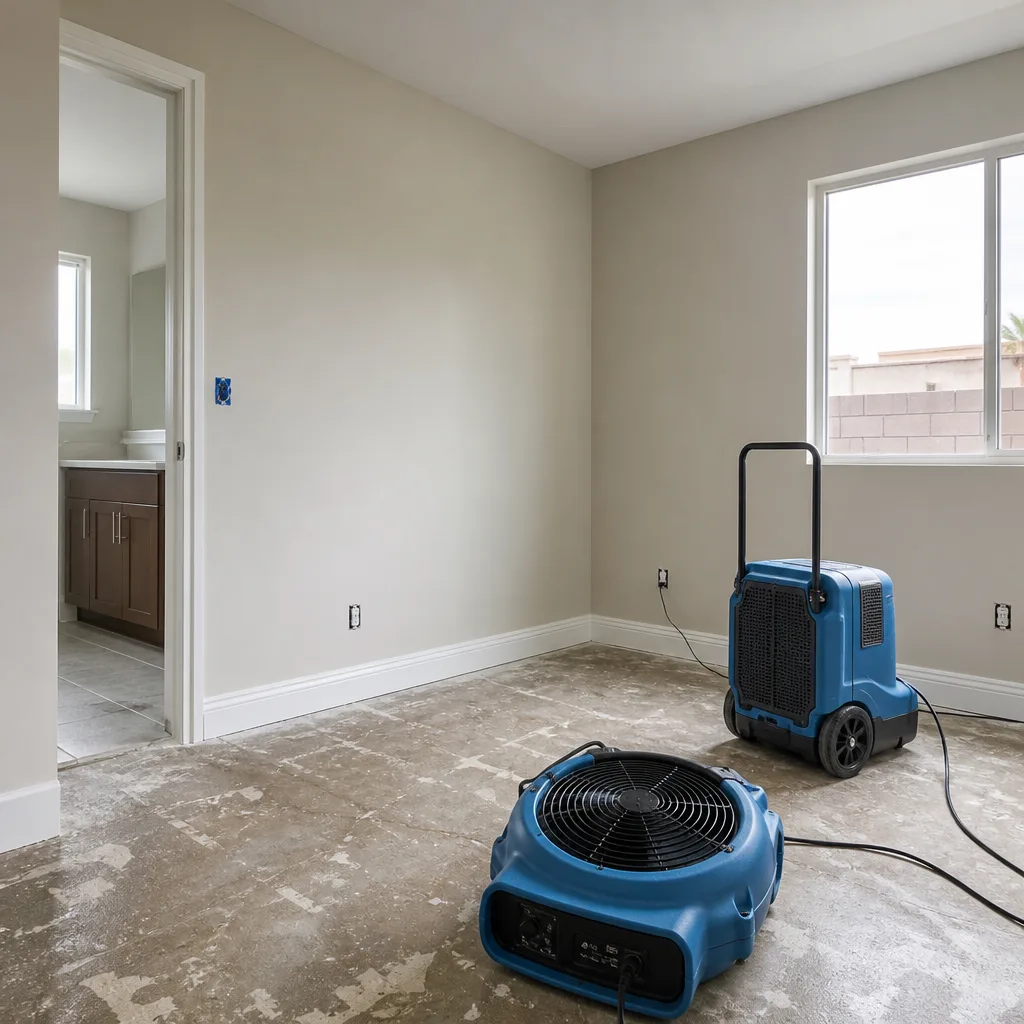 After
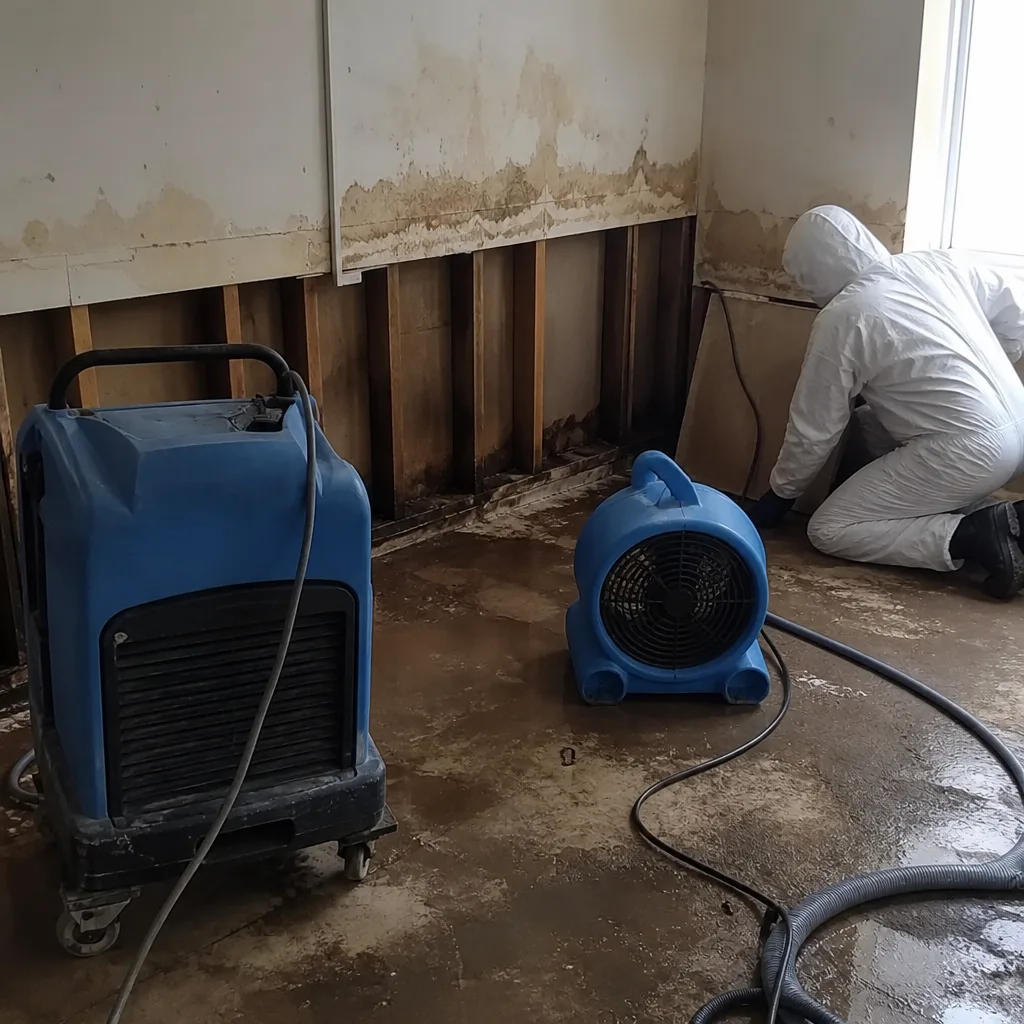 Before
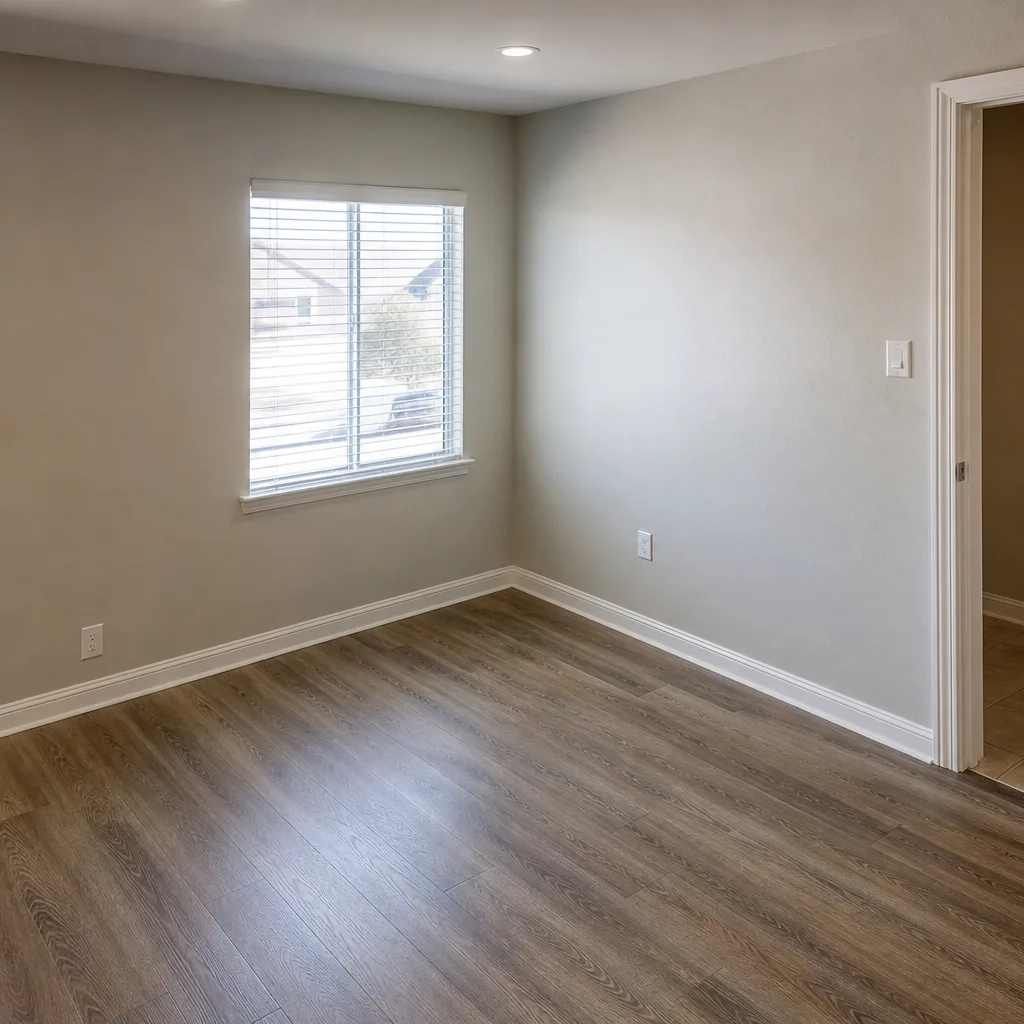 After
Frequently Asked Questions
Look for the non-visual indicators first: an AC-only musty odor, unexplained humidity spikes on your thermostat, cabinet toe kicks that feel soft, and floor tile cracking in linear patterns from plumbing walls. In Sunrise Manor’s dry climate, hidden damage rarely announces itself with a visible stain until it’s extensive. Check all four of these signals in any room where you suspect an issue.
On stucco, water damage appears as horizontal hairline cracks at upper window and door corners, plus rust-colored staining on or below the weep screed at the bottom of the wall. Both signals mean moisture is trapped behind the cladding and expanding with temperature swings. Vertical cracks are usually cosmetic; horizontal cracks are not.
No. The surface moisture evaporates quickly in Sunrise Manor’s low humidity, but the water that has wicked into drywall, wood framing, and concrete does not. It remains trapped inside materials, where it continues to degrade structural integrity and create conditions for mold. What looks like the problem going away on its own is actually the problem moving deeper into the structure.
Mold growth can begin within 24 to 48 hours in the right conditions, and the inside of a wall cavity stays far more humid than the desert air outside it. This is why fast response matters even in a dry climate. The visible surface may be dry, but the interior of the wall can be at 60 percent relative humidity or higher for days or weeks. For homes dealing with this issue, mold remediation in Sunrise Manor starts with finding and fixing the moisture source.
Most standard homeowner’s policies cover sudden and accidental water damage, including hidden leaks from plumbing. They typically do not cover damage from long-term neglect or lack of maintenance. This is why documentation matters so much: showing that you acted promptly once you discovered the issue makes a claims adjuster far more likely to approve the full scope of the claim. If the damage was caused by a fire, fire damage restoration in Sunrise Manor is typically covered as a separate peril.
A water stain is a historic record; active water damage is a current event. Test the area with the back of your hand: if it feels cool or damp compared to the surrounding material, the moisture is active. If the stain is dry and brittle with no odor and no softness, it may be from a previous issue that was resolved. When in doubt, use a moisture meter or have a professional assessment done. Active water damage will grow, spread, and continue to degrade materials; a dry stain will not.
The Bottom Line
The desert is not protecting your Sunrise Manor home from water damage; it’s disguising it. The same low-humidity air that makes the heat feel bearable dries surface indicators in hours, while moisture continues its slow migration through block, drywall, and slab. Reading the earlier signals, the tile cracks, the toe kick softness, the AC-only odor, the weep screed staining, the thermostat humidity spikes, is the difference between a $500 drying job and a $15,000 reconstruction. Learn these signs. Check them monthly. And when two or more appear in the same room, call a professional before the evidence disappears.
Written by the team at Ashworth Water Damage, serving Sunrise Manor since 2018.