Last updated October 30, 2026
 Water damage drying
 Fire & smoke cleanup
 Mold remediation
 Storm response
 Sewage cleanup
 Reconstruction
Free visual inspection and a written scope of work before any mitigation begins - photos, moisture readings, and drying logs go in your claim file
The scope we write is the scope we bill. Anything new gets shown to you, in writing, before we touch it.
Get your free estimateHow to Hire a Damage Restoration Contractor in Sunrise Manor: A Step-by-Step Guide
Nevada law does not require a specialty restoration license. Only a general contractor’s license. That means the person arriving at your Sunrise Manor home with a moisture meter and a clipboard may have zero formal training in drying science, mold containment, or structural repair. You can’t fix that problem at 2 a.m. when a supply line has burst and water is running through your ceiling. But you can fix it now, before the emergency happens. This guide walks through exactly how to vet, verify, and hire a damage restoration contractor in Sunrise Manor the right way, whether you’re dealing with a current loss or preparing for the next one.
Quick Answer
To hire a damage restoration contractor in Sunrise Manor, verify their Nevada State Contractors Board license and confirm it’s active with no disciplinary actions, check for IICRC certification and ask which technician will actually run your job, demand a written scope of work that lists specific equipment and moisture-log commitments, and never sign anything from a contractor who appeared unsolicited after a storm. Start with the license lookup, then verify credentials, then review the contract line by line.
Key takeaways:
- Check every contractor against the Nevada State Contractors Board database before signing anything
- IICRC certification is the industry’s recognized credential for restoration, but verify the technician assigned to your job holds it, not just the company
- Three contract clauses separate professional restoration firms from storm-chasers: written scope, moisture-log commitments, and third-party inspection rights
- “Insurance preferred vendor” means the contractor has a relationship with the insurer, not that they work for you
- Sunrise Manor’s monsoon season and aging pipe infrastructure create predictable periods when unqualified operators flood the market
Restoration work we handle
Table of Contents
- The Nevada License Lookup That Most Homeowners Skip
- What Certifications Actually Mean: IICRC, RIA, and Beyond
- Three Contract Clauses That Separate Professionals from Storm-Chasers
- The Truth About “Insurance Preferred Vendor” Lists
- Red Flags During Sunrise Manor Surge Periods
- A 7-Step Hiring Process You Can Run in Under an Hour
- Questions to Ask Before You Sign
- Common Mistakes to Avoid
The Nevada License Lookup That Most Homeowners Skip
Every legitimate restoration contractor operating in Sunrise Manor must hold a contractor’s license through the Nevada State Contractors Board. The lookup process takes under five minutes, but most homeowners never run it. They Google a company, see a professional website, read two reviews, and call. That’s how unlicensed operators get work. Run the license lookup first.
Here’s the issue with Nevada’s licensing for restoration specifically: there is no dedicated restoration classification. A contractor doing water damage remediation, mold abatement, or fire cleanup typically works under a general building classification (Class B), a specialty classification, or occasionally under a residential remodeling designation. Some will list themselves under a classification that has nothing to do with drying science or containment protocol, and the state board is fine with that. The license proves the contractor can legally perform construction work in Nevada. It does not prove they know how to map moisture migration through a slab or set up negative air for mold containment.
How to run the check:
- Go to the Nevada State Contractors Board website and open the license lookup portal
- Search by the exact business name as it appears on any document they give you
- Confirm the license status says “Active” with no pending actions
- Check the license expiration date and make sure it covers your project timeline
- Look at the classifications listed. If you see a classification that seems unrelated to repair or construction, ask the contractor to explain what work they’re actually authorized to do under it
- Note any past disciplinary actions. Minor infractions from ten years ago aren’t automatically disqualifying, but a pattern of consumer complaints is
We’ve talked with Sunrise Manor homeowners who hired a “restoration” company that turned out to have a pool plastering license. Their technician used a fan and a shop vac on a sewage loss. The moisture stayed. The smell came back in three weeks. The next company had to tear out twice the drywall. The lesson: a license lookup is the floor, not the ceiling. Run it, then keep verifying.
If you’re dealing with active water damage right now, start here: Water Damage Restoration in Sunrise Manor explains what proper response looks like in the first 48 hours.
What Certifications Actually Mean: IICRC, RIA, and Beyond
IICRC certification is the restoration industry’s most recognized independent credential. It means the holder has passed standardized testing on cleaning and restoration standards and committed to ongoing continuing education credits. But there’s a gap that matters for you: an IICRC-certified company does not mean IICRC-certified technicians on every truck. The certification belongs to individuals, not companies. A firm can legitimately say “IICRC-certified” because the owner holds the designation. The person running your job might have started last Tuesday.
Here’s the distinction that matters:
- WRT (Water Damage Restoration Technician) is the baseline certification for someone performing water mitigation. It covers drying science, equipment placement, and moisture documentation
- ASD (Applied Structural Drying) is the advanced credential for technicians managing complex drying projects involving structural cavities, hardwoods, and multi-level moisture mapping
- AMRT (Applied Microbial Remediation Technician) is the mold remediation designation. Someone holding this certification understands containment protocols, air scrubber operation, and post-remediation verification
- RIA membership (Restoration Industry Association) signals the company subscribes to the trade association’s business standards and ethics code. It’s an organizational commitment, not a technician-level certification
When you call a restoration contractor in Sunrise Manor, ask which technician will be assigned to your job and whether that specific person holds WRT or ASD. If the answer is vague (“our team is certified”), keep calling. If the company can name the technician and their credential, that’s a workable signal. In our experience, asking this one question eliminates a meaningful share of the companies that will show up with consumer-grade equipment and a fan.
For more on what restoration work should look like when done to standard, see our guide on Water Damage Restoration in Sunrise Manor and our approach to Mold Remediation in Sunrise Manor.
Three Contract Clauses That Separate Professionals from Storm-Chasers
When a restoration company sends you a contract, most homeowners check the price and scan the cancellation policy. Storm-chasing operators count on that. The clauses that matter for your outcome are buried in the middle, and they usually get skipped. Professional restoration contractors include them by default. Under-qualified operators avoid them because they create accountability.
The three clauses to look for before you sign anything:
- Scope-of-work specificity. A professional contract describes the work in terms you could show to any other restoration firm and they’d understand the plan. It lists affected areas, the category of water loss, the equipment to be deployed, the drying goal, and the expected monitoring schedule. A storm-chaser contract says “water drying services” or “mitigation and repair” with a price. If the scope isn’t specific, you can’t hold anyone accountable for incomplete work.
- Moisture-log commitments. This is the clause that separates real drying science from guesswork. A professional restoration firm commits to documenting moisture levels daily, comparing them against a dry standard, and sharing those readings with you or your adjuster. The contract or its attachments should reference daily monitoring. If no one mentions a moisture log, the company is planning to set fans and disappear.
- Third-party inspection rights. Professional contractors will allow you to bring in an independent inspector or qualified third party to verify the work at your own expense. This clause is rarely invoked, but its presence changes behavior. Companies that refuse third-party inspection rights, especially on large claims, are signaling that their work may not survive outside scrutiny.
Here’s what we see in Sunrise Manor after a heavy monsoon event or a widespread pipe failure: contractors appear within hours, sign homeowners to contracts within days, and cut corners that no one notices until the musty smell returns months later. Those jobs share a common feature. The contracts were thin. Three paragraphs, a price, a signature line. When you spot that, walk away. If you’re currently evaluating a water loss, read the section on Water Damage Restoration in Sunrise Manor for what a proper scope actually looks like.
The Truth About “Insurance Preferred Vendor” Lists
Insurance carriers maintain networks of preferred restoration vendors. When you file a water or fire claim, the adjuster may suggest a company from that list. The framing is usually reassuring: “this company has passed our screening.” What’s less often explained is what the preferred status actually means for your interests.
Here’s the mechanics that homeowners rarely see:
A restoration contractor becomes a preferred vendor by agreeing to the insurer’s pricing schedule and documentation requirements. That arrangement benefits the insurer in three ways: predictable pricing, standardized paperwork, and faster claim processing. It also benefits the contractor: steady work flow without marketing costs. What it does not do is guarantee the contractor answers to you.
On any insurance restoration job, there’s a three-way relationship: the homeowner, the insurer who pays the bill, and the contractor who does the work. When the contractor is on the insurer’s preferred list, that relationship tilts toward the insurer. The contractor may frame a scope of work that fits the insurer’s formula rather than what the home actually needs. If there’s disagreement, which party is the preferred vendor more likely to accommodate? Not the one with one claim.
Protecting your interests when working with a preferred vendor:
- Request the full written scope, not the insurer’s line-item estimate. Compare it against the damage you can see. Ask questions about gaps
- Document everything with photos and notes before mitigation starts. Your own file matters if the adjuster’s file is incomplete
- Ask if you can use a restoration contractor outside the preferred network. Nevada law generally allows you to choose your own contractor. The insurer may still only pay its approved amounts, but you have the right to select who does the work
- If you bring in a non-preferred contractor, get their scope in writing before work begins, and share it with the adjuster in writing. This closes the “they didn’t approve it” loop that often derails claims
One more dynamic worth understanding: not being on the preferred list does not signal low quality. Some of the most technically capable restoration firms in Southern Nevada choose not to accept insurer pricing schedules. They work for the homeowner, bill the insurer directly, and let the adjuster negotiate with the carrier. That arrangement can work in your favor, especially on complex losses where a formula-driven scope would leave hidden moisture behind.
Red Flags During Sunrise Manor Surge Periods
Sunrise Manor’s geography and infrastructure create two predictable windows when unqualified restoration operators flood the market: monsoon season, when storms overwhelm drainage and flooding sends homeowners into panic mode, and cold snaps, when aging pipes in homes built in the 1970s and 1980s fail. During those windows, the volume of available work exceeds the supply of qualified contractors. That gap fills with whoever has a truck and a marketing budget.
Red flags specific to surge-period hiring in Sunrise Manor:
- Door-to-door solicitation after a storm. Legitimate restoration firms in Southern Nevada rarely canvas neighborhoods after weather events. They’re booked on inbound calls. Someone knocking on your door within 48 hours of a storm with a “free inspection” offer is selling, not restoring
- “We’re doing houses in your area” with no local address. Ask for their physical office location. Many surge operators work from out of state and rent equipment locally. If they can’t give you a Sunrise Manor or Las Vegas Valley address, that’s a problem for accountability
- Immediate pressure to sign. “We need a signature today to secure the crew” is almost never true for a legitimate restoration firm. Established companies want you to verify their license and read their contract. Pressure is a sales tactic
- Large upfront payments. For insurance restoration work, professional companies bill the insurer and collect your deductible later. A demand for thousands of dollars upfront, before any documented work begins, is a warning signal
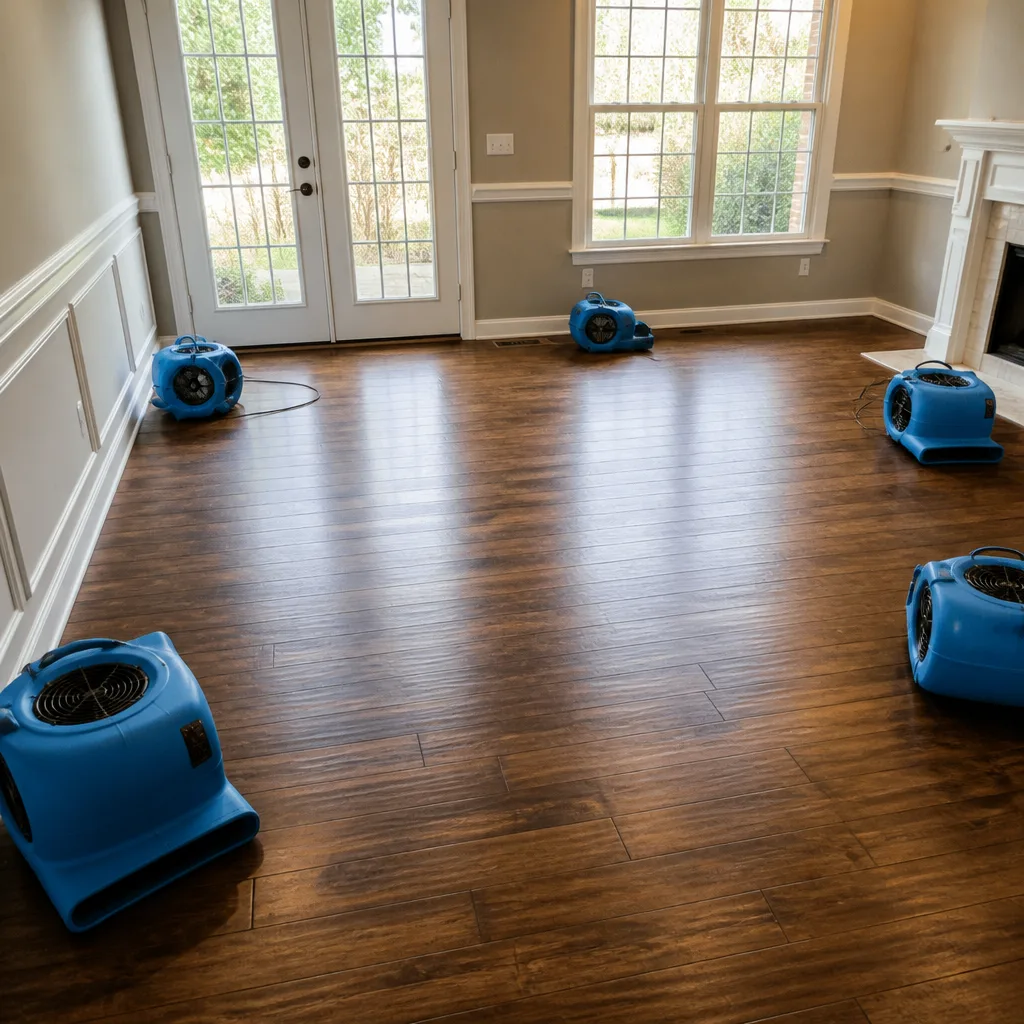
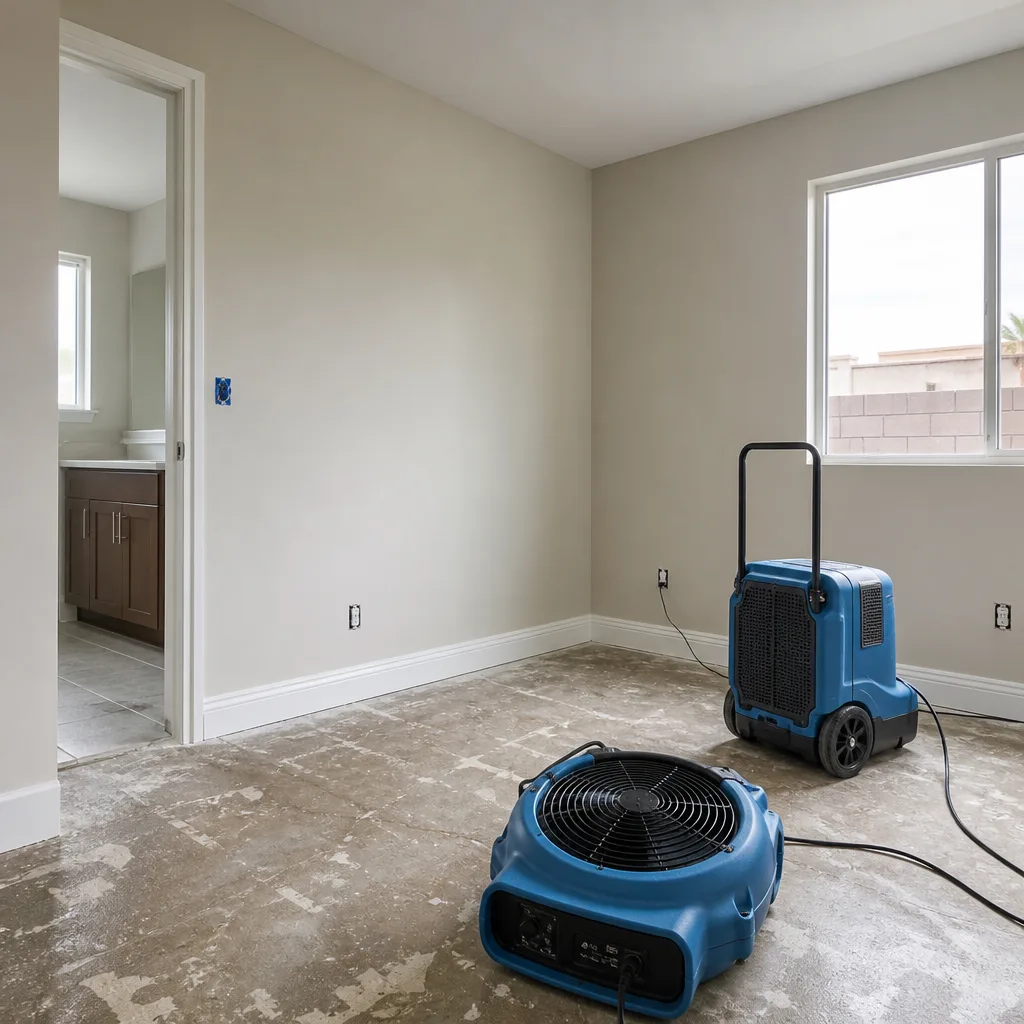
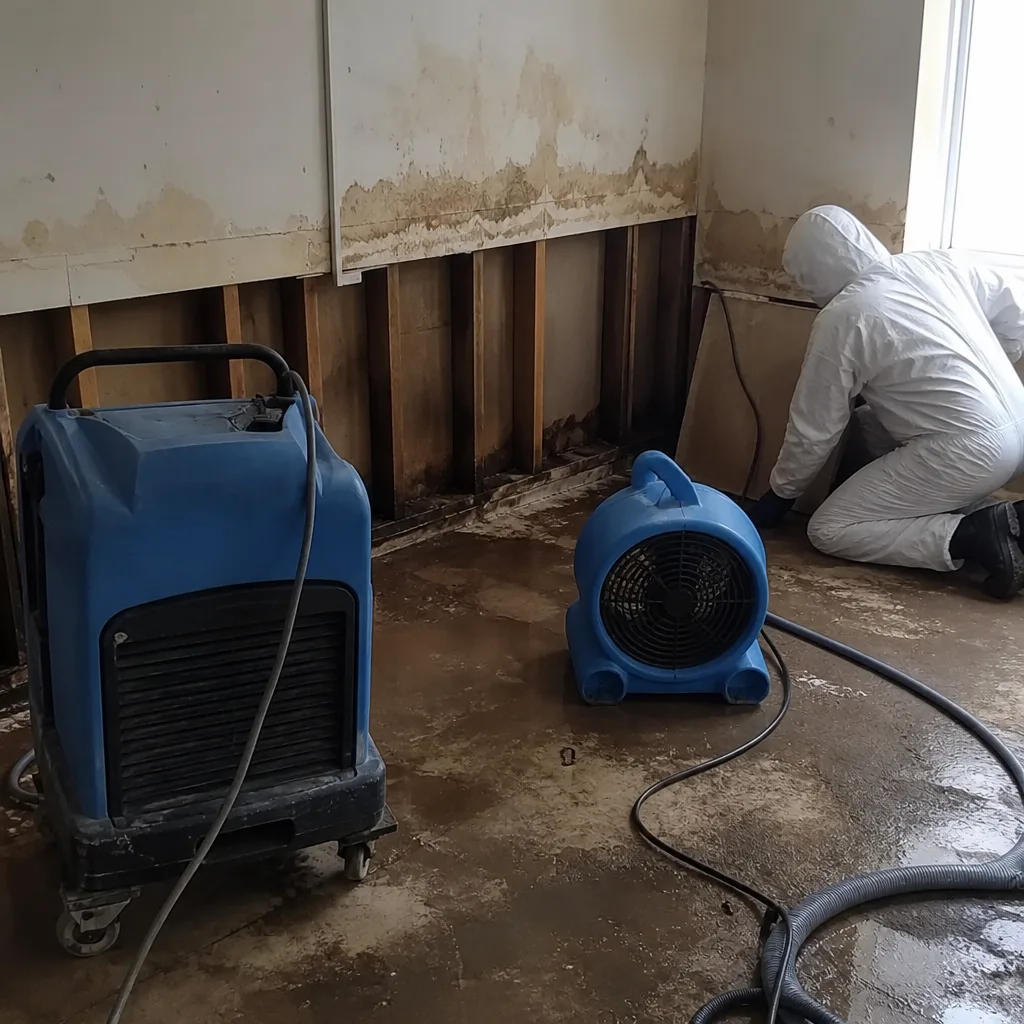
- Equipment you could rent yourself. If the arriving crew carries consumer-grade fans and a dehumidifier from a rental counter, they’re not running a professional drying protocol. Commercial restoration equipment has identifying brands you can see: Dri-Eaz, Phoenix, XPOWER, B-Air, and Injectidry among them
Monsoon flooding in Sunrise Manor brings in outside operators from Arizona and California. Some are qualified, many are not. The Nevada State Contractors Board database is your filter, because out-of-state companies often skip Nevada licensing entirely. Run the lookup every time. Slow hiring down is the point; you can act quickly without skipping verification. For a full explanation of what proper water response looks like, read our guide on Water Damage Restoration in Sunrise Manor.
A 5-Step Hiring Process You Can Run in Under an Hour
Hiring a restoration contractor in Sunrise Manor doesn’t require spreadsheets or a committee. It requires five steps executed in order, without skipping, regardless of how urgent the situation feels. Most of these can be completed from your phone while a crew keeps the water contained until you’ve made an informed decision.
- Run the Nevada State Contractors Board lookup. Confirm an active license, check expiry, note classifications, review disciplinary history. If the company isn’t in the database, stop. Move on. This takes five minutes and eliminates unlicensed operators
- Verify IICRC certification for the specific technician. Call the company and ask, “Which technician will lead my job, and do they hold a current WRT or ASD certification?” If you get a specific name and credential, ask for their IICRC number and verify it on the IICRC website. If you get vague wording, move to the next company
- Request a written scope of work before signing. A professional contractor will describe affected areas, loss category, equipment plan, drying goals, and monitoring schedule. If the “contract” is three paragraphs and a price, reject it. Ask for specificity in writing
- Ask about moisture monitoring and documentation. The company should commit to daily moisture readings, recorded and shared. If they can’t explain their monitoring protocol in one clear sentence, their drying approach is guesswork
- Confirm the equipment brands. Professional restoration firms run commercial-grade equipment from manufacturers like Dri-Eaz, Phoenix, XPOWER, B-Air, and Injectidry. Ask what equipment will be deployed and who owns it. Rental-equipment-only operators are rarely restorers; they’re renters who will bill you for equipment they don’t understand
This process works whether you’re handling an active water loss or preparing for one. The five steps are the same on a Tuesday in March or during a July monsoon event. The only variable is how fast you run them. For more on what proper equipment and drying standards look like in practice, read about Water Damage Restoration in Sunrise Manor and our Ashworth Water Damage home page.
Questions to Ask Before You Sign
You don’t need to become a restoration expert to hire a competent contractor. You need to ask questions that make unqualified operators uncomfortable and let qualified ones talk comfortably. Here’s the list we recommend, drawn from the realities of Sunrise Manor losses and the gaps we see in contracts signed too quickly.
- “What specific certifications does the technician assigned to my project hold?” Not the company, not the owner. The individual who will stand in your living room and run the equipment. If they can’t name the technician and the credential, the answer is no.
- “Explain your drying protocol for this type of loss.” A professional can explain this in plain language: how they’ll map moisture, where equipment goes, how they’ll know when it’s dry. A storm-chaser fumbles on this question.
- “Will I receive daily moisture readings, and can I share them with my adjuster?” If the answer is anything other than a clear yes, you’re hiring someone who hopes you don’t inspect their work.
- “What are the possible secondary damages if this isn’t dried correctly?” A qualified contractor will mention structural compromise, mold, odor, and maybe the equipment used to prevent those outcomes. An unqualified one will reassure you that “this is simple.” It rarely is.
- “Do you handle insurance claims directly with the adjuster, including photo documentation?” Most legitimate restoration firms in Southern Nevada do. If the answer is no, the paperwork burden falls on you, at the worst possible time.
- “For mold, what containment process do you use?” This should trigger a specific answer about negative air, containment barriers, and air scrubbers. If the answer is “we spray it and paint over it,” that’s a flag. For detail on this, see our page on Mold Remediation in Sunrise Manor.
This list will take you ten minutes on the phone. It will save you from weeks of unresolved problems.
Common Mistakes to Avoid
- Signing the first contract you receive. In surge periods, homeowners sign whatever arrives first because the water is alarming. That’s the exact time to slow down. Take the extra thirty minutes to run the license lookup and ask the certification question
- Assuming insurance preferred vendors are pre-vetted for quality. Preferred status is a business relationship, not a quality certification. Apply the same verification steps to a preferred vendor you’d apply to a door-knocker
- Skipping the written scope. A verbal promise isn’t enforceable when the moisture returns and the contractor has moved on. Written scope, or no signature
- Hiring separate contractors for water, mold, and fire without a plan. After a water loss, mold can develop in days. After a fire, water from suppression causes secondary water damage. A firm that handles all three in-house saves coordination overhead and reduces the chance that one contractor blames the other for failures. For the full picture of what we handle, see Fire Damage Restoration in Sunrise Manor
- Ignoring your own documentation. You don’t need professional gear to photograph standing water, wet drywall, and stained ceilings. Those photos become evidence if a claim gets complicated or a contractor’s scope is disputed
- Accepting “we’ll handle your insurance” without understanding what that means. A contractor can communicate with your adjuster. That’s helpful. They cannot commit your insurance company to coverage. If you hear a promise about what your insurer will do, get it in writing or assume it’s optimism, not fact
- Focusing on response speed as your primary decision criterion. During a Sunrise Manor pipe burst at midnight, the first company to answer the phone is rarely the most qualified. A fast response matters, but a two-hour delay spent verifying credentials beats a two-week redo caused by unqualified work
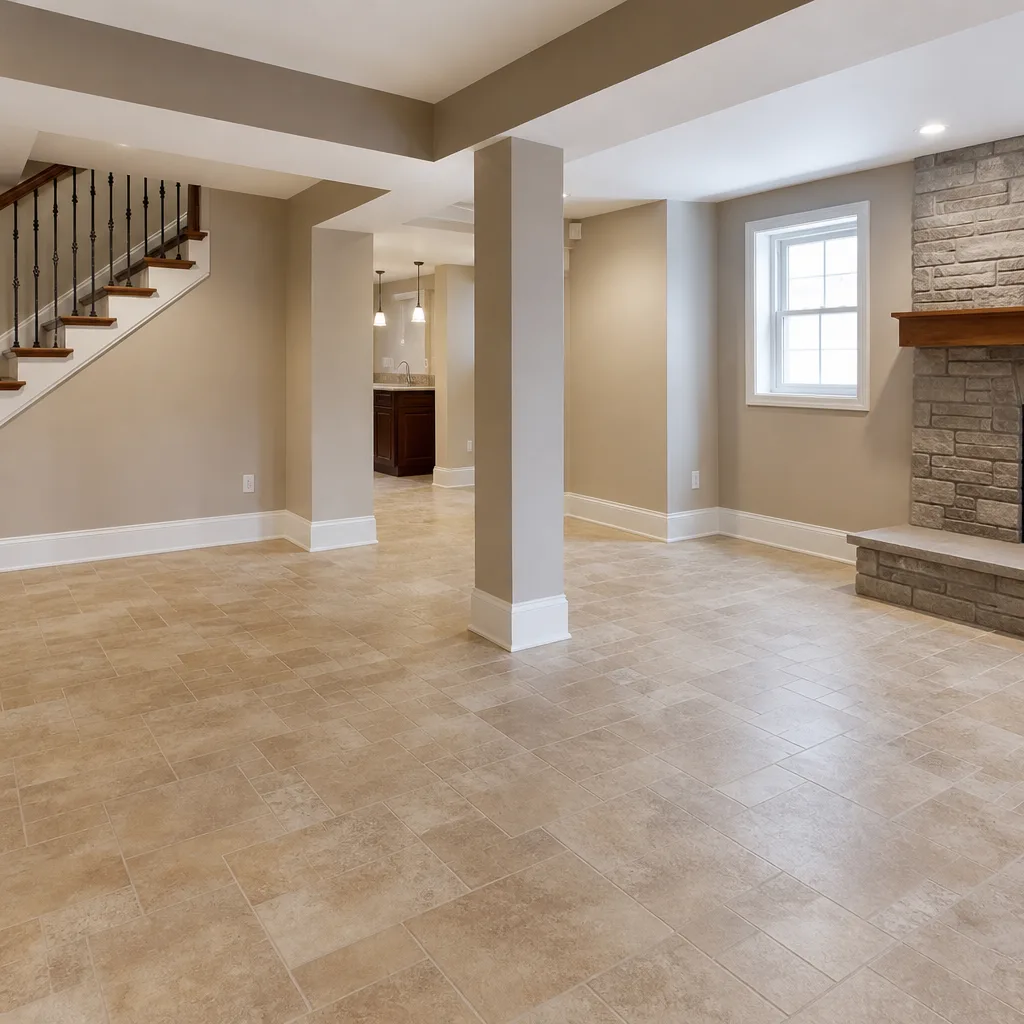
See the difference
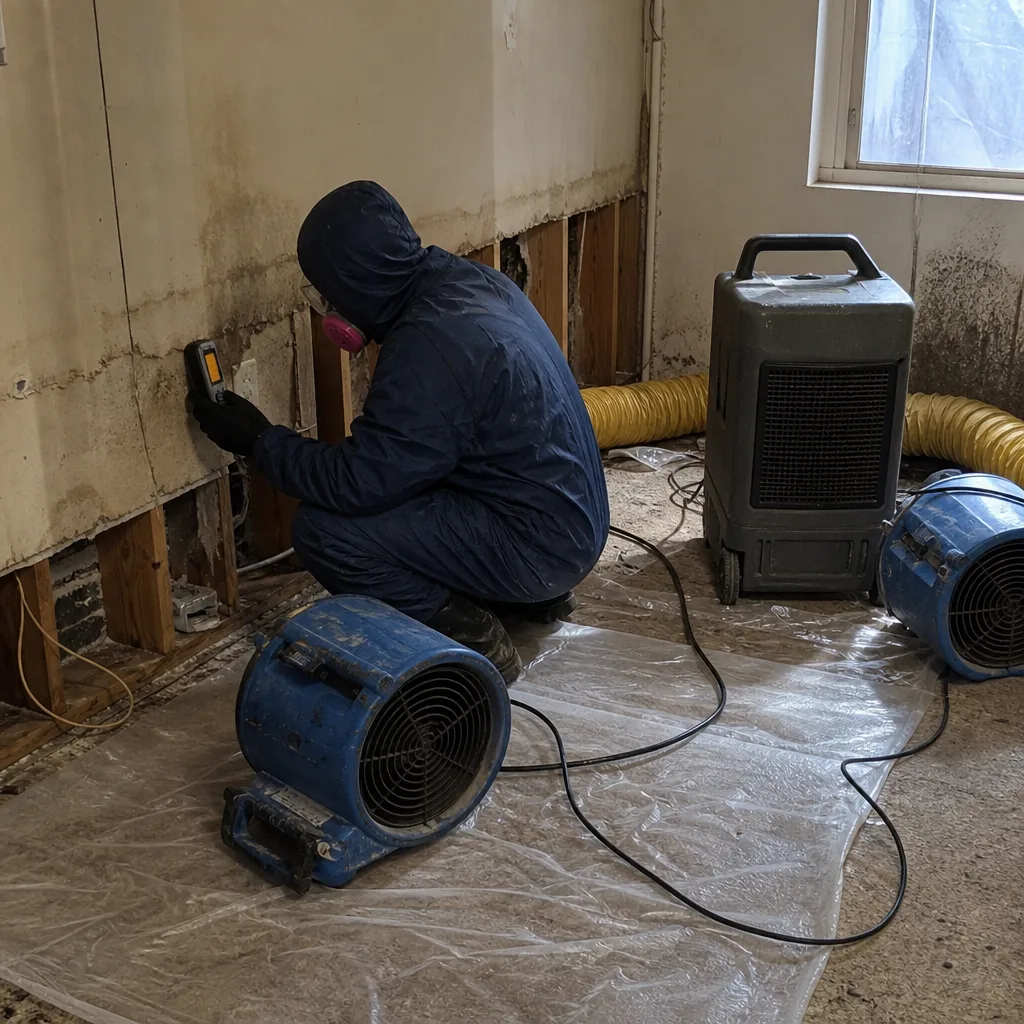 Before
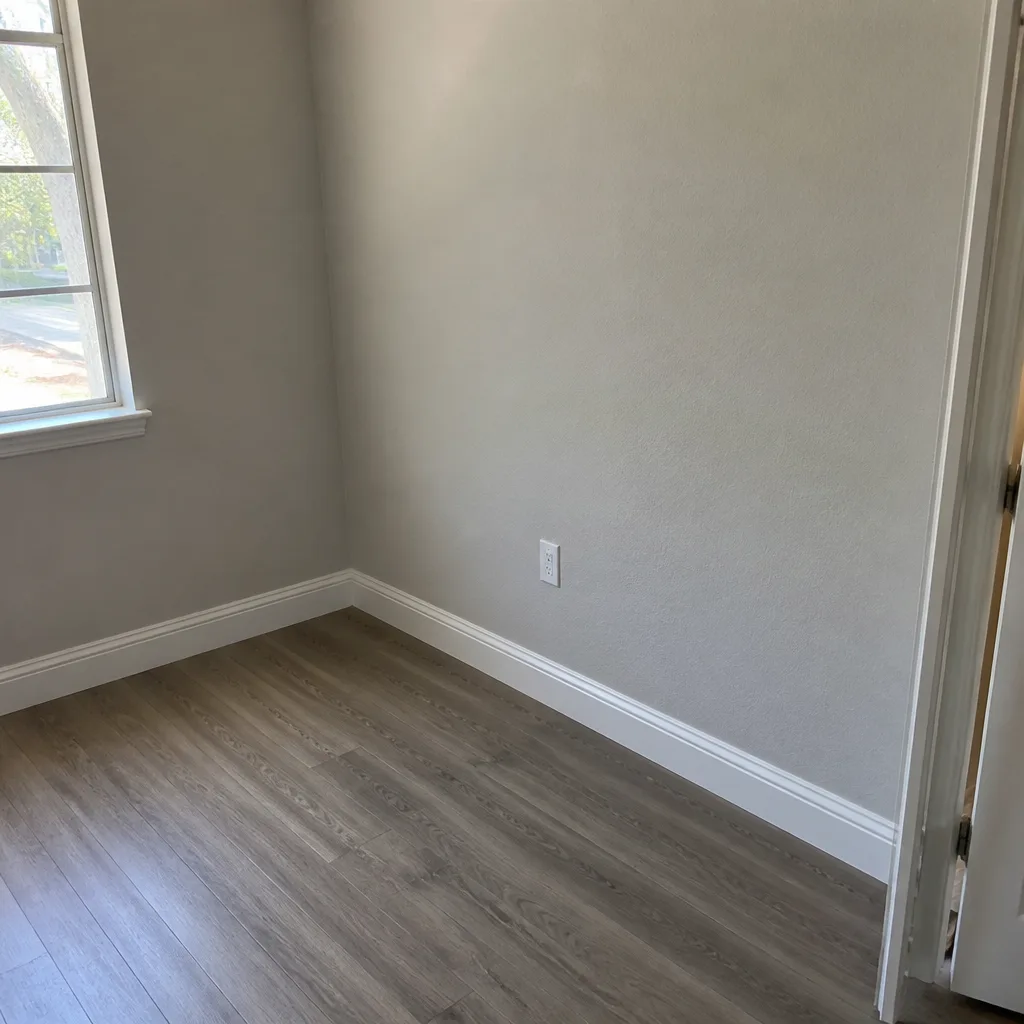 After
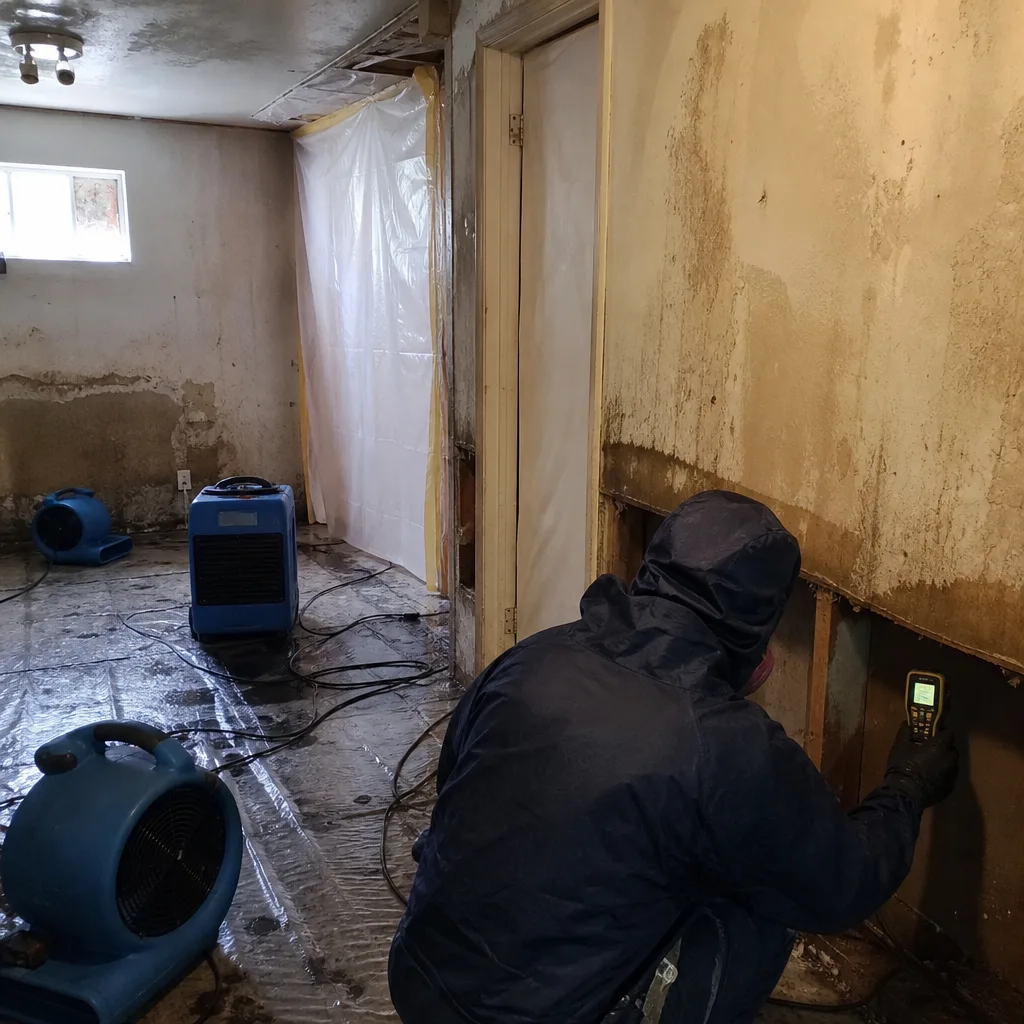 Before
 After
 Before
 After
When to Call a Professional
Any water loss that involves more than a surface spill warrants a professional assessment. If water has penetrated drywall, flooring, or the area beneath cabinets, if you can smell sewage, if visible mold is present, or if a fire has left soot and water residue through your home, you’re past DIY territory and into structural and health consequences. Sunrise Manor’s climate makes this especially relevant: high heat means moisture in wall cavities doesn’t dissipate naturally. It turns warm and humid, which is exactly what mold needs. For fire losses, the water used to suppress the fire becomes a water damage problem on top of the fire damage. Ashworth Water Damage offers free estimates in Sunrise Manor. Call (833) 734-7202 and we’ll walk you through the scope and next steps.
Frequently Asked Questions
Water damage restoration in Sunrise Manor typically costs between $1,500 and $8,000 depending on the loss category, affected square footage, and whether structural cavities need equipment. Clean water from a burst supply line on a single room tends toward the lower range; sewage losses or multi-room flooding with cabinetry involvement push toward the higher end. Call us at (833) 734-7202 for a free estimate based on your specific situation.
Yes. While Nevada doesn’t require a specialty restoration license, any contractor performing repair overhead and drywall work must hold a general contractor’s license through the Nevada State Contractors Board. Unlicensed work leaves you without the board’s complaint process and often without insurance coverage on the contractor’s side.
That depends on your policy and the cause of the loss. Sudden and accidental events like a burst pipe or storm flooding are typically covered, while gradual leaks and neglect-related damage often aren’t. Call us at (833) 734-7202 with your policy details and we’ll help you understand what documentation your adjuster will need.
A professional restoration firm in Sunrise Manor can generally respond within hours of your call, and the critical work, water extraction and equipment placement, should start the same day. What matters more than the arrival time is whether the technician who shows up holds the credential and follows a written scope. Fast response paired with unqualified work is still a bad outcome.
Mold can begin developing in 48 to 72 hours in a warm, humid environment like a recently flooded Sunrise Manor home. Signs include musty odor, visible discoloration on drywall or baseboards, and allergic reactions. Professional assessment includes moisture mapping and air sampling to identify what isn’t visible. For more, see our page on Mold Remediation in Sunrise Manor.
No. Nevada law allows you to select your own restoration contractor. Your insurer may only pay amounts up to its approved pricing schedule if you go outside the preferred list, but you retain the right to choose who performs the work on your home. Get your chosen contractor’s scope in writing and share it with your adjuster in writing.
The Bottom Line
Hiring a damage restoration contractor in Sunrise Manor is a two-track decision: act quickly to stop the damage from spreading, and verify slowly enough to avoid hiring the wrong operator under pressure. The Nevada State Contractors Board lookup takes five minutes. The certification question takes one phone call. The written scope demand takes one email. None of these slow your response meaningfully, and together they’re the difference between a home restored to standard and a hidden problem that resurfaces months later. Run the license check, confirm the technician’s IICRC credential, demand a written scope with moisture-log commitments, and understand what “preferred vendor” does and doesn’t mean. Then sign, and let the work begin.
Written by the team at Ashworth Water Damage, serving Sunrise Manor since 2018. Certified to IICRC standards, RIA member, and IFA-affiliated. We dry the structure, not just the surface.