Last updated October 30, 2026
 Water damage drying
 Fire & smoke cleanup
 Mold remediation
 Storm response
 Sewage cleanup
 Reconstruction
Free visual inspection and a written scope of work before any mitigation begins - photos, moisture readings, and drying logs go in your claim file
The scope we write is the scope we bill. Anything new gets shown to you, in writing, before we touch it.
Get your free estimateThe Complete Guide to Damage Restoration in Sunrise Manor
Most Sunrise Manor homeowners declare victory the day the carpet feels dry. What they don’t know is that gypsum board at just 19% moisture content is actively feeding mold colonies behind the wall, invisible and odorless for weeks. This guide—along with our The Complete Water Damage Restoration Guide for Sunrise Manor Homeowners—breaks down what actually happens during water, mold, and fire restoration in Sunrise Manor, why the Mojave climate tricks people into thinking the job is done, and how to verify the work was done right. By the end, you’ll understand the full restoration sequence, what each phase costs, what insurance needs from you, and when a contractor is cutting corners.
Restoration work we handle
Quick Answer
Damage restoration in Sunrise Manor follows a four-phase sequence: emergency extraction, structural drying, mold remediation (when needed), and reconstruction. In this desert climate, surface dryness is misleading, hidden moisture inside slab-built homes can drive mold growth for weeks after a visible leak is gone. Working with a certified contractor who documents moisture readings at each phase and coordinates directly with your insurance adjuster is the difference between a complete recovery and a recurring problem; see our Damage Restoration Emergency Preparedness Guide for Sunrise Manor Homes to get ahead of the next incident.
Table of Contents
- Why the Desert Climate Creates False Confidence
- How Slab Construction Changes Water Migration in Sunrise Manor
- The Four Phases of Damage Restoration
- What IICRC S500 and S520 Standards Actually Require
- Insurance Documentation Checkpoints at Every Phase
- Equipment That Actually Works vs. What Doesn’t
- Common Mistakes to Avoid
- When to Call a Professional
- Frequently Asked Questions
- The Bottom Line
Why the Desert Climate Creates False Confidence
Sunrise Manor sits in the Mojave Desert, where average annual rainfall hovers around 4 inches and relative humidity often stays below 20%. That aridity is exactly what makes hidden water damage so dangerous here, not less. When a pipe bursts or a water heater fails, the visible water evaporates fast. The surface of drywall, concrete, and subflooring can feel bone-dry within 48 to 72 hours. But evaporation only removes water from exposed surfaces.
Inside wall cavities, under vinyl plank flooring, and within the gypsum core of drywall, moisture gets trapped. With no airflow and no direct sun exposure, those areas can hold elevated moisture content for three to six weeks. That extended damp window is when mold colonization starts, usually in the 48-to-72-hour range after water intrusion, but continuing as long as moisture remains available. A moisture meter is the only reliable way to know if the structure is actually dry, and in our experience, most Sunrise Manor homes that “felt dry” a week after a leak still show readings between 17% and 24% in the lower wall plates. Normal is typically 8% to 12% in this climate.
This is also why under-equipped contractors get fooled. A restoration crew that doesn’t own commercial-grade moisture detection equipment, or one that skips the metering step entirely, will declare a structure dry when it isn’t. The result shows up months later as a musty smell, peeling paint, or visible mold behind furniture. The desert gives everyone involved a false sense of recovery, and that false confidence is the most common root cause of failed restoration projects in Sunrise Manor.
How Slab Construction Changes Water Migration in Sunrise Manor
Most homes in Sunrise Manor are built on concrete slab foundations, not raised crawlspaces. That single fact changes everything about how water moves after a leak or flood. In a crawlspace home, water that reaches the subfloor can drain downward, and air can circulate underneath to assist drying. In a slab home, water that penetrates flooring sits directly on concrete and moves laterally.
Concrete is porous. When water saturates a slab, it wicks outward from the source of the leak, traveling under flooring, behind baseboards, and into the lower sections of interior walls. The slab itself can hold moisture for a surprisingly long time. In Clark County, where soil beneath slabs is typically dense caliche and sandy loam, moisture that reaches the slab edge can be wicked upward through the concrete by capillary action for weeks. That water vapor then collects beneath vinyl flooring or inside wall assemblies, where it condenses back into liquid water against cooler surfaces.
The practical implication: water damage in a Sunrise Manor slab home rarely stays where you can see it. A leak in a kitchen line can migrate into the adjoining family room, under a hallway, and into a bedroom closet. We’ve documented moisture readings in interior walls 15 to 20 feet from the original leak source, with no visible water damage on the surface anywhere in between. Concrete slab construction means water moves through the slab itself, not just across it. Drying an affected room without checking slab moisture and adjacent wall cavities is treating the symptom, not the event.
This is where Water Damage Restoration in Sunrise Manor requires different equipment and a different sequence than what national checklists describe. Injectidry systems, which push dry air through small ports into wall cavities and under flooring, are particularly well-suited to slab construction because they access spaces that have no natural airflow. Without that targeted drying, the trapped moisture has nowhere to go and no reason to leave.
The Four Phases of Damage Restoration
Every damage restoration project, whether it starts with water, fire, or mold, moves through four phases. Skipping a phase, or rushing one to appear done, guarantees a second loss.
Phase 1: Emergency Extraction and Containment
The first priority is removing standing water and stopping active moisture from spreading. For sewage or Category 3 water, containment is equally urgent. Sunrise Manor homes built before the 1990s often have lower wall plates that sit directly on the slab, meaning contaminated water that reaches the wall base is in direct contact with porous drywall and wood framing.
- Standing water is removed using professional extraction equipment. This is the difference between removing 90 gallons in 20 minutes and spending six hours with a shop vac.
- Affected materials are assessed for category and class of water, per IICRC standards.
- Contaminated material that cannot be salvaged is removed and disposed of under appropriate protocols.
- A drying plan is set with a baseline moisture map, because drying without a baseline is guesswork.
Phase 2: Structural Drying
This is where most restoration projects fail in Sunrise Manor. Drying means reducing moisture content in structural materials to within 2 to 4 percentage points of the dry standard for this region. That dry standard is different in the Mojave than it is in Seattle or Miami. What counts as dry here is a lower number, and hitting it requires both airflow and dehumidification running continuously in a controlled environment.
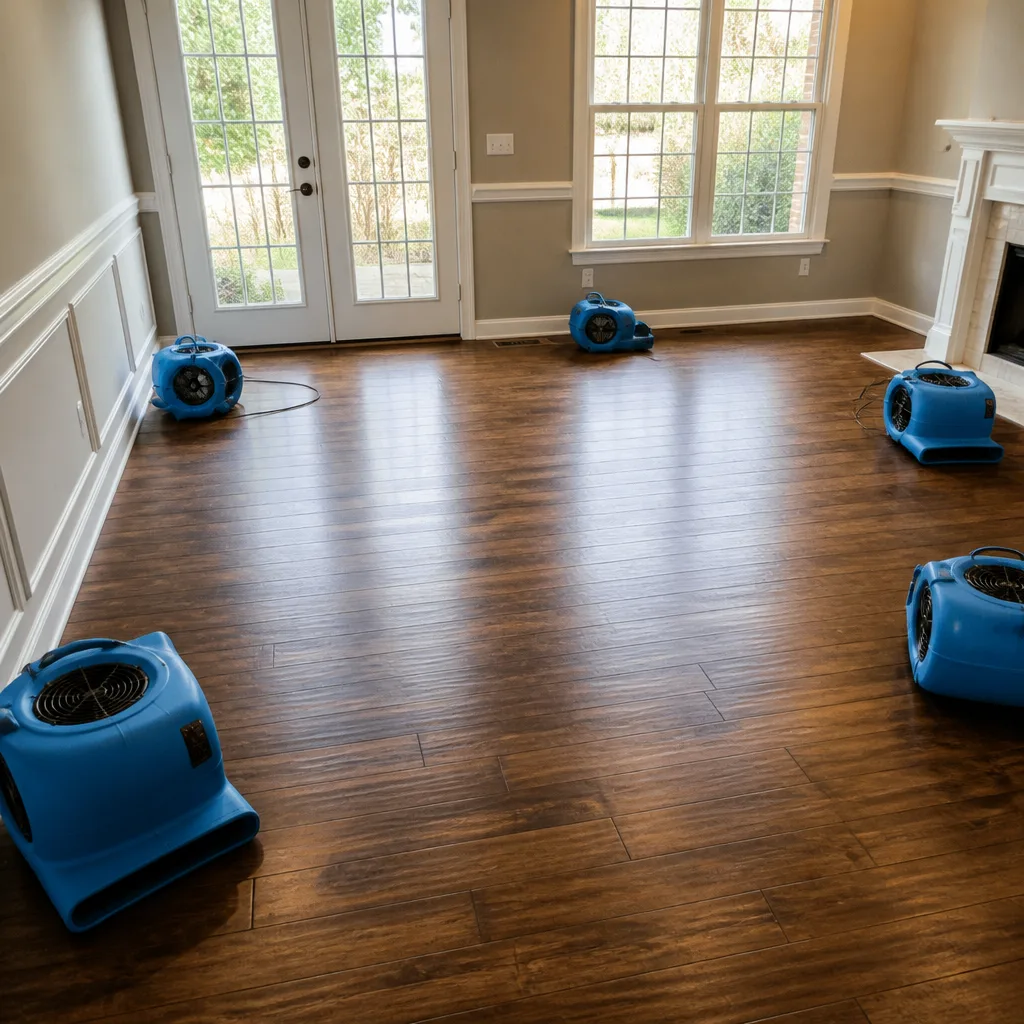
The equipment that makes this work is not what you can rent at a home improvement store. Air movers from brands like Dri-Eaz and Phoenix move 2,000 to 3,500 cubic feet per minute through enclosed spaces. Dehumidifiers pull 30 to 130 pints per day out of the air. Injectidry systems dry wall cavities and under-slab flooring without demolition, which means fewer walls opened up and lower rebuild costs. The point of this phase is not to dry the surface. We dry the structure, not just the surface, and the difference is measurable with a moisture meter at the end of the job.
Phase 3: Mold Remediation and Sanitization
If moisture has been present for more than 48 hours, mold remediation becomes part of the restoration scope. In Sunrise Manor homes, mold is usually found behind baseboards, inside wall cavities, under flooring, and inside bathroom vanities. The spores are already present in desert dust; the moisture gives them a food source and a place to grow. Remediation involves containment, HEPA air filtration, removal of affected porous materials, thorough cleaning of structural surfaces, and verification that the moisture source is gone. This double duty is why our Mold Remediation in Sunrise Manor services exist as a direct extension of water restoration, not a separate trade. Catching mold in the drying phase is far less destructive than discovering it six months later.
Phase 4: Reconstruction
The final phase returns the home to its pre-loss condition. It may involve replacing drywall, flooring, cabinetry, baseboards, and paint. Reconstruction should not begin until the structure verifiably passes the dry standard. Rushing this step means sealing damp material inside new walls, which is a guaranteed mold problem waiting to happen. For fire damage, this phase also includes smoke odor removal, structural cleaning, and surface sealing before any cosmetic work begins. A restoration contractor who is certified, equipped, and handles all phases in-house means you’re not coordinating a dry-out crew from one company and a rebuild crew from another.
What IICRC S500 and S520 Standards Actually Require
The IICRC publishes the restoration industry’s most widely recognized standards. S500 covers professional water damage restoration. S520 covers professional mold remediation. These are not suggestions; they are the technical reference points that insurance adjusters, attorneys, and restoration professionals use to determine whether a job was done correctly.
Under S500, every water damage project must include:
- A documented inspection and assessment before any drying begins.
- Classification of the water source: Category 1 (clean), Category 2 (contaminated), or Category 3 (grossly unsanitary).
- Determination of the water’s class, which describes how much water and how far it has migrated.
- Written moisture readings from affected and unaffected materials, so the dry standard can be verified.
- Documentation of drying progress over time, with readings taken at regular intervals.
- Final verification that all affected materials have reached the dry standard for this climate zone.
S520 requires containment, air filtration, and professional remediation procedures that prevent cross-contamination. The standard also requires post-remediation verification by an independent third party in some cases.
When a contractor tells you their methods meet IICRC standards, you can verify it. Ask to see the moisture map from the initial inspection. Ask to see the drying log. Ask what the dry standard is for Sunrise Manor and whether the current readings meet it. A certified contractor will have those documents and will share them. A contractor who says “trust me, it’s dry” without showing you a meter is not following the standard.
We hold certified credentials through IICRC, professional membership with RIA, and IFA affiliation. Those aren’t wall decorations. They mean every project we run is measured against the same technical standards that insurance companies and restoration professionals across the country use to define a complete job.
Insurance Documentation Checkpoints at Every Phase
Insurance claims for restoration in Sunrise Manor usually hinge on documentation. The insurer needs proof of the damage, the cause, the scope of work, and the completion. Missing any of these steps can reduce or deny a claim, and the homeowner pays the difference.
Before Work Begins
- Photograph everything: affected areas, standing water, visible damage, and any personal property involved.
- Document the cause of the loss with clear photos and a written description of what happened and when.
- Call your insurer to begin the claim. Many policies require prompt notice.
- Do not begin demolition before the adjuster has documented the damage or you have their approval, except in emergencies where waiting causes further damage.
During Restoration
- The contractor should produce a written scope of work, with line items, before starting. This is non-negotiable for a claim.
- Moisture readings, drying logs, and equipment placement records should be available to the adjuster.
- Photographs of affected materials before removal, during removal, and after replacement go directly into the claim file.
- If mold is discovered, remediation documentation should include containment dates, air quality testing (if performed), and final clearance.
After Completion
- Final invoices should match the approved scope.
- Photo documentation of completed work closes the claim file.
- Ask for a certificate of completion that states the structure met the dry standard.
We photograph every project and give homeowners access to that documentation directly. Coordination with your adjuster should be a given, not a favor. The goal is that no legitimate part of your claim gets denied because paperwork was missing or a step went undocumented.
Equipment That Actually Works vs. What Doesn’t
The restoration industry has a wide gap between what professional firms run and what shows up from a general handyman. The difference shows in outcomes, not in effort. A contractor who works hard with the wrong equipment still fails.
Professional water damage restoration uses high-volume air movers and refrigerant or desiccant dehumidifiers that process thousands of cubic feet per minute. The air movers create airflow across wet surfaces, which accelerates evaporation. The dehumidifiers pull moisture out of the air so that evaporation can continue. Together, they create a drying environment that reaches moisture embedded in structural materials.
At Ashworth Water Damage, our fleet includes Dri-Eaz and Phoenix drying systems. These are the same brands used on large commercial restoration projects. We also run XPOWER air purifiers and B-Air filtration equipment when mold or odor is part of the picture. The equipment matters because the science is unforgiving. If you don’t move enough air or remove enough moisture from the air, the water stays in the walls.
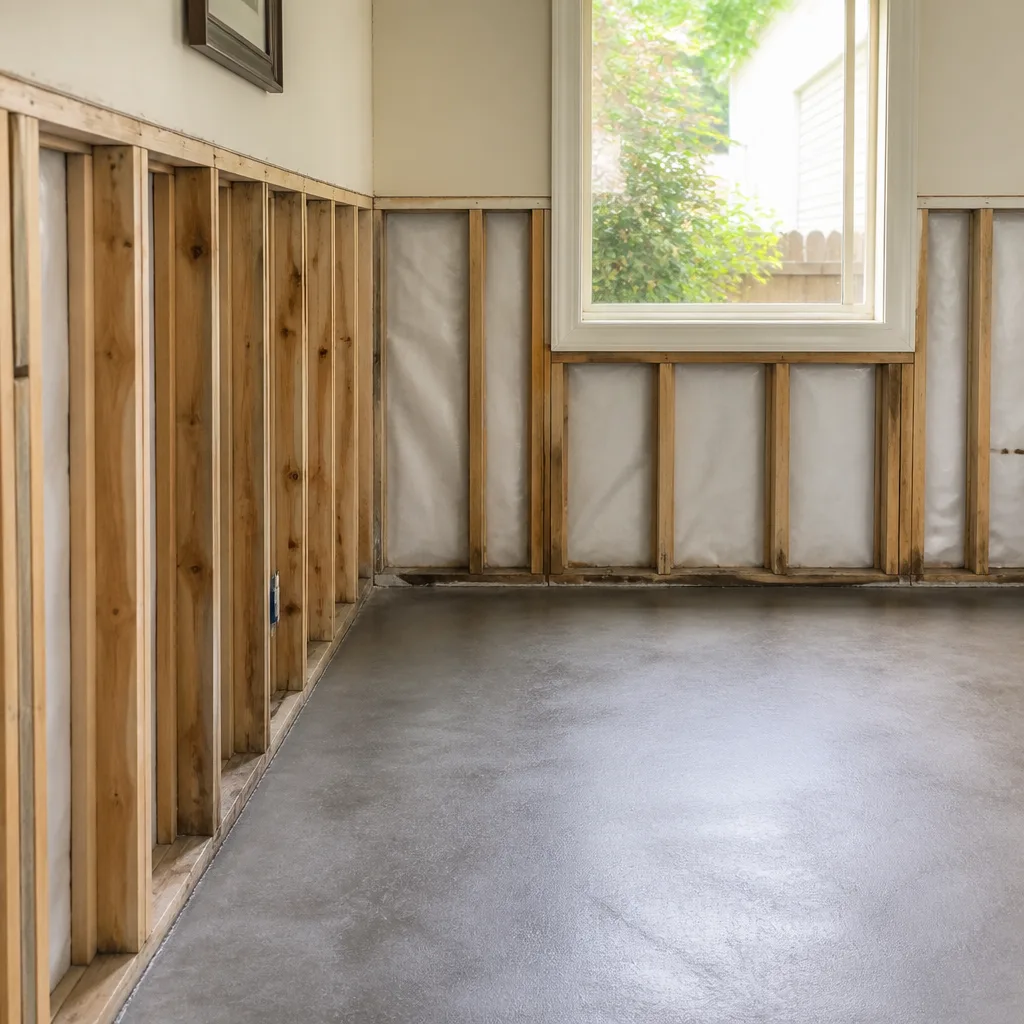
But the single most impactful piece of equipment we use is the Injectidry system, and it deserves a detailed explanation. Injectidry uses a manifold and a network of small hoses to deliver positive air pressure into wall cavities, under flooring, and inside other enclosed spaces that normal air movers cannot reach. In a Sunrise Manor slab home, the bottom plates of walls and the underside of flooring sit directly on concrete. Those areas never dry by surface evaporation alone. Injectidry lets us reach moisture inside walls without tearing them open. That means fewer demolition cuts, lower rebuild costs, and a faster return to normal.
For mold remediation, HEPA air scrubbers and negative air machines prevent spores from spreading during removal. Consumer-grade air purifiers don’t move enough air to create that containment. For fire damage, we rely on dry cleaning sponges, hydroxyl generators for odor, and full HEPA vacuuming of structural surfaces before any sealing or painting. The right tool at the right phase is not a luxury; it’s the definition of restoration.
If you’re comparing contractors in Sunrise Manor, ask what equipment they will bring. If the answer is “fans and a dehumidifier,” keep looking.
Common Mistakes to Avoid
- Declaring victory when the surface feels dry. In Sunrise Manor’s desert air, visible surfaces dry in days while wall cavities stay wet for weeks. The only acceptable proof of dryness is a moisture meter reading within the dry standard, not a palm test.
- Skipping the moisture map. Drying without baseline readings is like treating an illness without a diagnosis. You can’t prove anything afterward, and insurance adjusters won’t accept undocumented work.
- Using consumer-grade rental equipment. Shop vacs and box fans don’t generate the airflow or dehumidification capacity to dry structural materials. The job takes longer, and the water stays in the structure.
- Starting reconstruction before the structure passes the dry standard. Sealing damp drywall behind new tile or paint is a warranty on future mold. Verify with a meter before any rebuilding begins.
- Not coordinating insurance documentation from day one. Missing photos, skipped moisture logs, and unapproved scope changes mean denied claims. Start the paper trail the day the damage happens.
- Hiring separate contractors for water, mold, and fire work. The handoff between companies creates gaps. One call covers water, mold, and fire, and the responsibility stays with one accountable party.
- Assuming a slab foundation means no structural risk. Water moves laterally through concrete slabs and into wall cavities far from the original leak. Treat slab moisture as structural moisture, because that’s exactly what it is.
When to Call a Professional
Call a restoration professional any time water has touched drywall, flooring, or structural framing and you cannot dry it within 48 hours. Also call immediately for sewage backups, any water source that is contaminated, leaks that originate behind walls or under slabs, visible mold growth larger than about 10 square feet, or any situation where you smell a persistent musty odor with no known source. Fire damage always requires professional assessment because smoke residue is corrosive and continues to damage surfaces long after the fire is out. If you’re in Sunrise Manor and any of these situations sounds like yours, Ashworth Water Damage home services cover water, mold, and fire restoration under one roof, with IICRC-certified methods and commercial-grade equipment. We offer free estimates in Sunrise Manor, call (833) 734-7202.
Frequently Asked Questions
Most residential water damage restoration projects in Sunrise Manor take three to seven days for the drying phase, depending on the amount of water, the materials affected, and how far moisture migrated into the slab and wall cavities. Reconstruction adds additional time based on scope. The Mojave climate speeds surface evaporation but doesn’t shorten the time needed for structural drying, because enclosed spaces dry at roughly the same rate regardless of outdoor humidity. Call (833) 734-7202 for a project-specific timeline.
Most standard homeowners policies cover water damage restoration when the cause is sudden and accidental, such as a burst pipe, a leaking water heater, or a storm-related intrusion. Gradual leaks, sewage backup without a specific endorsement, and flood damage from external flooding are common exclusions. Coverage depends entirely on your policy language. Full photo documentation and a written scope of work protect your claim regardless of the cause.
Yes, mold grows in Sunrise Manor whenever moisture is trapped inside wall cavities, under flooring, or behind baseboards, even though outdoor humidity is low. The desert air dries surfaces quickly, but enclosed spaces stay damp for weeks and provide exactly what mold needs: moisture, organic food material, and stable temperature. Mold growth in sealed wall cavities can continue for months without producing an odor until the colony is well established.
IICRC certification means the contractor has completed training and passed examinations in restoration standards, including the S500 standard for water damage and the S520 standard for mold remediation. It’s the restoration industry’s most recognized independent credential, and it means the work meets published technical criteria, not the contractor’s personal judgment. You can ask to see a copy of the certification.
Small areas of mold on non-porous surfaces, like a few square inches on tile, can sometimes be cleaned with soap and water. Mold on drywall, wood, or any porous material larger than about 10 square feet requires professional containment and removal because the colony extends deeper than the visible surface. Disturbing mature mold without containment spreads spores throughout the home, which is exactly what Mold Remediation in Sunrise Manor is designed to prevent.
Water damage restoration in Sunrise Manor typically starts around $2,000 to $4,000 for a contained leak with professional drying, while mold remediation often runs $1,500 to $6,000 depending on the size of the affected area, and fire restoration averages $3,000 to $10,000 or more based on damage extent. These are ballpark figures for this market, every project is different. Call (833) 734-7202 for an exact quote, estimates are free.
Professional fire damage restoration can remove smoke odor completely when the work includes full structural cleaning, HEPA vacuuming, and hydroxyl or ozone treatment in sequence. Smoke particles penetrate porous surfaces and cannot be simply painted over or masked with deodorizer. Our Fire Damage Restoration in Sunrise Manor handles the full sequence from emergency board-up through structural cleaning and final verification.
The Bottom Line
Damage restoration in Sunrise Manor is a technical process with measurable endpoints. The Mojave climate creates a false sense of recovery that fools homeowners and under-equipped contractors alike. Slab construction moves water in ways that national guidelines fail to address. IICRC S500 and S520 standards exist to define what done actually looks like, and insurance documentation is the paper trail that protects your claim. The right equipment matters, the right sequence matters, and verifying moisture with a meter matters more than anything else. When damage hits, one call covers water, mold, and fire, and the crew that answers should be certified, equipped, and accountable from first inspection to final rebuild. For more guides & resources, visit our blog.
Written by the team at Ashworth Water Damage, serving Sunrise Manor since 2018.
See the difference
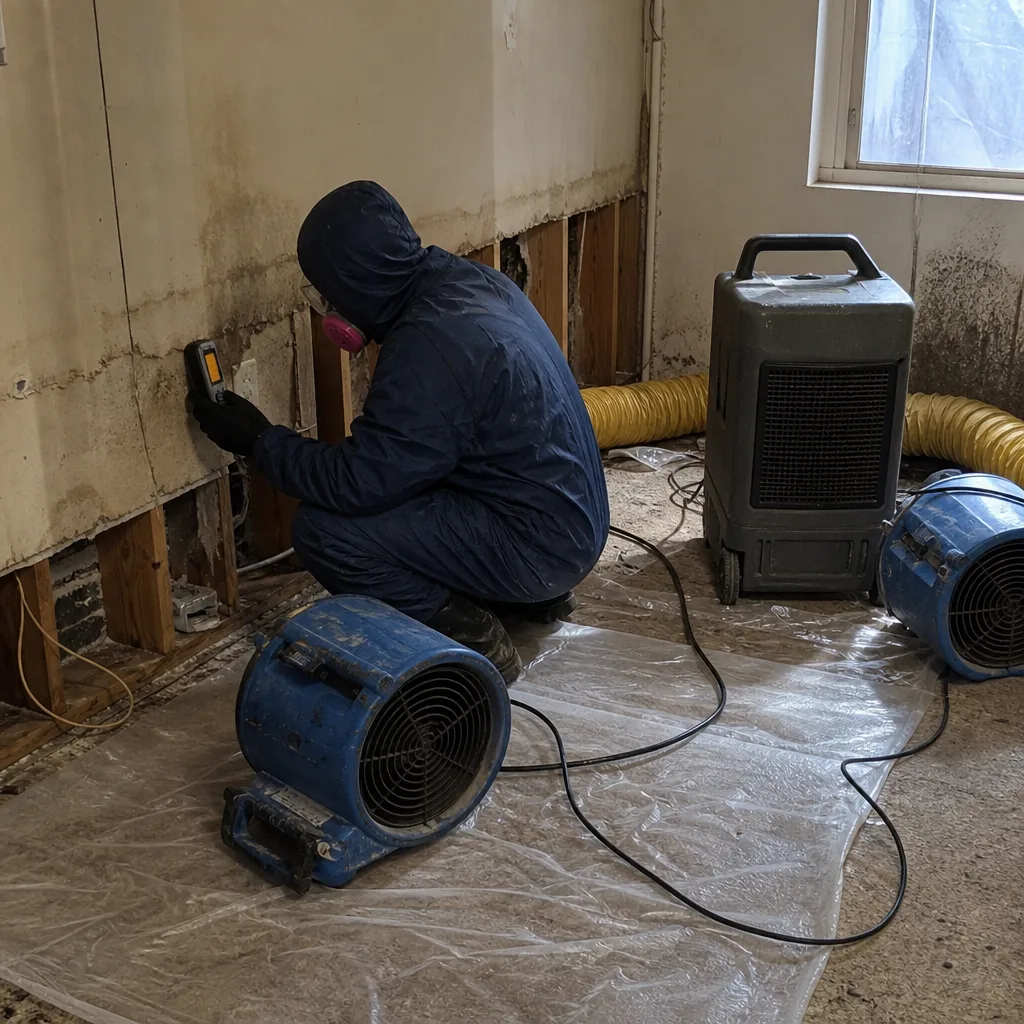 Before
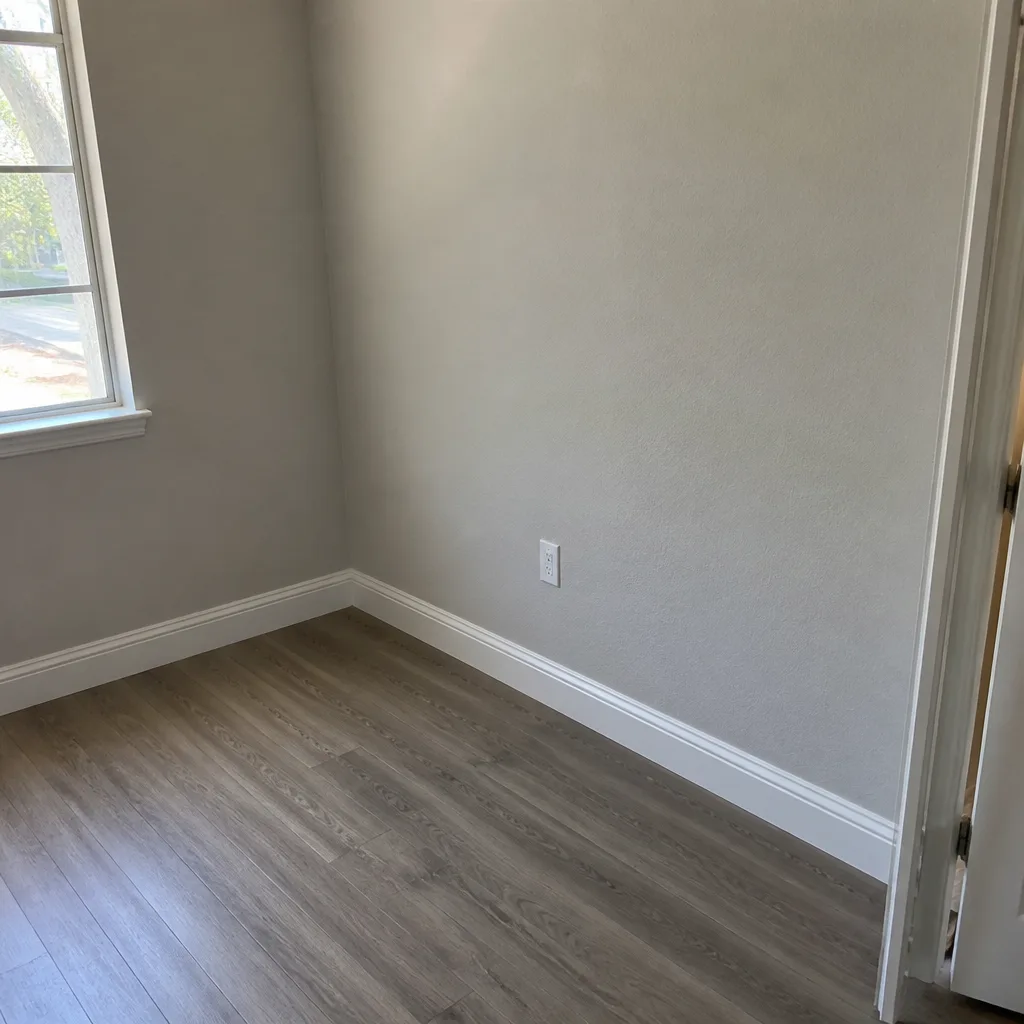 After
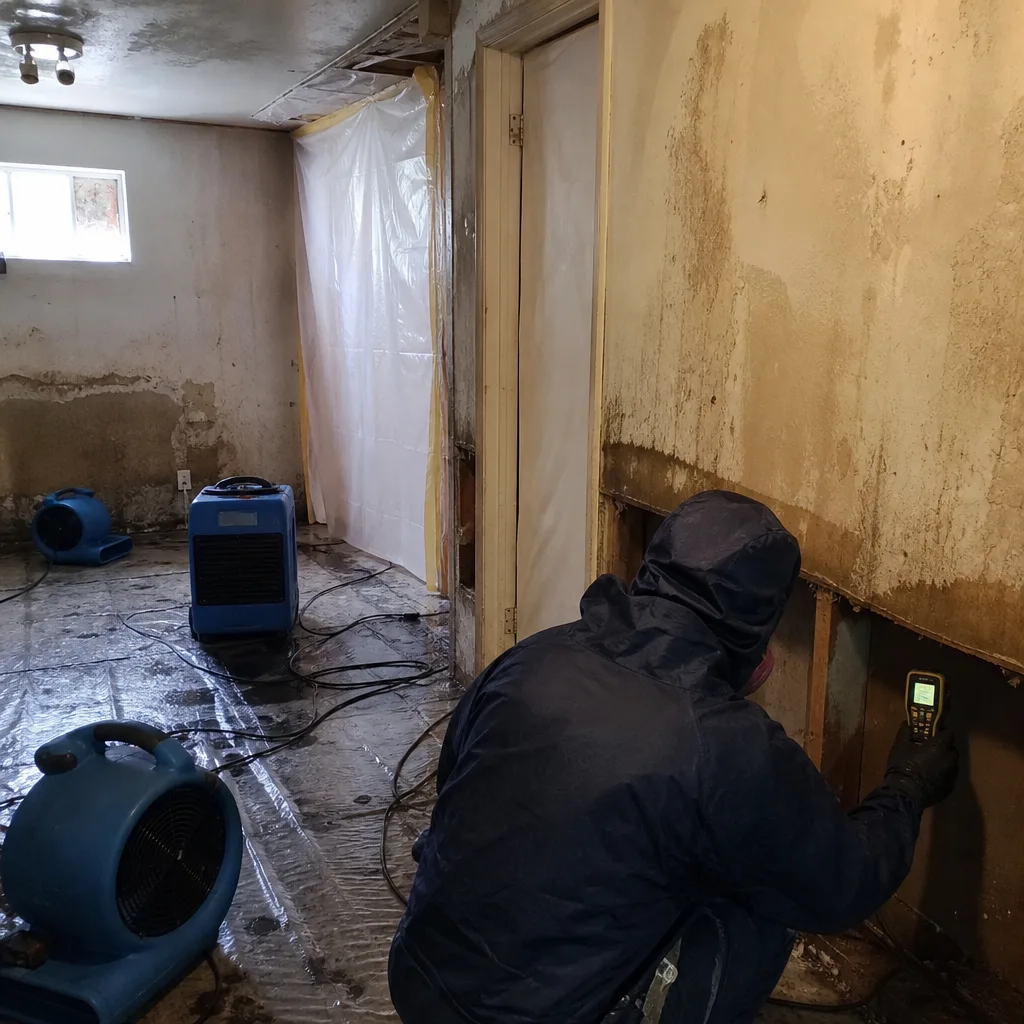 Before
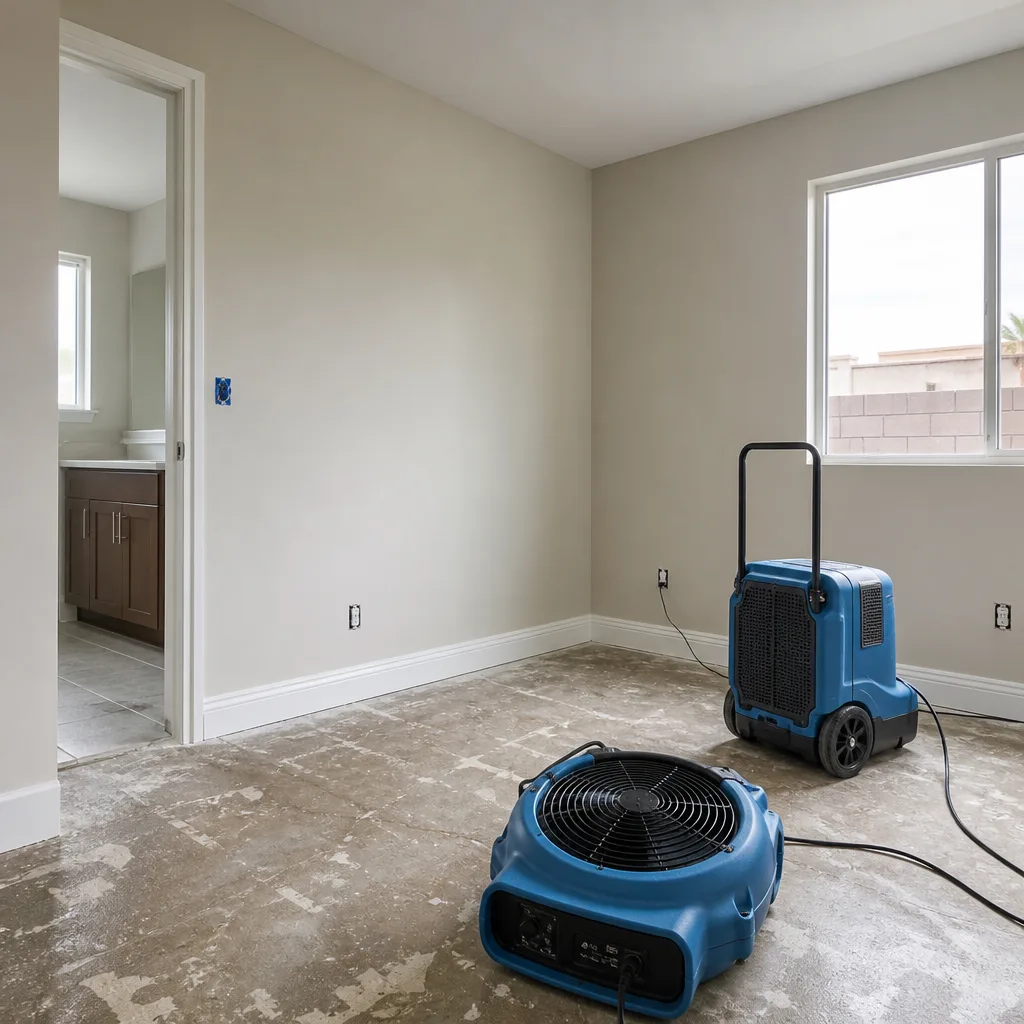 After
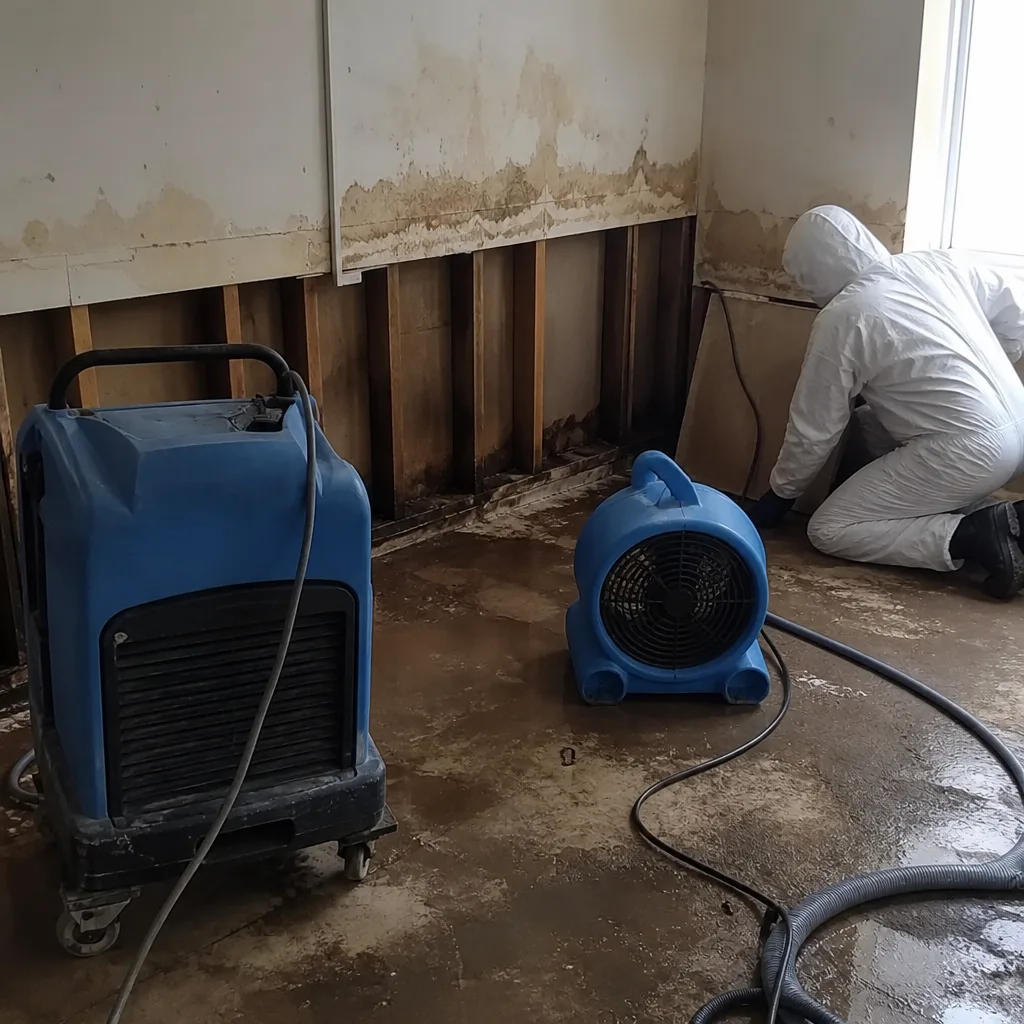 Before
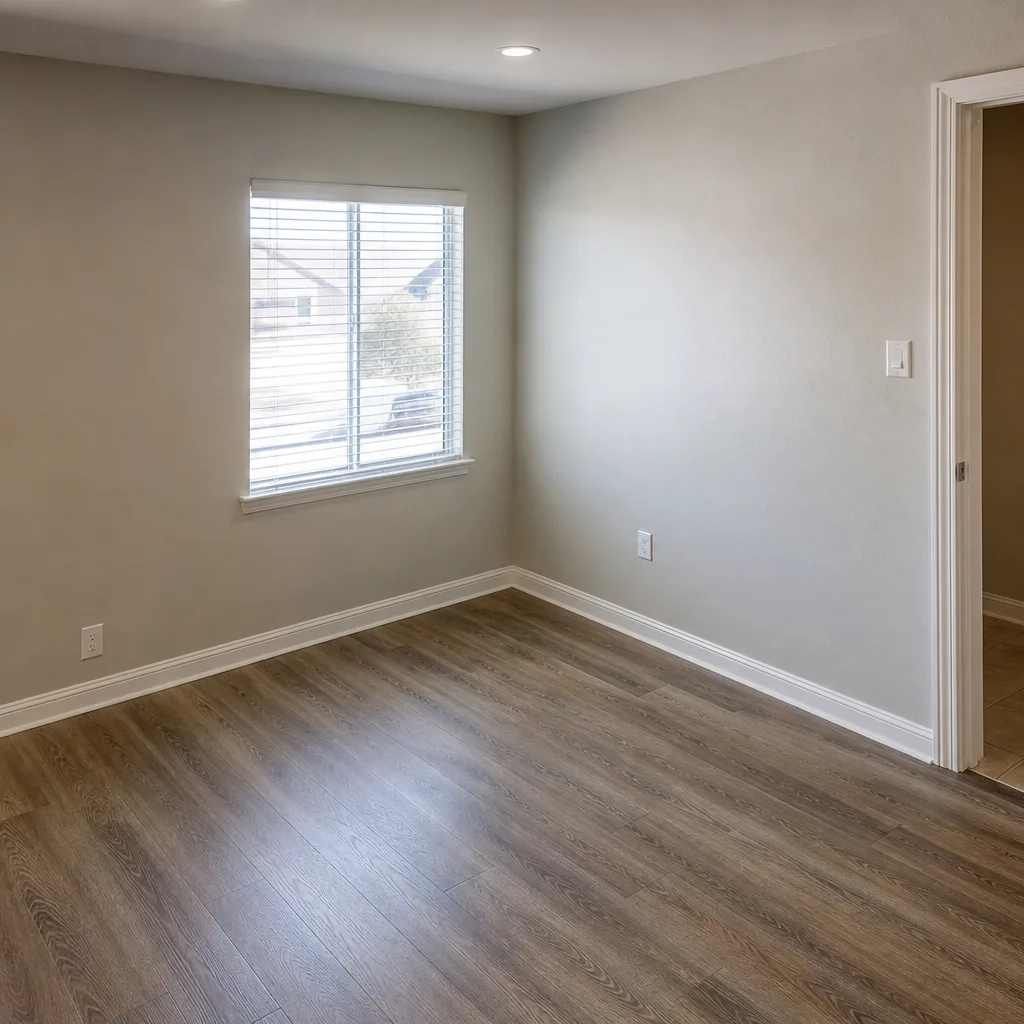 After