Last updated October 30, 2026
 Water damage drying
 Fire & smoke cleanup
 Mold remediation
 Storm response
 Sewage cleanup
 Reconstruction
Free visual inspection and a written scope of work before any mitigation begins - photos, moisture readings, and drying logs go in your claim file
The scope we write is the scope we bill. Anything new gets shown to you, in writing, before we touch it.
Get your free estimateChoosing the Right Damage Restoration Brand: A Buyer’s Guide for Sunrise Manor
When you call a nationally advertised restoration brand in Sunrise Manor, the person answering may be in a call center 1,200 miles away dispatching a subcontracted crew whose certifications they cannot verify. That’s a supply chain invisible to the stressed homeowner signing a work authorization form. This guide explains the three operational models in the restoration market, how to verify credentials before a crew enters your home, and which questions separate technically credible operators from marketing-heavy call centers. For The Complete Guide to Damage Restoration in Sunrise Manor and more guides & resources, see our blog. If you live in Sunrise Manor or anywhere in Clark County, what you’re about to learn could mean the difference between a structure that’s dried correctly and one that carries hidden moisture for years.
Restoration work we handle
Quick Answer
The best damage restoration company in Sunrise Manor isn’t determined by logo recognition or ad spend; it’s determined by whether the crew arriving at your door holds current IICRC certifications, uses commercial-grade drying equipment like Injectidry and Dri-Eaz, and can document moisture readings throughout the job. See our The Complete Water Damage Restoration Guide for Sunrise Manor Homeowners for deeper guidance. Independent certified specialists who staff locally typically outperform franchise operations on response time and crew continuity, which are the two variables that most affect drying outcomes. Verify credentials first, then evaluate equipment, then sign anything.
Table of Contents
- The Three Operational Models: Franchise, Independent, and General Contractor
- How to Verify IICRC Certifications on the Crew That Arrives
- Questions That Separate Technical Credibility from Marketing
- Why ‘Preferred Vendor’ Is a Business Relationship, Not a Quality Endorsement
- Local Presence Indicators That Actually Matter in Sunrise Manor
- Why Equipment Brands Matter: Dri-Eaz, Phoenix, XPOWER, B-Air, Injectidry
- Common Mistakes to Avoid
- When to Call a Professional
- Frequently Asked Questions
- The Bottom Line
The Three Operational Models: Franchise, Independent, and General Contractor
The restoration industry in Sunrise Manor operates on three distinct models, and each one changes who actually shows up, what equipment they bring, and who you hold accountable when something goes wrong. The franchise model works like this: a national brand owns the name, the phone number, and the marketing budget. When you call, a regional call center answers, logs your information, and dispatches whichever franchisee or subcontracted crew is available that day. The crew may be excellent, or they may be a rotating cast of day laborers working under a temporary agreement. You won’t know until they’re standing in your living room.
The independent certified specialist model is different. Companies like Ashworth Water Damage operate with direct-hire technicians who are trained, certified, and accountable to the company whose name is on the truck. There’s no call center filtering your emergency through a call script. When you call a local Sunrise Manor restoration specialist, the person you speak with works for the same company that will send the crew.
The third model is the general contractor who offers water or fire restoration as a side service. This is the riskiest category, because a general contractor may understand framing and drywall but lack the psychrometric knowledge required to confirm a structure is actually dry. Restoration is a science with its own certification bodies, its own equipment, and its own documentation standards. A contractor who does restoration “when needed” rarely invests in commercial-grade drying systems, because those systems cost tens of thousands of dollars to maintain.
Here’s what matters for your specific decision:
- Franchise operations: Brand-name recognition, but crew quality varies by franchisee, certifications may lag behind marketing claims, and the call center adds a communication layer when time is critical.
- Independent certified specialists: Direct accountability, consistent crews, and equipment investments that reflect a real commitment to restoration as a core discipline. In our experience, this model serves Sunrise Manor homeowners best.
- General contractors: Useful for rebuild work after drying is complete, but rarely equipped for proper moisture mapping, structural drying, or mold remediation to IICRC standards.
Sunrise Manor’s housing stock includes many homes built between 1950 and 1980, which means original plumbing, cast-iron drain lines, and slab foundations that complicate drying. A franchise dispatch system doesn’t know that. A local specialist does.
How to Verify IICRC Certifications on the Crew That Arrives
The single most important verification you can perform is confirming that the individual technicians, not just the company, hold current IICRC certifications. The Institute of Inspection, Cleaning and Restoration Certification maintains a public registry where you can search by name, company, or location. Here’s the exact process:
- Ask the company for the full names of the technicians who will be dispatched to your Sunrise Manor property.
- Go to the IICRC’s public registry and search each name individually.
- Verify that the certification is current. IICRC certifications require continuing education credits to remain active. A certification from 2016 that hasn’t been renewed is not current.
- Ask which specific certifications the technicians hold. The relevant ones for water damage are WRT (Water Damage Restoration Technician), ASD (Applied Structural Drying), and for mold work, AMRT (Applied Microbial Remediation Technician).
- If the company refuses to provide technician names, that’s your answer. Move on.
We hold IICRC certifications and maintain them through ongoing education, but we don’t expect you to take our word for it. The registry exists precisely so homeowners can verify claims without relying on marketing copy. This is the same verification we’d recommend for any restoration company you’re considering, including ours.
Beyond IICRC, look for RIA (Restoration Industry Association) membership, which signals that the company operates under the professional standards of the restoration trade organization, and IFA affiliation, which adds another layer of third-party oversight. These memberships mean the company’s methods are validated against industry standards, not internal checklists written by a marketing department.
Questions That Separate Technical Credibility from Marketing
Most restoration sales pitches sound identical. Every company promises prompt service, quality work, and courteous technicians. To separate the technically credible operators from the marketing-heavy ones, ask specific questions that only a legitimate operation can answer comfortably. Here are the ones we’d ask if we were hiring a restoration company for our own home in Sunrise Manor:
- “What will your psychrometric reporting include?” A proper water damage job requires measuring temperature, relative humidity, and specific humidity in every affected room, plus grain depression calculations for drying chambers. If the answer is “we’ll check it with a moisture meter,” that’s a red flag. A moisture meter reads surface conditions; it does not tell you whether the wall cavity behind the drywall is drying.
- “How often will moisture logs be updated?” Professional restoration follows a drying log protocol. Readings should be taken at least once per day, recorded, and compared against the drying plan. If the company can’t tell you their logging frequency, they don’t have a drying protocol.
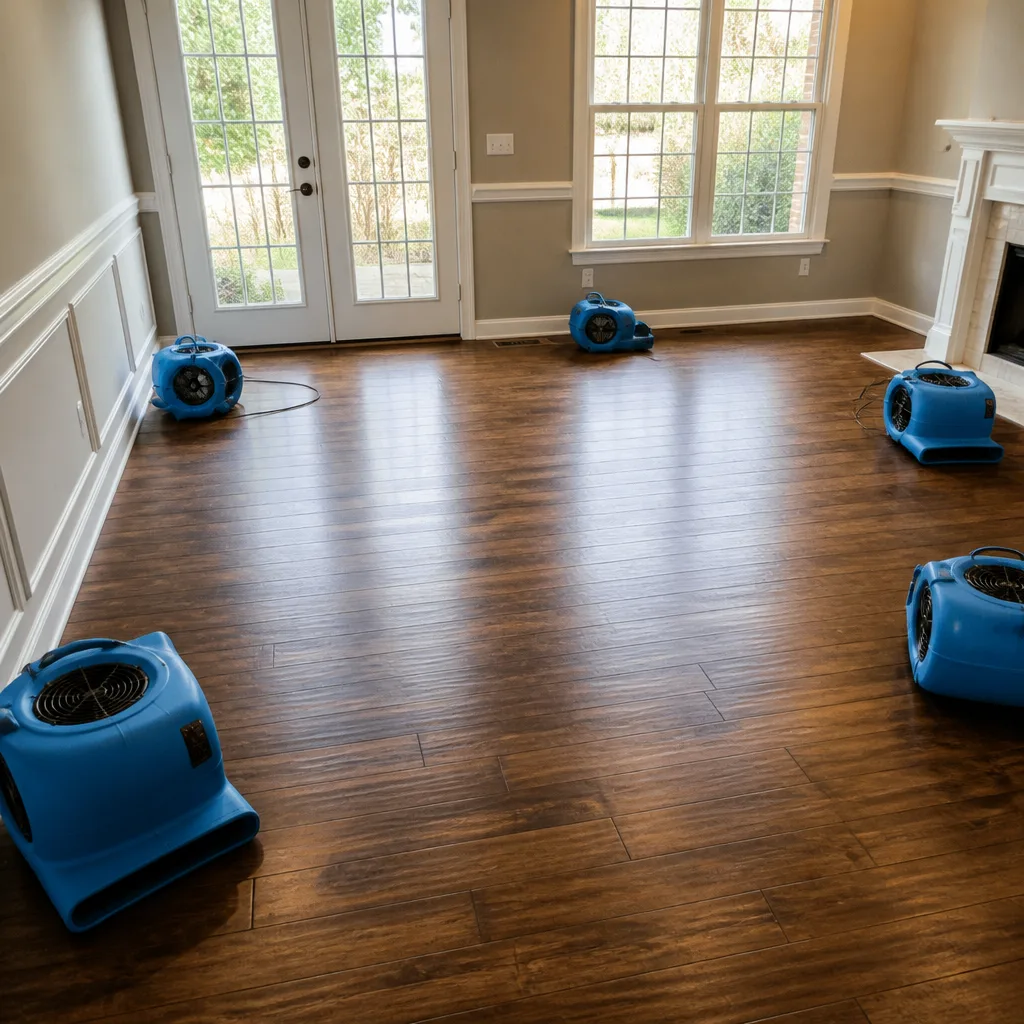
- “What’s your equipment placement rationale?” Drying equipment is not scattered randomly. Air movers are positioned to create specific airflow patterns across wet surfaces. Dehumidifiers are sized to the cubic footage and the humidity load. A credible technician can explain where each unit goes and why. Vague answers mean guesswork.
- “Can you dry inside wall cavities without demolition?” This is where Injectidry technology matters. Our Injectidry systems allow us to reach moisture inside wall cavities and subfloors using targeted vacuum and injection drying, which preserves more of your home’s original structure and reduces rebuild costs. If a company’s only answer is “we’ll tear out the drywall,” they’re not using the best available tools.
- “Will the same crew handle water, mold, and fire if I need more than one service?” Our answer is yes, because Water Damage Restoration in Sunrise Manor, Mold Remediation in Sunrise Manor, and Fire Damage Restoration in Sunrise Manor are all handled by our in-house team. One call covers water, mold, and fire. If a company refers you to a subcontractor for one of these, you now have coordination chaos after a loss event, which is the last thing you need.
Why ‘Preferred Vendor’ Is a Business Relationship, Not a Quality Endorsement
Insurance companies maintain lists of “preferred” restoration vendors, and homeowners often assume that designation means the vendor has been vetted for quality. It hasn’t. A preferred vendor is a contractor who has agreed to the insurance company’s fee schedule and reporting requirements. The arrangement is a business relationship built on pricing and administrative convenience, not an independent evaluation of technical competence. Some preferred vendors are excellent. Some are not. The designation itself tells you nothing about the crew that will arrive at your Sunrise Manor home.
Nevada law protects your right to choose your own contractor after an insurance loss. Insurers cannot force you to use a specific restoration company. You have the right to select a contractor who will document damage thoroughly and advocate for proper remediation, rather than one whose primary loyalty is to the entity paying their invoice at a negotiated rate.
Here’s our practical advice: when your adjuster recommends a vendor, ask for the names of the technicians who would be dispatched, run those names through the IICRC registry, and ask the same technical questions you’d ask any other candidate. If the vendor passes, fine. If not, exercise your right to choose. The contractor you hire works for you, not the insurance company. That distinction matters enormously when there’s a disagreement about scope or cost.
Local Presence Indicators That Actually Matter in Sunrise Manor
A website can claim anything. Here are the physical indicators that a restoration company genuinely operates in the Sunrise Manor and greater Clark County area:
- A physical equipment yard: Commercial drying equipment requires storage, maintenance, and transport infrastructure. A company with a physical yard near Las Vegas can deploy equipment to Sunrise Manor fast. A company without local infrastructure is shipping equipment in from another region, which costs time.
- Direct-hire technicians: Ask whether the technicians are W-2 employees of the company or independent contractors brought in per job. Direct-hire teams have consistent training, consistent supervision, and an employer who’s accountable for their work. Day-labor crews have none of that.
- Verifiable Clark County project history: Ask for addresses of recent projects in Sunrise Manor, Whitney, Winchester, or unincorporated Clark County. A legitimate local operator can name neighborhoods and describe the specific challenges there. Vague answers indicate an operation that flies crews in from elsewhere.
- Local knowledge of desert climate challenges: Sunrise Manor’s arid climate creates a specific drying challenge: surface materials dry fast, which can fool an inexperienced operator into declaring the job done while moisture still moves through wood framing and slab foundations. A local specialist knows that the true drying frontier is below the surface, and that Injectidry systems are often necessary to reach water that has migrated through wall cavities or into subfloor assemblies.
Why Equipment Brands Matter: Dri-Eaz, Phoenix, XPOWER, B-Air, Injectidry
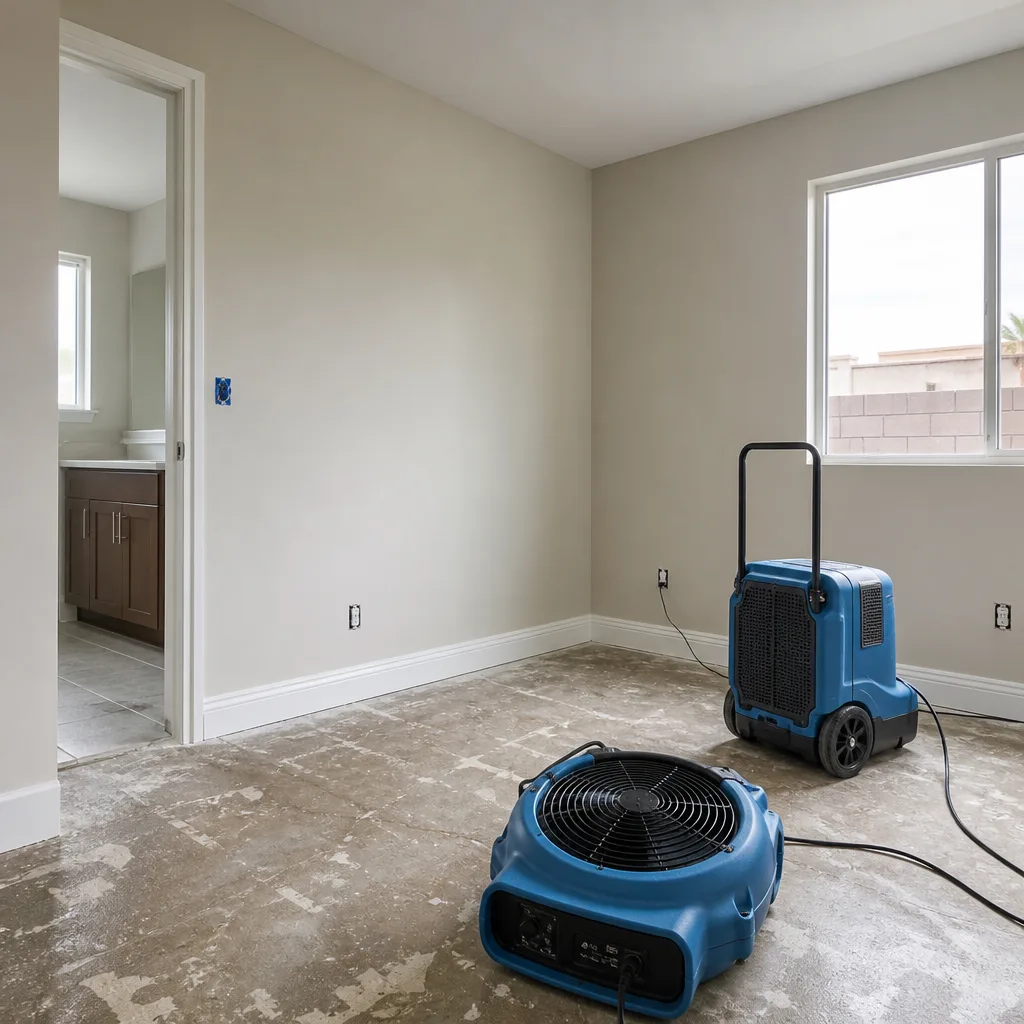
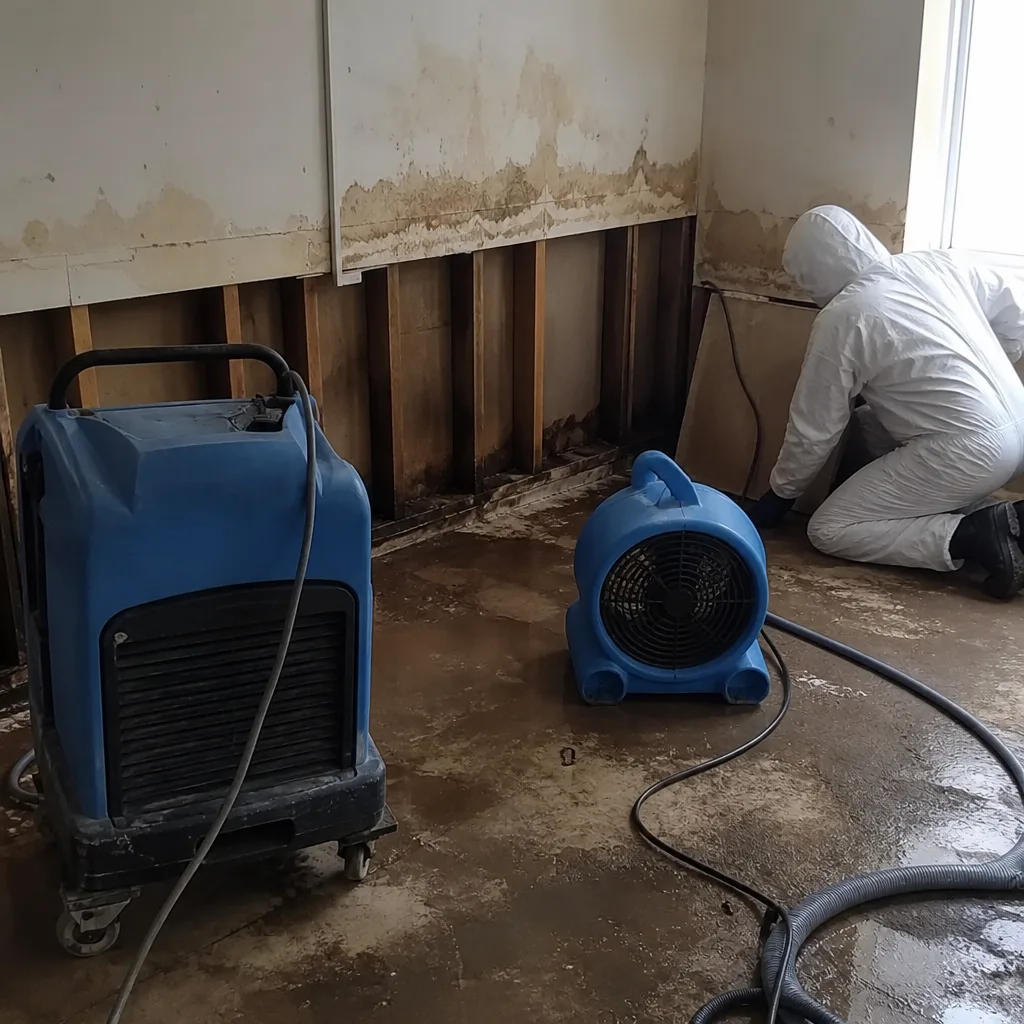
The brand names on a restoration company’s equipment are a useful diagnostic tool, because commercial-grade systems behave differently from consumer-grade rentals. Dri-Eaz and Phoenix make low-grain refrigerant (LGR) dehumidifiers that pull moisture from the air at rates consumer units cannot match. XPOWER and B-Air manufacture professional air movers designed for continuous operation over multiple days. These are the systems used on real restoration job sites, not the equipment you rent from a hardware store.
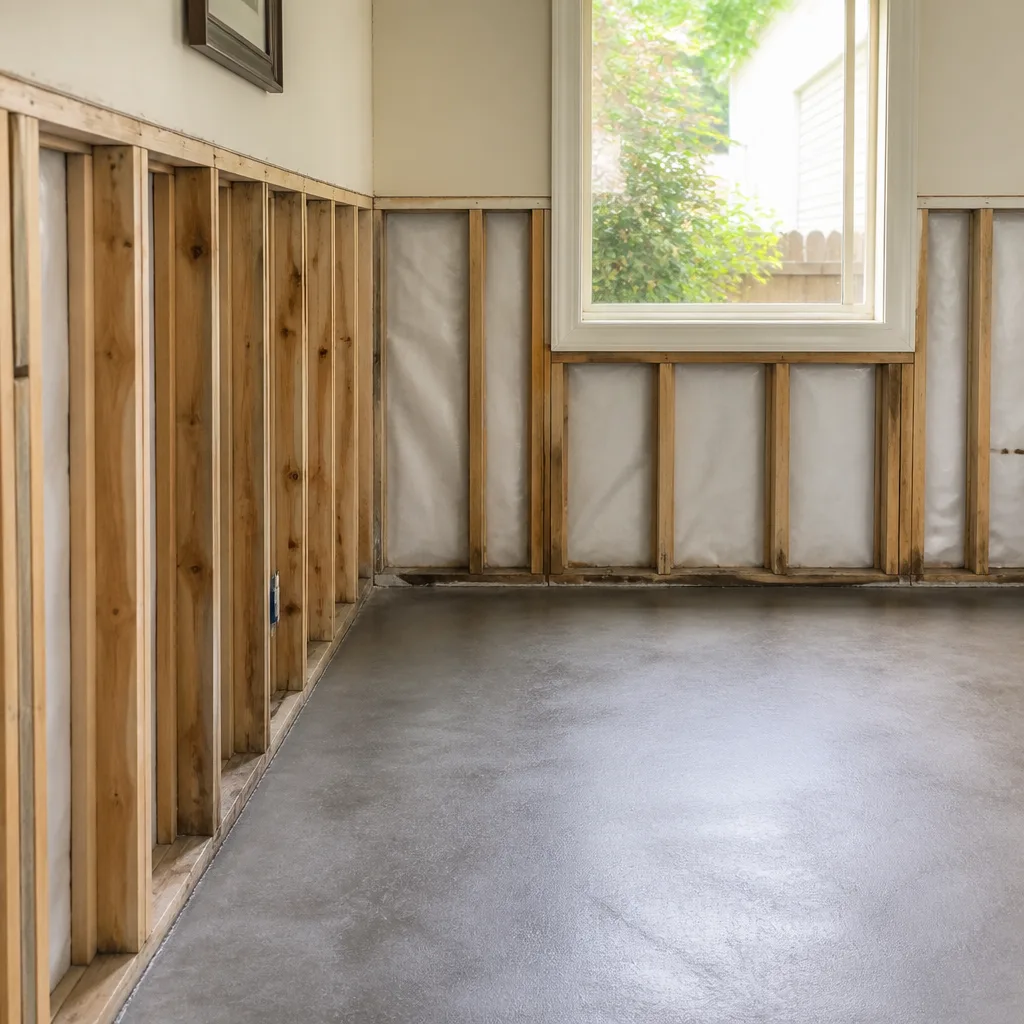
Injectidry deserves special mention because it addresses the single most expensive problem in water damage: the rebuild. When water migrates into wall cavities, the traditional approach is to cut holes in drywall, remove insulation, and expose the framing to air. Injectidry systems use panel-based vacuum technology to pull air through the wall cavity and into the drying chamber, reaching moisture that conventional equipment cannot touch without demolition. In Sunrise Manor homes built on slab foundations, this same principle applies to subfloor drying. The result is more of your original structure preserved and a smaller rebuild bill.
Ask any restoration company you’re considering which equipment brands they operate. If they use consumer-grade dehumidifiers from a big-box store, that tells you something. If they mention Dri-Eaz, Phoenix, XPOWER, B-Air, or Injectidry, that also tells you something. Commercial-grade equipment, residential care is the phrase that captures how we approach this.
Common Mistakes to Avoid
- Signing a work authorization before verifying certifications. Once signed, you’ve agreed to whatever crew and equipment the company chooses to deploy. Verify before you sign, not after.
- Choosing based on the size of the ad, not the skill of the crew. National restoration franchises spend heavily on television and internet marketing. That budget comes from somewhere, and it doesn’t automatically translate into better drying outcomes.
- Assuming the insurance company’s vendor is the only option. Nevada law protects your right to choose. The adjuster’s preferred vendor is a suggestion, not a requirement.
- Accepting surface-level drying as job completion. In Sunrise Manor’s dry climate, surfaces can feel dry while moisture travels through structural framing. Insist on moisture logs that demonstrate drying at depth before the job is closed.
- Hiring a contractor with no mold remediation capability. Water damage that isn’t dried properly leads to mold. If your restoration company can’t handle the biological follow-up, you’ll be coordinating two vendors and dealing with the insurance implications of each. One call covers water, mold, and fire with us.
- Skipping the photo documentation step. Your restoration company should document damage photographically before, during, and after mitigation. These photos are the backbone of your insurance claim. A company that doesn’t document thoroughly is leaving money on your claim table.
- Paying for a rebuild before the structure is dry. Never allow a contractor to install new drywall, flooring, or trim until the moisture logs confirm the affected materials are at acceptable moisture content. Rebuild over wet framing is a mold farm waiting to bloom.
When to Call a Professional
Some situations leave no room for delay. Call a restoration professional immediately if you discover water from a ruptured supply line has migrated into wall cavities or under flooring, if you can smell a musty odor that suggests hidden mold growth after a previous leak, or if a fire has left structural materials saturated from firefighting water. Sunrise Manor’s older slab-foundation homes present a particular challenge: water from a slab leak can travel under tile and into wall plates before any visible signs appear on the surface. If your utility bill spikes without explanation, you may be dealing with a hidden slab leak that has already begun saturating building materials. That’s not a retail-plumber situation; that’s a structural drying situation. Ashworth Water Damage offers free estimates in Sunrise Manor, and we’ll walk you through what’s actually happening without obligating you to anything. Call (833) 734-7202.
Frequently Asked Questions
Ask for a physical address in the Las Vegas metro area, verify they have direct-hire technicians rather than subcontractors, and ask which Clark County neighborhoods they’ve served recently. A genuine local operator can answer these questions immediately. A call-center operation will deflect.
Coverage depends on your specific policy, the cause of loss, and whether the damage is sudden and accidental versus long-term and gradual. Your restoration company should document damage thoroughly and coordinate directly with your adjuster to maximize your legitimate claim. Ashworth Water Damage provides photo documentation and direct adjuster coordination on every job.
Yes, in many cases. Injectidry systems can reach moisture inside wall cavities and subfloors without unnecessary demolition, preserving more of the original structure and reducing rebuild costs. The key is starting the drying process before materials become saturated enough to require replacement. Call (833) 734-7202 for an evaluation.
Within hours, not days. Sunrise Manor’s low ambient humidity may make surfaces feel dry quickly, but moisture inside wall cavities and under slab flooring continues migrating and causing damage long after the visible puddle disappears. The sooner equipment is placed, the less demolition is required.
Equipment brand tells you whether a company has invested in commercial-grade restoration systems or is using consumer equipment that’ll run for 48 hours and quit. Professional systems like Dri-Eaz LGR dehumidifiers, Phoenix axial air movers, XPOWER and B-Air air movers, and Injectidry cavity-drying panels are built for the continuous multi-day operation that structural drying requires.
Most restoration companies, including Ashworth Water Damage, can begin mitigation work immediately and document everything for your subsequent claim. Mitigation is time-sensitive by nature. The insurance approval process should not be the rate-limiting step, and a professional restoration company will help you navigate that sequencing.
The Bottom Line
Choosing a restoration brand in Sunrise Manor comes down to one structural question: will the crew that arrives be accountable to you, or to a call center in another state? If you verify IICRC certifications on the actual technicians, insist on commercial-grade drying equipment, ask about psychrometric reporting and moisture log frequency, and remember that “preferred vendor” is a business arrangement rather than a quality guarantee, you’ll make a decision you can defend later if the drying comes into question. Certified to IICRC standards, we dry the structure, not just the surface. Explore more guides & resources on our blog. That’s the entire game in this industry, and now you know how to check whether any company can do it. For a free estimate in Sunrise Manor, call (833) 734-7202.
Written by the team at Ashworth Water Damage, serving Sunrise Manor since 2018.
See the difference
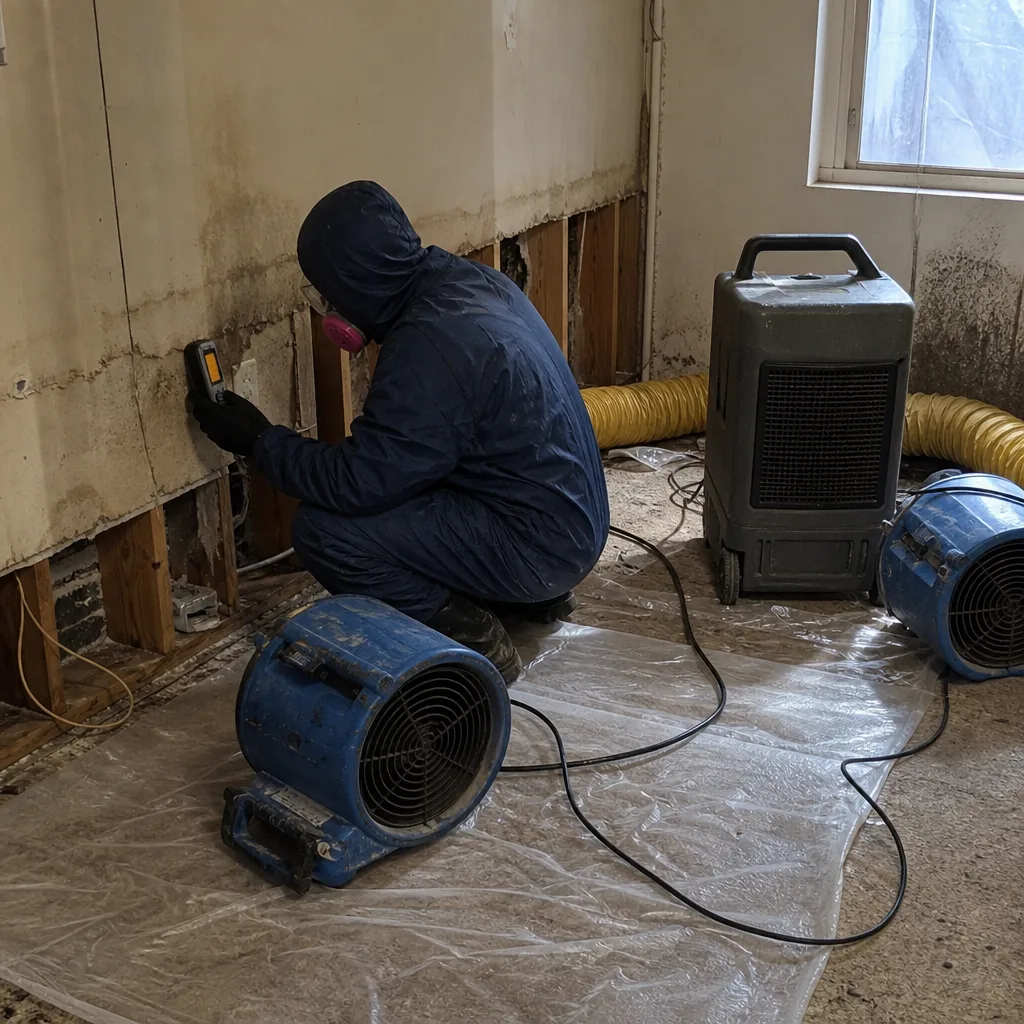 Before
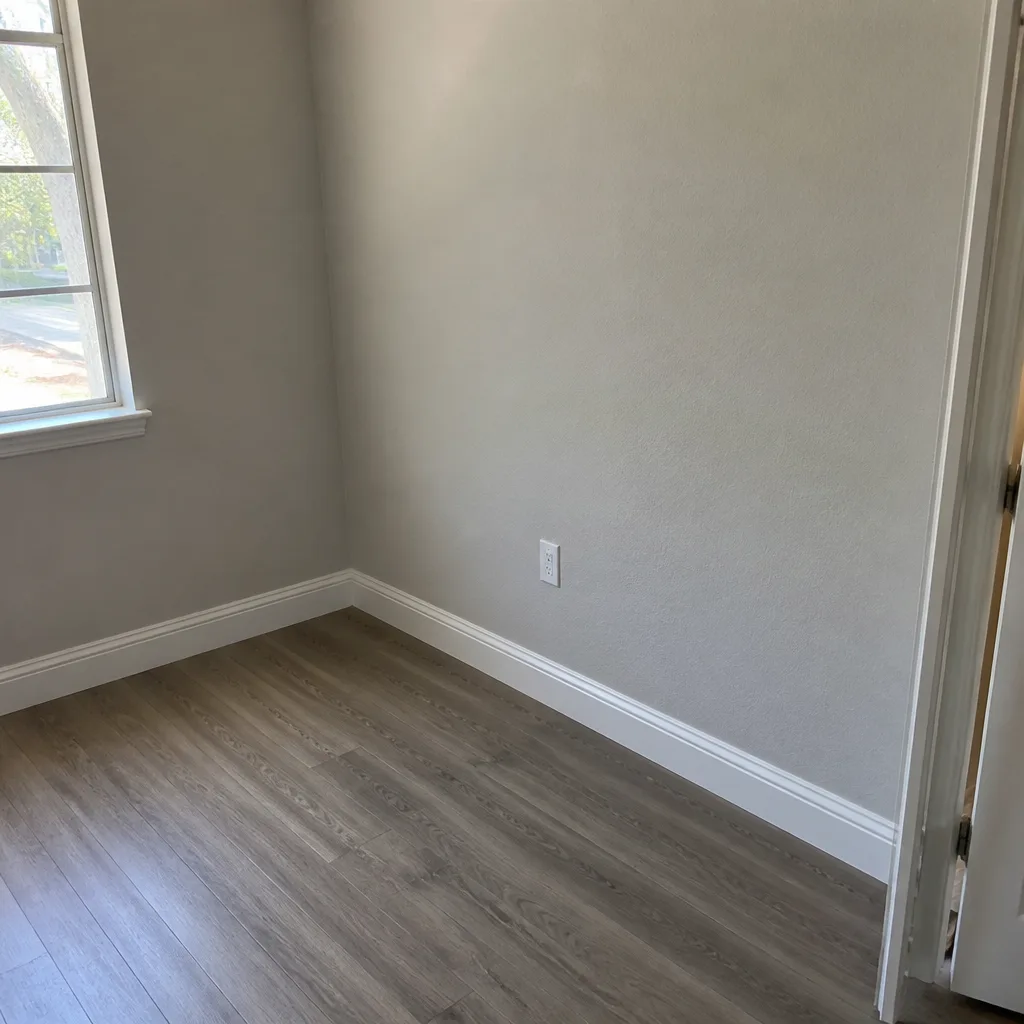 After
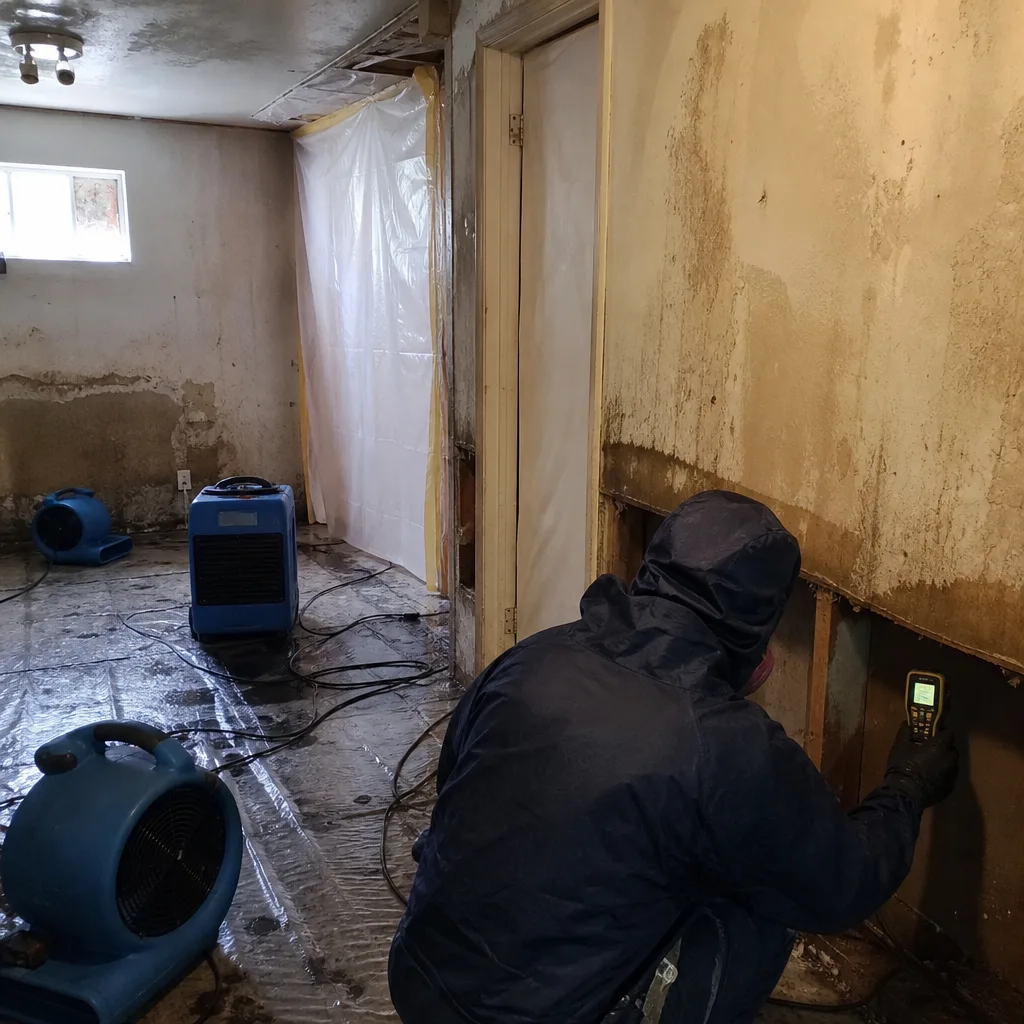 Before
 After
 Before
 After