RIA Water Damage Restoration in Sunrise Manor: A Homeowner’s Guide
RIA water damage restoration means your contractor follows the Restoration Industry Association’s standards, which exist specifically to protect homeowners, not contractors or insurance carriers. The RIA writes guidelines for structural drying that beat anything an insurance adjuster’s software will estimate. If you’re standing in a flooded living room in Sunrise Manor right now, know this: the standards are your leverage, and you can call (833) 734-7202 for a free estimate while you read.
Most Sunrise Manor homeowners have never heard of the RIA until they’re in a dispute with their carrier. That’s not an accident. Insurance companies train adjusters on Xactimate, a pricing database that tells them what a drying job “should” cost based on regional averages. Contractors train on IICRC standards, which tell them how to dry a structure correctly. Neither framework was written with your financial recovery as the priority. The RIA fills that gap, and knowing the difference changes how your claim gets paid.
What the RIA Actually Is (and How It Differs from IICRC)
The Restoration Industry Association is a professional trade organization for restoration companies. The IICRC is a credentialing body that certifies individual technicians. Different jobs, different purposes, and confusing them costs homeowners real money.
Here’s the plain-language breakdown:
- IICRC certification means a technician passed a test proving they know how to run drying equipment and follow established procedures. It’s about individual competence.
- RIA membership binds a company to the association’s business standards, documentation requirements, and position statements. It’s about organizational accountability.
- IFA affiliation adds another layer of third-party oversight for companies that want independent verification of their practices.
In our experience across Sunrise Manor, an IICRC-certified tech working for a company with no RIA oversight can still leave you with a half-dried structure and a denial letter. The certification says they know the method. The RIA membership says their company agrees to document the method precisely enough to survive an insurance dispute. When your carrier pushes back on a claim, RIA-aligned documentation is what your public adjuster will ask for. Certifications alone don’t generate that paper trail.
The Ashworth Water Damage home approach holds all three: IICRC-certified technicians, RIA membership, and IFA affiliation. That redundancy matters because each body audits different parts of the restoration process.
How RIA Drying Standards Translate into Deliverables You Can Request
RIA position statements on drying don’t just say “dry the structure.” They specify how dry, measured how, documented when. If you’re in Sunrise Manor dealing with a burst supply line or a failed water heater, you can request these deliverables in writing before any work begins. A contractor operating to RIA standards won’t blink. A contractor who markets the name but doesn’t follow the standards will suddenly get vague.
Three deliverables to request, in plain terms:
- A moisture map. This is a diagram of your affected areas showing moisture readings taken with a penetrating moisture meter. Every affected room, wall, and floor section gets a number. You should receive this before equipment is placed, not after the job is done.
- A drying log. Daily readings showing moisture levels trending downward across every mapped location. RIA standards require this documentation throughout the drying process. If a contractor can’t produce a drying log for your Sunrise Manor job, they can’t prove the structure reached the dry standard.
- A final moisture verification. A closing set of readings showing every affected material returned to its pre-loss moisture baseline or to the RIA’s established dry standard. This is what prevents mold from appearing six months later inside a wall cavity that never actually dried.
We use Water Damage Restoration in Sunrise Manor equipment from Dri-Eaz and Phoenix, the same brands large commercial restoration firms run. But equipment matters less than documentation. You can rent a fan at Home Depot. You can’t rent a defensible drying log.
Why RIA Documentation Matters in Nevada Insurance Disputes
Sunrise Manor sits in Clark County, where property claims after water losses tend to follow a pattern. The adjuster arrives, photographs the visible damage, writes an estimate based on Xactimate line items, and the homeowner accepts it because they don’t know what else to do. Six to twelve months later, the drywall is still bowing at the baseboards and the carrier says it’s pre-existing.
RIA documentation changes that scenario at the appraisal stage. Nevada allows policyholders to invoke appraisal or hire a public adjuster when claim values are disputed. In those proceedings, the side with better records wins. Here’s what makes the difference:
- Daily drying logs showing moisture content trending down over time prove the contractor’s work was effective, not partial
- Moisture maps taken before demolition show the full scope of affected materials, which supports line items the carrier may have excluded
- Photo documentation tied to specific dates and readings creates a timeline that undermines “pre-existing condition” denials
A Sunrise Manor homeowner with an RIA-aligned contractor who documented everything has leverage. A homeowner with a franchise crew that showed up, set fans, and left without a single moisture reading has a problem. The standards exist to give you the first outcome instead of the second.
We pulled a drying job in the Hollywood Highlands area last year where the carrier initially approved only two rooms of mitigation. The moisture map showed elevated readings extending through a hallway and into a third bedroom because the water had wicked under the flooring. That map, submitted with the claim supplement, got the scope expanded. Without RIA-aligned documentation, that hallway stays wet, and the mold that follows becomes a separate fight with a much worse carrier response.
Three Questions to Ask Any Sunrise Manor Restoration Company
You can determine whether a contractor actually operates to RIA standards or just has the logo on their truck by asking three questions. Here’s what to ask and what honest answers sound like:
Question 1: “Will you provide a moisture map before you place equipment, and daily drying logs until the job is complete?”
The right answer is yes, delivered in writing. Not “we’ll send you something at the end.” RIA-aligned documentation is generated throughout the job, not retroactively.
Question 2: “What dry standard do you use, and how do you determine when the structure is actually dry?”
The right answer references specific moisture content targets for different materials. Wood framing dries to a different standard than drywall. A contractor who says “we let the equipment run for three or four days” is guessing. RIA standards don’t guess.
Question 3: “If my claim is underpaid, will your documentation support an appraisal or a public adjuster?”
The right answer is a confident yes, followed by an explanation of what records they keep. The wrong answer is a long pause. Contractors who operate to standard know their documentation is defensible. Contractors who don’t will hem and haw about “working with the insurance company.”
We handle Mold Remediation in Sunrise Manor with the same documentation discipline because secondary biological growth follows water damage on a delay. The moisture map from a drying job becomes the reference point for any mold that appears later. That continuity is why one company handling both disciplines matters.
How to Read a Moisture Map and Drying Log
These documents look technical, but homeowners can read them with a few minutes of explanation. The goal isn’t to become a restoration technician. The goal is to verify that the contractor’s claims match the documented evidence.
A moisture map shows affected areas with numbers representing moisture content. For wood, anything below 16% moisture content is generally considered dry in Southern Nevada’s climate. For drywall, the target is typically below 12%. But the more important comparison is baseline: what did this material read before it got wet? A wall that normally reads 8% and currently reads 20% is wet, even if a generic chart says 20% is acceptable. RIA standards require returning materials to their pre-loss condition, not to some arbitrary universal number.
A drying log shows those same locations re-measured daily. You’re looking for a consistent downward trend. Flat readings three days in a row mean the drying setup isn’t working. Rising readings mean water is still entering somewhere. A log that shows steady decline across every mapped location until reaching baseline is what a properly dried structure looks like on paper.
If you’re reading this while standing in a flooded Sunrise Manor home, this is the point where you should call a professional. Drying a structure correctly requires penetrating meters, psychrometry calculations, and equipment placement based on airflow physics. The RIA exists because this is a skilled trade, not a matter of renting fans. Call (833) 734-7202 and we’ll start the documentation from the first reading.
When RIA Standards Matter Most: Complex Drying Scenarios
Some water losses are straightforward. A supply line breaks, water pools on tile, you extract it, you dry the open air. Simple jobs don’t test a contractor’s standards. Complex ones do.
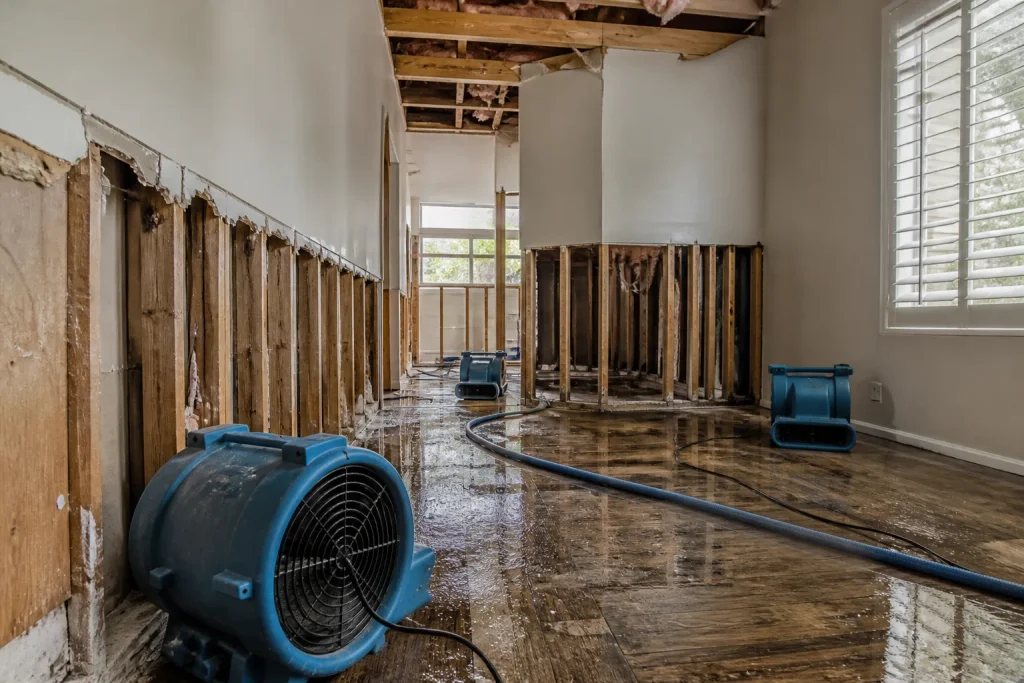
Sunrise Manor homes built in the 70s and 80s often have stucco exterior walls over wood framing, slab foundations, and interior wall cavities that hide water movement. Water from a kitchen overflow can travel under the slab, wick into the bottom plate of a wall, and move up the cavity without ever showing on the surface. A contractor running fans in the open room dries the surface. The wall cavity stays wet. Six months later, the homeowner has a mold problem and a carrier saying it’s a new loss.
RIA standards address this with documentation requirements for hidden cavities and wood framing. The drying plan must account for where water moved, not just where it pooled. This is where Injectidry systems matter. Injectidry forces dry air into wall cavities and under subfloors without tearing out every wall. We reach moisture inside walls without demolition, which preserves the structure and reduces rebuild costs. More importantly, the Injectidry system gives verifiable evidence that hidden cavities dried. The equipment generates readings and the readings go into the log.
For fire losses that involve water from suppression efforts, the same documentation standards apply. Fire Damage Restoration in Sunrise Manor combines water extraction, structural drying, and smoke remediation in one sequence. The drying documentation from a post-fire water phase is just as critical as in a pure water loss, and carriers scrutinize those claims just as closely.
The Bottom Line
RIA standards exist to give Sunrise Manor homeowners an independent benchmark they can use to verify their restoration job was done correctly and their insurance claim was paid fairly. The IICRC certifies technicians. The RIA holds companies accountable for documented, defensible restoration work. The difference shows up in moisture maps, drying logs, and the outcome of insurance disputes.
If your next step is finding a contractor who operates to these standards, Ashworth Water Damage holds IICRC, RIA, and IFA credentials. We run commercial-grade equipment from Dri-Eaz, Phoenix, and Injectidry. We dry the structure, not just the surface. And we document everything in a format your carrier or public adjuster can use. If you’re in Sunrise Manor and need help, call (833) 734-7202 for a free estimate.
Frequently Asked Questions
No. RIA membership is voluntary, not mandated by Nevada or Clark County. That’s exactly why it’s a useful signal. A contractor who voluntarily submits to RIA’s documentation and business standards is choosing accountability that competitors avoid. Sunrise Manor doesn’t require licensing beyond standard Nevada contractor credentials, so the difference between a standard-compliant restoration and a guess comes down to what the company chooses to follow.
Carriers respect documentation that survives scrutiny in appraisal or litigation. RIA-aligned moisture maps, daily drying logs, and photo records tied to specific dates are objective evidence. Adjusters may still try to underpay, but they’re far less likely to push back when the file contains daily readings showing a consistent downward trend toward dry standards. That’s the documentation that wins disputes.
Typical structural drying in Southern Nevada’s dry climate takes three to five days when the water is clean and the structure is standard construction. Complex losses, hidden cavities, or subfloor saturation can extend that timeline. The right answer for your specific situation comes from moisture readings, not a calendar. RIA standards judge dryness by documentation, not by days elapsed. Call (833) 734-7202 and we’ll give you an honest assessment based on readings.
A moisture map is the starting picture: a diagram showing where water affected the structure and what moisture readings were taken before drying began. A drying log is the ongoing record: daily readings from those same locations showing moisture content trending down over time. The map defines the scope. The log proves the drying worked. Both are required for RIA-standard documentation, and both should be yours to keep.
Written by the team at Ashworth Water Damage, serving Sunrise Manor since 2018.
Need Damage Restoration Help?
Call Ashworth Water Damage — licensed & insured, here with fast after-hours help in Sunrise Manor.
(833) 734-7202